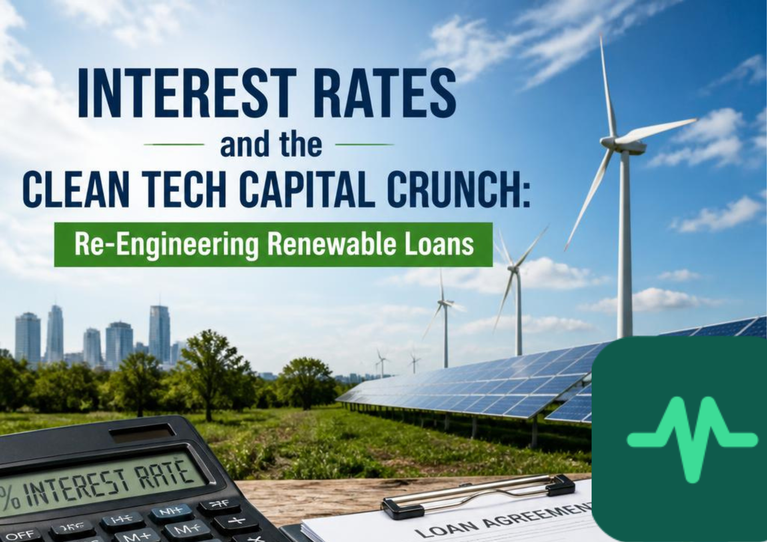
Here is the strange truth. Building a gas plant costs less upfront. You pay for fuel slowly, over many years. Building a wind or solar farm works the opposite way. You must pay almost everything upfront, on day one. That single difference changed everything once interest rates started climbing.
In this guide, we will explore how clean tech financing works. We will look at why rising interest rates hit renewables so hard. We will also look at the clever new tools helping this industry survive. By the end, you will understand why clean tech financing has quietly become just as important as the technology itself.
Why Renewables Need Money Differently Than Fossil Fuels
Let's start with the basic difference. A gas plant is cheap to build. It is expensive to run. Fuel costs pile up slowly, spread across many years of operation. This spreads out the financial risk over a long time.
Solar and wind farms flip this pattern completely. There is no fuel to buy later. Instead, the entire cost gets front-loaded. Panels must be bought. Turbines must be built. Land must be secured. All of this happens before a single watt of power gets sold.
This is exactly why clean tech financing matters so much. Developers cannot spread their costs out slowly like a gas company can. They need massive amounts of money right away, long before any revenue starts flowing in.
What Happens When Interest Rates Rise
So why does this front-loaded cost structure matter so much? The answer comes down to borrowing. Almost every renewable project relies on loans to cover that huge upfront cost. When interest rates go up, those loans suddenly cost a lot more.
Picture a massive offshore wind project. It might need a loan worth hundreds of millions of dollars. When rates were low, that loan felt manageable. When rates doubled or tripled, the interest payments alone became a serious burden.
This is where clean tech financing hit a real wall. Rising rates did not just make loans slightly more expensive. They made some projects completely unaffordable. Several offshore wind projects were canceled entirely, caught between rising loan costs and old contracts signed back when rates were low.
Understanding the Cost of Capital Problem
To really understand this issue, it helps to know a simple term: the cost of capital. This just means how expensive it is to borrow money for a project. When rates are low, borrowing is cheap. When rates are high, borrowing gets painful fast.
Fossil fuel plants do not feel this pain the same way. They spend less money upfront, so they borrow less. Clean tech financing works under a much heavier burden, since almost the entire project cost needs funding right away.
This imbalance created a real problem for renewable energy competitiveness. When rates were low, solar and wind could beat fossil fuels easily on price. When rates climbed, that price advantage started to shrink, sometimes disappearing altogether.
The Fixed-Price Trap
Here is another painful piece of this puzzle. Many renewable projects sign long-term contracts to sell their power at a fixed price. These agreements often get locked in years before construction even finishes.
A gas plant operator has more flexibility. If fuel costs rise, some of that cost can get passed along to customers. A solar or wind developer usually cannot do this. Their price is fixed. Their loan costs are not.
This mismatch created serious stress across the clean tech financing world. Developers found themselves stuck. Their contracts promised one price. Their loans demanded much higher payments than originally planned. This squeeze pushed many projects toward cancellation or serious renegotiation.
A Clever Fix: Selling Tax Credits
Just when things looked bleak, a powerful new tool emerged to help clean tech financing survive this tough period. It is called tax credit transferability, and it works in a genuinely clever way.
Here is the old problem. Renewable projects often earn large tax credits from the government. But many young solar or wind companies do not owe enough taxes to actually use those credits. For years, this meant valuable credits just sat unused, worth nothing on paper.
Transferability changed this completely. Now, companies can sell these credits directly to other businesses that do owe large tax bills. A big insurance company or tech firm might buy these credits at a discount, maybe paying ninety cents for every dollar of credit.
Why This Fix Works So Well
This solution helps everyone involved, and that is exactly why it feels so clever. The clean energy company gets real cash immediately. No interest payments. No new debt required. Just a straightforward sale.
The buying company benefits too. They lower their own tax bill legally, often at a solid discount compared to paying full taxes outright. This creates a real incentive for large, profitable companies to jump into clean tech financing, even if they know little about wind turbines or solar panels themselves.
This tool has become a genuine lifeline for the industry. Instead of relying only on expensive bank loans, clean tech financing now has another path forward, one that does not depend as heavily on interest rates at all.
Other Tools Helping Bridge the Gap
Tax credit sales are not the only trick keeping clean tech financing alive right now. Developers are also turning to private credit deals, working directly with investment firms instead of traditional banks. These direct deals sometimes offer more flexible terms than a standard bank loan.
State-backed infrastructure banks are stepping in too. These government-supported lenders often offer lower interest rates than private banks, specifically because their goal is supporting public infrastructure rather than maximizing profit. This gives clean tech financing another valuable, lower-cost option during tough economic periods.
Some developers are also restructuring their power contracts, negotiating new pricing terms that better reflect today's higher borrowing costs. This is not a perfect fix, but it helps ease some of the pressure created by the mismatch between fixed prices and rising loan costs.
Which Projects Feel the Pain Most
Not every renewable project suffers equally under high interest rates. Offshore wind has been hit especially hard. These projects are massive, complex, and extremely capital-intensive, making them highly sensitive to borrowing costs.
Residential solar developers have also felt real strain. Many homeowners rely on financing to install solar panels. When interest rates rise, monthly loan payments rise too, making solar less attractive to everyday buyers, even if the long-term savings remain strong.
Smaller, simpler projects tend to weather this storm a bit better. Community solar installations or smaller wind farms usually need less upfront capital, meaning clean tech financing challenges hit them somewhat less severely than massive offshore wind developments.
Why This Story Matters Beyond Wall Street
It would be easy to view clean tech financing as a distant, abstract topic, mostly relevant to bankers and investors. But this issue touches real lives too. Delayed or canceled renewable projects mean slower progress on climate goals. They also mean fewer new jobs in construction, engineering, and clean energy manufacturing.
Every canceled offshore wind farm represents lost clean electricity that could have powered homes for decades. Every delayed solar project means a slower shift away from fossil fuels. Clean tech financing challenges ripple outward, affecting far more than just corporate balance sheets.
This is exactly why new tools like tax credit transferability matter so much. They are not just clever financial tricks. They represent real efforts to keep the broader energy transition moving forward, even during a genuinely difficult economic stretch.
What This Means for the Future
Looking ahead, clean tech financing will likely keep evolving as economic conditions shift. If interest rates eventually fall again, some of this pressure should ease naturally. Cheaper borrowing would make large projects feel manageable again, much like they did in years past.
However, many of these new financing tools are likely here to stay, regardless of where interest rates head next. Tax credit transferability, in particular, offers real, lasting value beyond just surviving high rates. It creates an entirely new pipeline connecting clean energy developers with corporate capital, one that did not exist in a meaningful way before.
This evolution suggests something important. Clean tech financing is maturing into a smarter, more resilient system. Developers are no longer just building turbines and panels. They are becoming skilled financial strategists too, learning to navigate economic ups and downs without losing sight of long-term climate goals.
Common Questions About Clean Tech Financing
Why do interest rates affect renewable energy more than fossil fuels? Renewable projects require nearly all their costs upfront, making them far more dependent on borrowed money than fossil fuel plants, which spread costs out over years through fuel purchases.
What is tax credit transferability? It is a financial tool allowing clean energy companies to sell their tax credits directly to other businesses for cash, providing funding without taking on additional debt.
Which renewable sectors have struggled most with clean tech financing challenges? Offshore wind projects and residential solar developers have faced some of the toughest pressure, given their high upfront capital needs and sensitivity to borrowing costs.
Will clean tech financing improve if interest rates fall again? Likely yes, though many of the new financing tools developed during this period, like tax credit sales, are expected to remain valuable regardless of future rate changes.
Final Thoughts
Clean tech financing has faced a genuinely difficult stretch, tested hard by rising interest rates and heavy upfront costs. What once felt like a straightforward industry, powered by free sun and wind, revealed just how deeply it depends on smart, careful money management behind the scenes.
Still, this story is not one of defeat. Tools like tax credit transferability show real creativity and resilience within the clean tech financing world. Developers found new paths forward instead of simply giving up when old methods stopped working.
As the industry keeps adapting, clean tech financing is proving it can handle real economic pressure. This matters enormously for the future of clean energy, ensuring that turbines keep spinning and solar panels keep going up, even when the economic weather turns rough.
In the end, clean tech financing reminds us that even the cleanest energy source still needs a solid financial foundation to reach the real world. Sunlight and wind may be free, but building the infrastructure to capture them will always require smart, adaptable money behind the scenes.


Comments (0)
Login to leave a comment.
No comments yet. Be the first to share your thoughts!