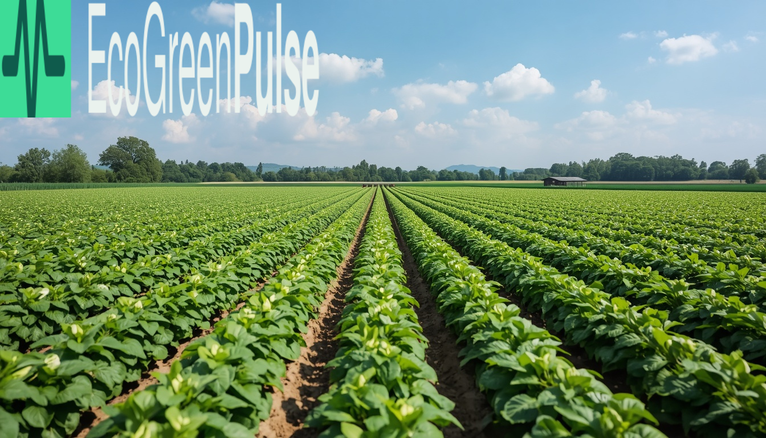
What Is Agrivoltaics? How Solar Farms Are Doubling Crops
Land is precious. Farmers need it to grow food. Cities need it for clean power. For years, these two needs have been fighting each other. Every acre used for solar panels felt like an acre lost for crops. This painful trade-off has worried farmers for years.
But now, there is real hope. A bold new idea called agrivoltaics is changing everything. Agrivoltaics lets solar panels and crops share the exact same land. It sounds almost too good to be true. Yet it works, and it is already helping real farms today.
In this guide, we will explore agrivoltaics in simple terms. We will look at how it protects crops. We will look at how it helps solar panels work better too. By the end, you will understand why agrivoltaics feels like such a hopeful breakthrough for struggling farming communities.
Why Solar Farms and Food Farms Started Fighting
Let's start with the root of the problem. Building a solar farm takes a lot of flat, open land. Sadly, the best land for solar panels is often the same land farmers depend on for crops.
This creates a heartbreaking choice. Should a community grow food to feed people? Or should it clear the soil to generate clean electricity? Neither option feels fair. Farmers watch good soil disappear under rows of panels. Meanwhile, clean energy goals fall behind schedule.
This is exactly the painful gap that agrivoltaics was built to fix. Instead of choosing between food and power, agrivoltaics blends the two together. It offers a win for farmers. It offers a win for the planet too.
What Is Agrivoltaics, Really?
So what is agrivoltaics in simple terms? Agrivoltaics means growing crops directly underneath solar panels. Instead of placing panels low to the ground, agrivoltaics raises them higher into the air. This creates space below for real, living crops to grow.
Think of it like a gentle, protective roof. The solar panels sit above. The crops grow safely below. Sunlight still reaches the plants, just in a softer, filtered way. This simple shift changes everything about how the land gets used.
Agrivoltaics is not just a clever trick. It is a full redesign of how solar farms are built. Instead of treating land as either "solar" or "farm," agrivoltaics treats it as both, all at once.
How Shade Helps Crops Thrive
Here is something surprising. Many crops do not actually love nonstop sunlight. Leafy greens, berries, tomatoes, and root vegetables often reach a point where more sun stops helping them. In fact, too much sun starts to hurt them.
When the sun blazes down all day, plants get stressed. This stress forces them to use more water, just to survive the heat. Over time, this wastes precious water and slows down healthy growth. For farmers in dry regions, this is a heartbreaking, costly problem.
This is where agrivoltaics steps in like a quiet hero. The solar panels above create gentle shade during the hottest parts of the day. This shade cools the soil. It slows down water evaporation. Because of this, it can cut irrigation needs by 20 to 30 percent.
For farmers battling brutal droughts, this kind of water savings feels like a lifeline. Agrivoltaics does not just protect crops. It protects entire livelihoods built around fragile, thirsty land.
How Crops Help Solar Panels in Return
Here is the beautiful part. Agrivoltaics is not a one-way relationship. While crops enjoy the shade, solar panels get something valuable in return.
Solar panels do not love extreme heat either. On scorching summer days, panels can heat up past 60 degrees Celsius. When this happens, their efficiency drops fast. A hot panel simply cannot produce power as well as a cool one.
This is where the crops below become surprisingly helpful. As plants release moisture into the air, a natural process called transpiration begins. This rising moisture gently cools the air around the panels above. Thanks to agrivoltaics, this cooling effect can boost total energy output by 5 to 10 percent compared to a normal, dirt-covered solar farm.
So in an agrivoltaics system, nothing goes to waste. The panels help the plants. The plants help the panels. It is a rare, heartening example of technology and nature actually working hand in hand.
Designing an Agrivoltaics System
Building an agrivoltaics farm is not as simple as just raising panels a little higher. It takes real engineering, thought, and care. Every detail matters.
Most agrivoltaics systems mount solar panels on tall pylons. These pylons often stand 8 to 10 feet high. This gives enough room for tractors and harvesters to move safely underneath. Without this careful spacing, farm equipment could never fit beneath the panels at all.
Some advanced agrivoltaics setups go even further. They use smart tracking systems. These systems can tilt the panels upright during harvest season, clearing the way for large machines. Once harvest ends, the panels tilt back down, ready to capture maximum sunlight and shade again.
Not every farm needs big machinery, though. On smaller properties, agrivoltaics often gets paired with grazing animals instead. Sheep are a popular choice. They wander peacefully beneath the panels, quietly eating weeds and grass. This clever pairing removes the need for noisy lawn mowers near sensitive electrical wires.
Why Farmers Are Falling in Love With Agrivoltaics
It is easy to see why so many farmers feel hopeful about agrivoltaics. For years, they faced an impossible choice between growing food and hosting solar panels. It finally removes that painful trade-off.
Instead of losing land to solar development, farmers gain a whole new income stream. They can sell crops. They can also sell solar power. Both revenue streams come from the exact same acre of land. For struggling rural families, this extra income can make a real, life-changing difference.
Agrivoltaics also brings a strong sense of relief for communities in drought-prone regions. Water has become an increasingly scarce and stressful resource for farmers across the world. Cutting water use by up to 30 percent, thanks to agrivoltaics, feels like a genuine breath of fresh air for exhausted farming families.
Where Agrivoltaics Works Best
Agrivoltaics is not a perfect fit for every single crop or region, but it shines in the right conditions. Arid farming regions benefit enormously, since water savings matter so much there. Drought-prone states are also ideal candidates for agrivoltaics, given how badly they need relief from harsh, dry conditions.
Certain crops respond especially well to agrivoltaics too. Shade-tolerant leafy greens do wonderfully underneath solar panels. Berries also thrive in this softer light. Root vegetables benefit from the cooler, moister soil that agrivoltaics naturally creates. Even livestock grazing fits beautifully into its many setups, especially for smaller farms.
As more research continues, scientists expect even more crop types to join this growing list. Agrivoltaics is still evolving, and each new success story builds more confidence in its future.
Common Questions About Agrivoltaics
Does agrivoltaics reduce crop yields? Not usually. In many cases, agrivoltaics actually improves yields for shade-tolerant crops. The gentle shade reduces heat stress, which can help many plants grow stronger, not weaker.
Is agrivoltaics expensive to build? Agrivoltaics does cost more upfront than a standard solar farm, mainly due to taller support structures. However, the added income from both crops and solar power often makes agrivoltaics a smart long-term investment for many farms.
Can any farm use agrivoltaics? Not every farm is a perfect match. Agrivoltaics works best with shade-tolerant crops and moderate climates. Still, many regions are finding creative ways to adapt agrivoltaics to their specific needs.
Why is agrivoltaics considered so hopeful for the future? Agrivoltaics offers a rare win-win solution. It supports clean energy goals. It also protects farmland and struggling rural communities. This dual benefit is exactly why so many people see agrivoltaics as a hopeful path forward.
The Emotional Weight of Land and Water
For many farming families, land is not just an asset. It is a legacy. It is passed down through generations, carrying memories, sacrifice, and hard-earned pride. Watching that land get swallowed by rows of solar panels can feel like a quiet kind of grief.
This is part of why agrivoltaics resonates so deeply with rural communities. It does not ask farmers to give up their identity as growers. Instead, agrivoltaics lets them keep farming while still embracing clean energy. That emotional relief matters just as much as the financial benefits.
Water scarcity carries its own heavy emotional toll too. Watching crops wilt under a brutal sun, knowing irrigation costs keep climbing, can feel exhausting and discouraging. Agrivoltaics offers a gentler path forward. By easing water stress, agrivoltaics gives farmers a renewed sense of control over their own land and future.
The Growing Momentum Behind Agrivoltaics
Interest in agrivoltaics is not slowing down. Universities are running new field trials. Startups are designing smarter mounting systems. Governments are beginning to offer incentives for dual-use land projects like agrivoltaics.
This growing momentum matters because scaling agrivoltaics takes real investment. Taller structures cost more upfront. Smart tracking systems require careful engineering. Yet as more successful agrivoltaics projects prove their worth, banks and investors are becoming more willing to fund new farms.
Researchers are also expanding the list of crops suited for agrivoltaics. Early trials focused mostly on leafy greens and berries. Now, scientists are testing grains, herbs, and even some fruit trees under agrivoltaics arrays. Each new success adds more proof that agrivoltaics can adapt to a wide range of farming needs.
Policy support is growing too. Some regions now offer tax breaks specifically for agrivoltaics projects. Others include agrivoltaics in official renewable energy plans, recognizing it as a serious tool for meeting climate goals without sacrificing farmland. This kind of support signals a hopeful shift: agrivoltaics is moving from a niche experiment into a real, respected part of modern agriculture.
Final Thoughts
Agrivoltaics proves that solar power and farming do not have to compete for the same land. Instead of fighting over limited acres, agrivoltaics brings both worlds together in one shared, thriving space.
From cooler soil to happier crops, from cooler panels to stronger energy output, every part of agrivoltaics supports something bigger. It supports struggling farmers. It supports clean energy goals. It even supports the fragile ecosystems caught in the middle of this ongoing land debate.
As droughts grow harsher and land grows scarcer, agrivoltaics offers something rare: real, practical hope. It shows that with smart design and a little creativity, technology and nature can grow together, rather than apart.
The story of agrivoltaics is still being written. But for tired, hopeful farmers everywhere, it already feels like a much-needed light at the end of a very long, dry road.



Comments (0)
Login to leave a comment.
No comments yet. Be the first to share your thoughts!