
 ) requires rigorous engineering control over semiconductor material figure of merit (
 ), Seebeck coefficients, electrical contact resistance, and thermal boundary dissipation.
The Peltier Effect and Semiconductor Thermodynamics
The fundamental thermodynamic principle governing solid-state cooling is the Peltier effect, where passing an electrical current through a junction of two dissimilar semiconductor materials induces reversible heat absorption or rejection at the junction interface. Unlike traditional mechanical vapor-compression systems that rely on the latent heat of vaporization of working fluid refrigerants, thermoelectric devices operate entirely through electron and hole transport across semiconductor crystal lattices.
When direct current ( ) flows through a thermoelectric module comprising alternating p-type and n-type semiconductor legs (typically bismuth telluride
 alloys), charge carriers absorb thermal energy from the conditioned building space at the cold junction and release it to the external environment at the hot junction. The net heat pumping rate (
 ) at the cold junction is defined by the governing energy conservation equation:


where  represents the aggregate Seebeck coefficient of the semiconductor couple,
 and
 denote cold and hot junction absolute temperatures measured in Kelvin,
 is the electrical resistance of the module, and
 represents the thermal conductance. The first term dictates active Peltier heat pumping, while the second and third terms account for parasitic Joule heating (
 ) and Fourier thermal conduction back-flow from the hot side to the cold side.
Figure of Merit ( ) and Semiconductor Material Science
The energy efficiency of thermoelectric building cooling systems is dictated directly by the dimensionless thermoelectric figure of merit ( ), which quantifies the thermodynamic performance of semiconductor materials:
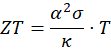
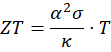
where  represents electrical conductivity,
 is total thermal conductivity (the sum of lattice thermal conductivity
 and electronic thermal conductivity
 ), and
 is absolute temperature. Maximizing
 requires maximizing electrical conductivity while simultaneously minimizing thermal conductivity—a persistent engineering challenge because electrons that carry electrical current also transfer thermal energy via lattice vibrations (phonons).
State-of-the-art commercial thermoelectric modules utilize heavily doped bismuth telluride ( ) alloys operating near room temperature (
 ), achieving peak
 values between
 and
 . Advanced academic materials science research published in clean-energy literature focuses on nanostructured bulk materials, skutterudides, and silicon-germanium alloys. Introducing nanoscale point defects, grain boundaries, and atomic-scale voids scatters short-wavelength phonons without impeding electron transport, suppressing lattice thermal conductivity (
 ) and elevating experimental
 values above
 .
Coefficient of Performance ( ) and Building HVAC Integration
Evaluating the energy efficiency of thermoelectric cooling versus conventional vapor-compression air conditioning requires analyzing the coefficient of performance ( ). The cooling
 of a thermoelectric module is defined as the ratio of the net heat removed at the cold junction (
 ) to the electrical power input (
 ):


While vapor-compression chillers achieve high operating  values ranging from
 to
 under steady-state conditions, commercial solid-state thermoelectric cooling modules typically operate at a lower
 between
 and
 when subjected to large temperature differentials (
 [
 ]).
To overcome this efficiency gap in building HVAC applications, engineers integrate thermoelectric modules into hybrid radiant cooling panels and localized task-ambient conditioning systems. By maintaining small temperature differentials ( [
 ]) between indoor radiant surfaces and circulating chilled water loops, thermoelectric
 scales upward toward
 to
 , rivaling traditional mechanical systems while eliminating mechanical noise, fluid leakage risks, and compressor maintenance overhead.
Technical Data Specifications of Thermoelectric Parameters
| Thermoelectric & Thermal Parameter | Engineering Specification Range |
|---|---|
| Peltier Semiconductor Material | Bismuth Telluride ( ) p-type and n-type legs |
Figure of Merit ( at  ) |  to  (commercial grade);  (advanced nanostructured) |
Seebeck Coefficient ( ) |  to  per semiconductor couple |
Operating Coefficient of Performance ( ) |  to  (at  );  to  (at  ) |
| Hot Junction Temperature Limit |  to  (  to  ) max operational boundary |
| Electrical Contact Resistance | 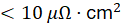 interface resistivity |
Cooling Heat Flux Density ( ) |  to  active thermal transfer rate |
Thermal Management and Heat Dissipation Engineering
The operational efficacy of solid-state thermoelectric cooling systems in buildings depends heavily on managing the thermal boundary resistance at the hot junction. Because thermoelectric modules absorb heat on the cold side and reject both the absorbed heat and the internal Joule heating power ( ) from the hot side, failing to dissipate thermal energy rapidly causes hot-side temperatures to spike. Rapid thermal accumulation degrades the Seebeck coefficient, accelerates thermal back-conduction, and triggers catastrophic thermal runaway.
Engineering robust heat rejection requires integrating high-performance heat exchangers on the hot side of the thermoelectric assembly:
- Extruded Aluminum Passive Heat Sinks: Utilizing large surface-area finned geometries optimized via computational fluid dynamics (CFD) to maximize natural convective heat transfer into ambient building cavity air.
- Liquid-Cooled Cold Plates: Circulating water-glycol heat transfer fluids through micro-channel aluminum cold plates, maintaining hot-side temperatures below
 (
 ) during peak cooling intervals.
- Phase-Change Material (PCM) Integration: Coupling thermoelectric hot junctions with paraffin-based composite phase-change thermal storage blocks to absorb transient heat spikes, smoothing thermal loads across variable diurnal building cycles.
Electrical Power Modulation and Pulse-Width Modulation (PWM) Control
Controlling cooling capacity in solid-state thermoelectric systems avoids the mechanical throttling losses associated with variable-speed compressor inverters. Thermoelectric cooling output is controlled directly by modulating input direct current.
Advanced building energy management systems (BMS) integrate high-frequency pulse-width modulation (PWM) power supplies operating between  and
 to regulate electrical current delivery to the thermoelectric arrays. Modulating the duty cycle adjusts instantaneous cooling capacity from 0% to 100% with millisecond response times, matching dynamic solar heat gain coefficients across southern-facing building facades. Furthermore, solid-state controllers eliminate electrical startup surges, reducing peak electrical grid demand spikes during extreme summer cooling events.
The Final Take
Integrating solid-state thermoelectric cooling energy efficiency into building envelopes establishes an advanced pathway toward chemical-free, zero-maintenance architectural climate control. Citing International Energy Agency building efficiency assessments and academic materials science literature, optimizing bismuth telluride figure of merit ( ) values, minimizing contact resistance, and deploying liquid-cooled thermal management elevates thermoelectric
 to competitive operational levels. By eliminating HFC refrigerants and mechanical compressors, solid-state thermoelectric cooling delivers sustainable thermal regulation for future low-carbon buildings.



Comments (0)
Login to leave a comment.
No comments yet. Be the first to share your thoughts!