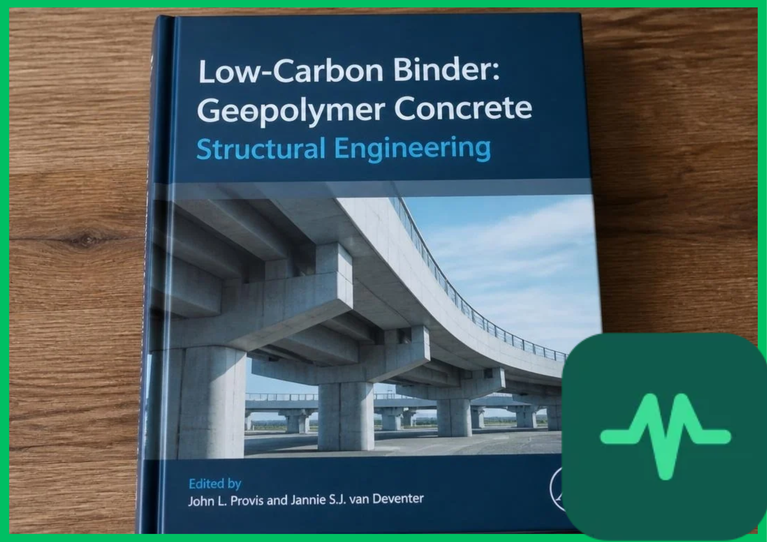
Chemical Activation and Polymerization Mechanics
The structural integrity of geopolymer concrete relies on alkali activation rather than traditional hydraulic cement hydration. Precursors rich in amorphous silica ( ) and alumina (
 )—including Class F fly ash, ground granulated blast furnace slag (GGBFS), and metakaolin—react with alkaline activator solutions composed of sodium hydroxide (
 ) and sodium silicate (
 ).
The activation process proceeds through three distinct thermodynamic stages: dissolution, condensation, and polymerization. Hydroxide ions ( ) attack the glassy aluminosilicate surface of the precursor particles, dissolving monomeric species like silicate (
 ) and aluminate (
 ) ions into aqueous solution. These dissolved ions form a saturated coagulated gel that undergoes polycondensation, linking into a rigid, three-dimensional amorphous network known as a sodium-aluminosilicate-hydrate (N-A-S-H) or calcium-aluminosilicate-hydrate (C-A-S-H) gel framework. This cross-linked polymer matrix traps water molecules within its nanoporous structure, yielding high early-stage mechanical strength without requiring calcium-silicate-hydrate (
 ) crystal growth.
Embodied Carbon Reductions and Life-Cycle Realities
Quantifying the environmental benefits of geopolymer concrete requires comparing its cradle-to-gate embodied carbon emissions against traditional Ordinary Portland Cement production. Producing one metric ton of OPC clinker generates between  and
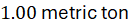 of
 (
 ), split evenly between fuel combustion and limestone decarbonation.
Conversely, utilizing industrial byproducts like fly ash or slag as raw precursors eliminates calcination emissions entirely. Life-cycle assessments (LCAs) published by academic research institutions and international environmental agencies confirm that geopolymer concrete reduces embodied greenhouse gas emissions by 65% to 85% compared to conventional OPC concrete mixes. While activator production (particularly sodium silicate synthesis) incurs upstream energy consumption, the net carbon balance remains exceptionally favorable, especially when utilizing locally sourced pozzolanic industrial wastes and renewable electrical power grids.
Mechanical Performance, Compressive Strength, and Curing Kinetics
Geopolymer concrete exhibits robust mechanical performance characteristics suitable for demanding structural engineering applications. Compressive strengths range from  to over
 (
 ), depending on the precursor-to-activator mass ratio, silica modulus (
 ), and curing thermal cycle.
Unlike OPC concrete that hardens via ambient hydration over a 28-day curing window, fly-ash-based geopolymers typically require thermal curing at temperatures between  and
 (
 and
 ) for 24 hours to accelerate polycondensation kinetics and achieve high early compressive strength exceeding
 (
 ) within 48 hours. Conversely, geopolymer mixes incorporating high proportions of calcium-rich ground granulated blast furnace slag cure effectively at ambient temperatures (
 [
 ]), forming hybrid C-A-S-H and N-A-S-H gel networks that develop rapid early strength without thermal chambers.
Technical Data Specifications of Geopolymer Concrete Parameters
| Material & Mechanical Parameter | Engineering Specification Range |
|---|---|
| Compressive Strength (28-Day) |  to  (  ) |
| Embodied Carbon Reduction vs. OPC | 65% to 85% lower greenhouse gas emissions |
| Thermal Curing Temperature Range |  to  (  to  ) for fly ash mixes |
| Chloride Diffusion Coefficient |  (high microstructural density) |
| Elevated Temperature Stability Limit | Up to  (  ) without explosive spalling |
Activator Solution Molarity ( ) |  to  aqueous concentration |
| Initial Setting Time (Ambient Mix) |  to 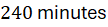 |
Durability, Chemical Resistance, and Microstructural Density
Beyond carbon reduction, geopolymer concrete demonstrates exceptional durability advantages over traditional OPC matrices, particularly in aggressive chemical and marine environments. Ordinary Portland Cement concrete undergoes severe degradation when exposed to acidic soils or sulfate-rich groundwater due to the leaching of calcium hydroxide ( ) and calcium-silicate-hydrate phases, which react with sulfate ions to form expansive gypsum and ettringite crystals that crack the concrete matrix.
Geopolymer binders lack free calcium hydroxide phases, rendering them virtually immune to sulfate attack and acid corrosion. Furthermore, the dense, amorphous three-dimensional microstructure of geopolymer concrete restricts chloride ion diffusion coefficients to less than  , preventing reinforcement rebar corrosion in marine infrastructure. High-temperature thermal stability is another key performance metric; geopolymer concrete retains structural integrity at elevated temperatures exceeding
 (
 ), whereas OPC concretes suffer explosive spalling and structural degradation at
 (
 ) due to chemically bound water vaporization and thermal expansion mismatch.
The Final Take
Optimizing geopolymer concrete embodied carbon reduction transforms structural engineering practices by replacing carbon-intensive Ordinary Portland Cement with durable alkali-activated binders. Citing UNEP industrial assessments and academic materials research, alkali-activated aluminosilicate matrices deliver high compressive strength, superior chemical resistance, and thermal stability while cutting embodied greenhouse gas emissions by up to 85%. By leveraging industrial byproducts and advanced polymerization chemistry, geopolymer concrete establishes an indispensable technical foundation for sustainable global infrastructure.

Comments (0)
Login to leave a comment.
No comments yet. Be the first to share your thoughts!