Thermodynamic Principles of Latent Heat Storage
The foundational physical mechanism distinguishing phase-change materials from traditional sensible thermal mass is the exploitation of latent heat during phase transformations. Sensible heat storage relies on the specific heat capacity ( ) of a building material, where temperature increases linearly in direct proportion to the thermal energy absorbed:


where  represents mass and
 denotes the temperature differential. Because human thermal comfort requires maintaining indoor air temperatures within a strict envelope (typically
 to
 [
 to
 ]), the allowable
 for sensible storage within drywall or concrete is narrow, severely limiting total heat absorption capacity.
Conversely, latent heat storage exploits the enthalpy of fusion ( ) released or absorbed during isothermal phase transitions. When ambient temperatures rise above the phase change threshold, solid PCMs absorb massive quantities of thermal energy while maintaining a constant temperature corresponding to their melting point:


Organic and inorganic phase-change materials engineered for building integration typically exhibit latent heat capacities ranging from  to
 (
 ), matching or exceeding the sensible heat capacity of standard concrete walls while operating across a minimal temperature variation of
 to
 (
 to
 ).
Chemical Classifications of Phase-Change Materials
Selecting appropriate phase-change materials for building envelope integration requires evaluating thermal, chemical, and economic performance criteria across organic, inorganic, and eutectic chemical categories.
- Organic PCMs (Paraffins and Fatty Acids): Paraffin waxes (
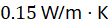
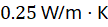
 ) and fatty acids (such as capric, lauric, and palmitic acids) exhibit congruent melting behavior, meaning they melt and freeze repeatedly without phase segregation or component separation. Paraffin waxes possess high latent heat capacities (
 to
 ), chemical stability, non-corrosiveness, and negligible supercooling. However, organic PCMs are flammable and possess low thermal conductivities (
 to
 ), requiring flame retardants and conductive additives.
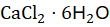
- Inorganic PCMs (Salt Hydrates): Salt hydrates—such as sodium sulfate decahydrate (
 ) and calcium chloride hexahydrate (
 )—offer high volumetric latent heat storage capacities (
 to
 ), high thermal conductivity (
 to
 ), and non-flammability. Despite these thermodynamic advantages, salt hydrates suffer from phase segregation during melting and severe supercooling, where liquid solutions fail to crystallize at the freezing point unless specialized nucleating agents are added to the chemical mixture.
- Eutectic PCMs: Eutectic mixtures combine two or more organic or inorganic compounds that melt and freeze synchronously at a precise, invariant minimum melting temperature, tailoring phase transition ranges to specific building climate zones.
Microencapsulation and Composite Panel Integration
Integrating liquid-phase PCMs directly into porous building materials—such as gypsum wallboard, concrete blocks, or plaster matrices—presents structural leakage risks when the material transitions to a liquid state during high-temperature daytime cycles. To prevent liquid leakage, industrial manufacturing processes employ microencapsulation.
Microencapsulation encapsulates microscopic PCM droplets (ranging from  to
 in diameter) inside a dense, chemically inert polymer shell, typically composed of melamine-formaldehyde, polymethyl methacrylate, or polyurethane. These microcapsules are compounded directly into paraffin wax composite panels or blended into wet gypsum slurry during drywall manufacturing, yielding building panels containing 25% to 40% PCM by weight.
Furthermore, because pure organic PCMs exhibit low thermal conductivities that impede rapid heat charging and discharging, composite panels incorporate thermally conductive fillers. Dispersing exfoliated graphite nanoplatelets, carbon nanotubes, or aluminum metal foam matrices throughout the polymer composite increases bulk thermal conductivity by 200% to 500%, accelerating thermal energy absorption rates during peak solar irradiation intervals.
Technical Data Specifications of Phase-Change Material Parameters
| Thermophysical & Material Parameter | Engineering Specification Range |
|---|---|
| PCM Melting Temperature Range |  to  (  to  for human comfort) |
Latent Heat Capacity ( ) |  to  (  ) |
| Bulk Thermal Conductivity | 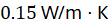 to 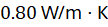 (unmodified vs. carbon-enhanced) |
| Microcapsule Diameter Size |  to  polymer shell matrix |
| PCM Mass Fraction in Drywall | 25% to 40% active latent material loading |
| Cyclic Durability Threshold |  melt-freeze cycles without degradation |
| Density (Solid/Liquid State) |  to  (  ) |
Indoor Temperature Stabilization and Peak Load Shifting
Deploying phase-change material composite panels within building envelopes transforms lightweight construction assemblies into high-performance thermal storage systems, achieving significant indoor temperature stabilization. During diurnal heating cycles, solar radiation striking exterior walls and windows elevates interior surface temperatures.
As indoor air temperatures approach the PCM melting threshold (typically set between  and
 [
 and
 ]), the encapsulated paraffin wax absorbs excess thermal energy isothermally, buffering interior air temperature spikes and reducing peak indoor temperatures by
 to
 (
 to
 ).
During nighttime cooling intervals, ambient temperatures drop, reversing the thermal gradient. The stored latent heat is rejected from the PCM panels to the cooler indoor air or expelled via nocturnal ventilation, solidifying the PCM matrix and resetting thermal storage capacity for the subsequent diurnal cycle. This thermal energy absorption and phase reversal shifts peak HVAC cooling loads away from high-tariff daytime hours toward off-peak nighttime periods, reducing total building cooling electricity consumption by 15% to 35%.
The Final Take
Optimizing phase-change material thermal regulation within building envelopes bridges advanced materials science with sustainable architectural thermodynamics. Citing IEA building efficiency assessments and academic materials research, integrating microencapsulated paraffin wax composite panels provides high latent heat storage density within human thermal comfort thresholds. By stabilizing indoor temperatures, eliminating sensible mass weight penalties, and reducing peak HVAC energy demand, phase-change materials establish an indispensable technical foundation for low-carbon building envelopes.
Comments (0)
Login to leave a comment.
No comments yet. Be the first to share your thoughts!