 ) ranging from
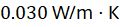 to
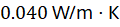 (approximate R-values of
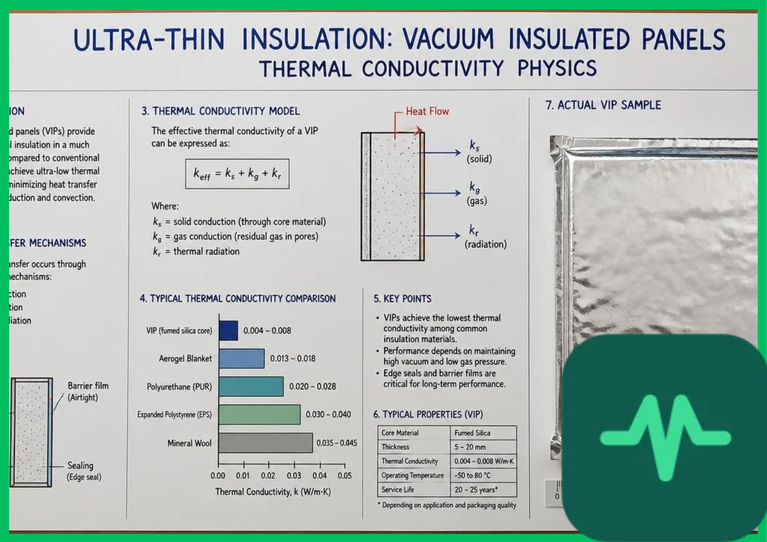
 ). In contrast, vacuum insulated panels (VIPs) eliminate gaseous conduction entirely by encasing a highly porous core within an evacuated, gas-tight barrier envelope, achieving initial thermal conductivities as low as
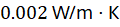 to
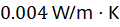 and delivering exceptional R-values exceeding
 (
 ).
Heat Transfer Modes and Knudsen Effect Mechanics
The foundational thermodynamic principle governing vacuum insulated panel performance is the suppression of thermal conductivity components within porous media. Total apparent thermal conductivity ( ) across any insulation material is the sum of three distinct physical mechanisms:


where  represents conductive heat transfer through the solid matrix skeleton,
 denotes thermal conduction through gas molecules filling pore spaces,
 accounts for radiative heat transfer via electromagnetic infrared emission, and
 represents internal fluid convective currents.
In standard insulation at atmospheric pressure, gaseous conduction ( ) accounts for 60% to 80% of total heat transfer. When the internal pressure of a porous core is evacuated below
 (
 ), the mean free path of air molecules exceeds the average pore diameter of the insulation material. This phenomenon, known as the Knudsen effect, restricts molecular collisions between gas molecules, effectively shutting down gaseous thermal conduction and dropping
 near zero.
Pyrogenic Silica Core Microstructure and Solid Conduction Suppression
Executing extreme thermal insulation requires specialized core materials that maintain high structural porosity under high-vacuum compression without collapsing the internal matrix. Vacuum insulated panels utilize pyrogenic silica (fumed silica) or precipitated silica powders as the core matrix.
Pyrogenic silica consists of amorphous silicon dioxide ( ) nanoparticles aggregated into three-dimensional branched chains, establishing a total porosity exceeding 90% to 95% with extremely tortuous, sub-micron pore sizes (typically
 to
 ). This intricate nano-porous structure minimizes solid conduction (
 ) by forcing thermal phonons to traverse long, convoluted pathways across microscopic point-contact bridges between silica nanoparticles. Furthermore, opacifying agents—such as silicon carbide (
 ) or titanium dioxide (
 ) particles—are blended into the silica core at mass concentrations of 5% to 10% to absorb and scatter infrared radiation, suppressing radiative heat transfer (
 ) across the panel cross-section.
Technical Data Specifications of VIP and Insulation Parameters
| Thermal Insulation Parameter | Conventional EPS / Mineral Wool | Advanced Vacuum Insulated Panel (VIP) |
|---|---|---|
Thermal Conductivity ( - Initial) |  to 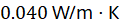 |  to 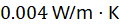 |
| Thermal Resistance (R-Value / inch) |  |  |
| Internal Core Material Composition | Expanded polymer / mineral fibers | Pyrogenic / fumed silica with opacifiers |
| Internal Evacuation Pressure Level | Atmospheric pressure ( ) |  to  high vacuum |
| Encapsulation Barrier Architecture | None (breathable fibrous matrix) | Multi-layer metallized polymer laminate film |
| Panel Thickness for Equivalent R-Value |  to  (  ) |  to  ( 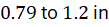 ) |
| Design Service Life Expectancy |  permanent structural stability | 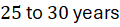 vacuum retention limit |
Envelope Barrier Lamination and Gas Permeation Physics
While pyrogenic silica cores provide near-zero thermal conductivity, maintaining vacuum stability over decades requires high-performance gas-tight envelope barriers. Over time, atmospheric gases—specifically nitrogen ( ), oxygen (
 ), and water vapor (
 )—permeate through polymer barrier films, increasing internal pressure and degrading thermal performance.
Manufacturers enclose the compressed silica core within multi-layer barrier laminates comprising polyethylene terephthalate (PET), ethylene vinyl alcohol (EVOH), and vacuum-deposited aluminum or aluminum foil layers sandwiched between protective polymer coatings. The overall annual pressure increase ( ) within the panel is governed by the gas transmission rate (GTR) and water vapor transmission rate (WVTR) of the laminate edge seals and film surface. Advanced metallized polymer films achieve oxygen transmission rates below
 and water vapor transmission rates below
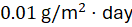 , ensuring that internal pressure remains below critical thermal degradation thresholds (
 ) across a 30-year operational building lifespan.
Thermal Bridge Elimination and Perimeter Edge Effects
Integrating vacuum insulated panels into building envelopes requires rigorous management of thermal bridging across panel edges and joints. Because VIP panels are wrapped in metallized foil barrier envelopes, lateral conductive heat transfer through the aluminum foil laminate at the panel perimeter creates a localized thermal bridge known as the edge effect.
The linear thermal transmittance ( -value) associated with panel edges can degrade the effective R-value of a building assembly if panels are installed without overlapping joints or thermal break strips. Building engineers utilize numerical finite-element heat transfer modeling to optimize panel dimensions (typically
 [
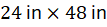 ]) and integrate protective rubberized or aerogel thermal break margins along panel perimeters, preserving overall envelope thermal resistance.
The Final Take
Mastering vacuum insulated panels thermal conductivity physics redefines building envelope design by delivering ultra-low thermal transmittance within ultra-thin structural profiles. Citing IEA building decarbonization assessments and building physics literature, evacuating pyrogenic silica nano-porous cores eliminates gaseous conduction and achieves R-values exceeding 30 per inch. By resolving envelope gas permeation limits and mitigating edge thermal bridging, vacuum insulated panels establish an indispensable technical foundation for high-efficiency zero-energy architecture.

Comments (0)
Login to leave a comment.
No comments yet. Be the first to share your thoughts!