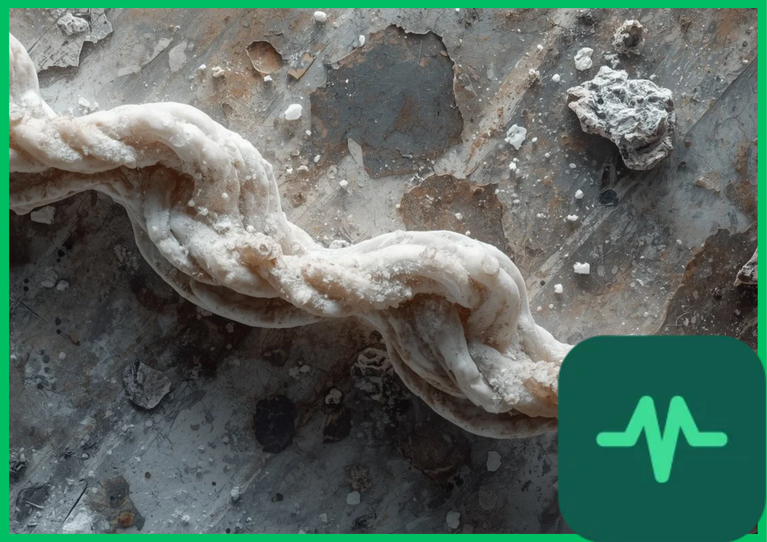
 ) during solid-liquid phase transitions to absorb or release large quantities of thermal energy at a constant or near-constant temperature.
Thermodynamic Principles and Latent Heat Storage Mechanics
The fundamental thermodynamic advantage of phase change materials over conventional building materials lies in their high latent heat storage capacity per unit volume. When a material undergoes a phase transition from solid to liquid, it absorbs thermal energy without experiencing a proportional rise in temperature.
The total stored thermal energy ( ) within a composite building envelope containing PCMs is expressed by the enthalpy (
 ) formulation across a temperature range:

where  represents the mass of the PCM,
 and
 denote the specific heat capacities of the solid and liquid phases respectively,
 is the phase change melting temperature, and
 is the latent heat of fusion.
During peak daytime solar radiation or elevated ambient temperatures, PCMs embedded in wallboards absorb incoming heat flux as latent energy while transitioning from solid to liquid at a fixed melting point (typically engineered between  and
 or
 to
 ). As ambient temperatures decline during evening hours, the stored latent heat is released back into the interior space or rejected outdoors, flattening diurnal indoor temperature curves and stabilizing thermal comfort.
Classification of Phase Change Materials in Construction
Selecting appropriate phase change materials for building envelope integration requires evaluating thermal properties, chemical stability, and phase change temperature thresholds across three primary material categories:
- Organic PCMs (Paraffins and Fatty Acids): Paraffin waxes (
 ) and fatty acid derivatives exhibit high latent heat storage capacities (
 to
 ), chemical stability, and negligible supercooling. They undergo congruent melting without phase segregation. However, raw organic PCMs are flammable and require containment matrices to prevent liquid leakage during phase transitions.
- Inorganic PCMs (Salt Hydrates): Salt hydrates—such as sodium sulfate decahydrate (
 ) and calcium chloride hexahydrate ($\text{CaCl}_2 \cdot 6\text{H}_2\text{O}`)—offer high volumetric latent heat storage densities and non-flammability. Despite these thermal advantages, salt hydrates suffer from phase separation and supercooling during solidification cycles, necessitating the addition of nucleating agents and thickeners.
- Eutectic Mixtures: Comprising precise combinations of organic or inorganic compounds, eutectics melt and freeze concurrently at a sharp, defined temperature point, optimizing thermal storage efficiency for specific climatic zones.
Microencapsulation Technology and Envelope Integration
Integrating raw, uncontained liquid PCMs directly into porous building materials is impractical due to leakage risks during melting cycles. Modern construction engineering utilizes microencapsulation technology, enclosing microscopic PCM droplets ( to
 in diameter) within dense, cross-linked polymeric or inorganic shells (such as melamine-formaldehyde or silica).
These microencapsulated phase change materials (MPCMs) are seamlessly integrated into diverse building products:
- Gypsum Wallboards: MPCMs are blended directly into gypsum plaster slurries during manufacturing, yielding wallboards containing 20% to 35% PCM by weight. These composite boards double the effective thermal mass of standard drywall without adding structural dead weight.
- Concrete Masonry Units (CMUs): Impregnating lightweight aggregate or hollow cores with stabilized PCM slurries enhances the thermal inertia of concrete walls in commercial buildings.
- Insulation Blankets: Loose microencapsulated powders or PCM-infused fibrous batts are integrated into fiberglass or mineral wool insulation layers, providing simultaneous sensible and latent thermal resistance.
Technical Data Specifications of Phase Change Materials
| PCM Material Classification | Melting Point (Tm) Range | Latent Heat Capacity (ΔHf) | Thermal Conductivity (k) | Density (Solid / Liquid) |
|---|---|---|---|---|
| Paraffin Wax (Organic) |  to  (  to  ) |  to  | 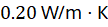 |  |
| Fatty Acid (Capric-Lauric) |  to  (  to  ) |  to  | 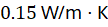 |  |
Salt Hydrate (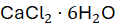 ) |  (  ) |  to  | 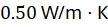 |  |
| Eutectic Organic Blend |  to  (  to  ) |  to  | 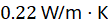 |  |
Peak Cooling Load Reduction and HVAC Energy Optimization
Implementing phase change material thermal storage building envelopes alters transient building thermodynamics, mitigating peak cooling load demands. In cooling-dominated climates, internal heat gains from solar radiation, occupant metabolic activity, and electrical appliances drive afternoon indoor air temperatures upward.
When interior surface temperatures exceed the PCM melting threshold, the embedded microcapsules absorb thermal energy isothermally. This latent heat absorption dampens peak indoor air temperature swings by  to
 (
 to
 ), delaying peak thermal transmission through the envelope by 3 to 5 hours.
Flattening thermal load profiles prevents mechanical HVAC systems from operating at maximum capacity during peak electricity tariff hours. Empirical building science research published by academic consortia and ENERGY STAR technical evaluations confirms that PCM-enhanced building envelopes reduce peak cooling electricity demand by 15% to 30% and lower total annual space cooling energy consumption by 10% to 20%, minimizing compressor cycling wear and extending mechanical equipment lifespans.
Thermal Cycling Durability and Supercooling Mitigation
Long-term structural reliability requires PCMs to maintain phase change enthalpy and chemical stability across thousands of freeze-thaw thermal cycles. Organic paraffin waxes exhibit exceptional thermal durability, retaining over 95% of their latent heat storage capacity after 5,000 continuous thermal cycles. Conversely, inorganic salt hydrates are susceptible to phase segregation, where anhydrous salt settles out of the aqueous solution during melting, degrading latent heat performance over time.
To prevent degradation, industrial manufacturers incorporate thickening agents—such as fumed silica or bentonite clay—to maintain homogeneous salt-water suspensions. Furthermore, addressing supercooling (where liquid salt hydrates fail to solidify at their theoretical freezing point) requires introducing specialized heterogeneous nucleating agents that provide crystal growth sites, restricting supercooling temperature differentials to less than  (
 ).
Life-Cycle Assessments and Global Market Scalability
Quantitative life-cycle assessments (LCAs) published by the UNEP and international building research institutes indicate that the embodied energy required to manufacture microencapsulated phase change materials is offset by operational energy savings within 2 to 4 years of continuous building service. As global green building standards mandate higher thermal performance and net-zero energy compliance, latent mass phase change technologies provide an effective pathway for upgrading lightweight building envelopes without requiring massive structural retrofits. By bridging the gap between passive thermal storage and active architectural design, phase change materials establish a durable foundation for energy-efficient building operations.

Comments (0)
Login to leave a comment.
No comments yet. Be the first to share your thoughts!