
Multi-Layer Thin-Film Stack Physics and Tungsten Oxide Electrochromism
Electrochromic glazing operates as a transparent, multi-layered solid-state electrochemical cell integrated between two panes of architectural glass. The active coating stack comprises five distinct functional layers deposited via magnetron sputtering:
- Transparent Conductive Oxides (TCO): Outer layers of fluorine-doped tin oxide (
 ) or indium tin oxide (
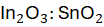 ) form the electrical bus bars, applying a uniform electric field across the assembly without obstructing visible light.
- Electrochromic Active Layer: Typically composed of transition metal oxides such as tungsten trioxide (
 ), this layer undergoes reversible optical changes upon ion and electron intercalation.
- Ion Conductor (Electrolyte): A solid or polymeric ionic conductor layer (such as lithium tantalate or tantalum oxide) allows the free migration of small cations (
 or
 ) while blocking electrical current flow.
- Ion Storage Counter Electrode: A complementary layer (such as nickel oxide
 or vanadium pentoxide
 stores ions when the device is in a bleached state.
Applying a low direct-current (DC) voltage (typically  to
 ) forces lithium ions and electrons to migrate from the counter electrode, through the ion conductor, and into the tungsten oxide layer. This electrochemical reduction reaction alters the electronic band structure of the tungsten trioxide, introducing a broad optical absorption band in the near-infrared and visible regions. Reversing the polarity of the applied voltage extracts the ions back into the counter electrode, returning the glass to a clear, bleached state.
Solar Heat Gain Coefficient (SHGC) and Visible Light Transmission (VLT)
Quantifying the thermal performance of dynamic glazing requires analyzing two primary optical metrics: the Solar Heat Gain Coefficient (SHGC) and Visible Light Transmission (VLT). SHGC defines the fraction of incident solar radiation admitted through the window, both directly transmitted and absorbed followed by inward release, expressed on a scale from 0.0 to 1.0. VLT measures the percentage of the visible light spectrum (wavelengths between  and
 ) passing through the glass assembly.
In its bleached state, high-performance electrochromic glass achieves a VLT of 60% to 70% and an SHGC of  to
 , maximizing daylight harvesting and passive solar heating during cold winter months. When fully tinted, the active layer suppresses VLT down to 1% to 5% and drives SHGC down to
 to
 . This dramatic reduction blocks up to 90% of incoming solar heat radiation, preventing indoor thermal discomfort and eliminating peak cooling loads without deploying internal mechanical blinds or roller shades.
Thermodynamic Realities and HVAC Energy Load Reductions
Controlling thermal radiation at the window pane level alters the broader thermodynamic equilibrium of the building envelope. Incident solar radiation striking interior furnishings and flooring is absorbed and converted into long-wave infrared thermal radiation (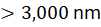 ). Ordinary window glass is opaque to long-wave infrared radiation, trapping thermal energy inside the interior space—a phenomenon known as the greenhouse effect.
By dynamically reducing SHGC prior to direct solar radiation peaks, electrochromic smart glass prevents short-wave solar radiation from entering the indoor space, stopping the subsequent conversion into trapped long-wave thermal energy. Empirical building science research published by ENERGY STAR and academic engineering consortia demonstrates that dynamic electrochromic glazing reduces peak cooling energy demand by 20% to 30% and cuts total annual HVAC electricity consumption by 15% to 25% in commercial office buildings across diverse global climates.
Technical Data Specifications of Electrochromic Glazing Parameters
| Technical Parameter | Engineering Specification Range |
|---|---|
| Visible Light Transmission (VLT - Bleached) | 60% to 70% maximum clarity |
| Visible Light Transmission (VLT - Tinted) | 1% to 5% deep tint state |
| Solar Heat Gain Coefficient (SHGC - Bleached) |  to  baseline solar admittance |
| Solar Heat Gain Coefficient (SHGC - Tinted) |  to  maximum thermal rejection |
| Switching Operating Voltage |  to  DC low-power drive |
| Full Tint Switching Kinetics |  to  transition duration |
| U-Factor (Double-Glazed Unit) | 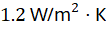 to 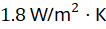 (  to  ) |
Building Management System (BMS) Integration and Automated Tinting
Maximizing the operational efficiency of electrochromic smart glass requires integration with computerized Building Management Systems (BMS) and automated facade control networks. Automated control algorithms process real-time environmental telemetry from exterior pyranometers, solar azimuth tracking sensors, and interior occupancy detectors.
When solar irradiance exceeds designated thresholds (typically  or
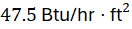 ), the BMS transmits low-voltage switching signals to specific architectural zones, initiating graduated tinting cycles. Advanced predictive algorithms also account for cloud cover forecasts and building thermal mass inertia, preemptively adjusting glass tinting to optimize daylight autonomy while preventing glare on computer workstations. Because electrochromic coatings consume electrical power only during the active switching phase—drawing zero sustained power to maintain a static tint state—parasitic electrical loads remain negligible, averaging less than
 of active glass area during transitions.
Global Market Adoption and Architectural Integration
As global green building standards—such as LEED and BREEAM—impose stricter energy efficiency requirements on structural envelopes, electrochromic smart glass transitions from a specialty architectural feature into a standard specification for high-performance buildings. Quantitative assessments published by the IEA confirm that dynamic glazing technologies eliminate the need for exterior louver systems and motorized window treatments, reducing structural framing weight and simplifying building maintenance. By combining tungsten oxide electrochromic chemistry with intelligent microelectronics, smart glass establishes precise thermal and visual control across modern architectural facades.

Comments (0)
Login to leave a comment.
No comments yet. Be the first to share your thoughts!