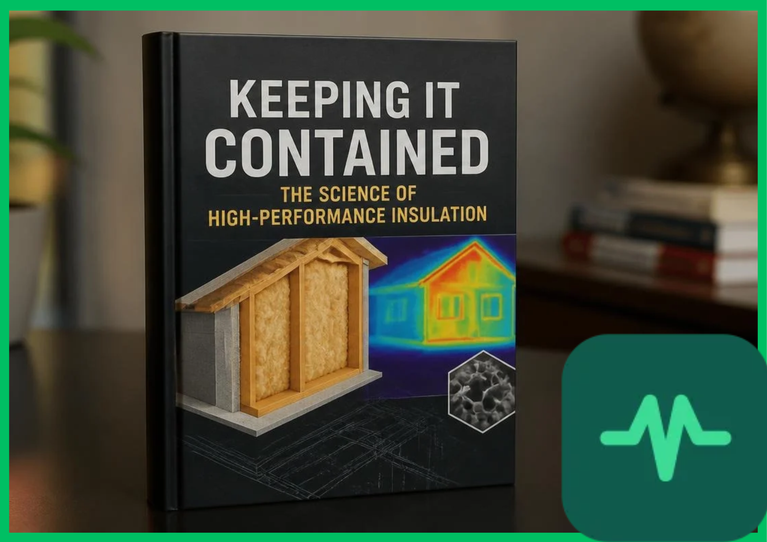
A biting wind whistles past the window. Yet, you feel completely comfortable.
You do not shiver. You do not reach for a heavy sweater.
Now imagine stepping into an older, drafty house on that same freezing morning.
You feel a constant, chilly draft brushing against your ankles. Cold air leaks through the walls, and the heater runs constantly, struggling to keep up with the chill seeping in from outside.
What makes the difference between those two homes?
It is not just the size of the furnace. It is how well the building holds onto its air.
For generations, humans tried to stay warm by burning more fuel in bigger heaters. We poured cheap energy into leaky buildings, letting precious warmth escape straight through the walls, floors, and roofs.
That wasteful habit drains family bank accounts and pumps massive amounts of carbon pollution into our atmosphere.
A quiet structural revolution is changing how we build and retrofit our homes.
According to residential building efficiency reports from the International Energy Agency (IEA), sustainable urban guidelines from the United Nations Environment Programme (UNEP), energy conservation standards from ENERGY STAR, and academic building physics research, high-performance insulation is transforming architecture.
By prioritizing building envelope insulation standards, passive design principles, and airtight construction, we can lock comfortable temperatures inside our homes with zero waste.
Here is how thermal insulation works, why reducing thermal bridges stops energy loss, and how airtight building envelopes secure a sustainable future.
The Hidden Leaks in Our Homes
To understand why insulation matters so much, you have to look at how buildings lose energy.
Many people assume heat escapes a house simply because building materials like wood, brick, or concrete let cold air pass straight through.
That is only part of the story.
The bigger culprit is uncontrolled air leakage and thermal bridging.
Thermal bridging happens when highly conductive materials—like wood studs, steel framing, or concrete beams—cut straight through a wall, creating an easy physical pathway for heat to flow outward in winter or inward in summer.
Heat naturally moves toward cold. If your walls have gaps, cracks, or poor insulation, warm air rushes outside relentlessly.
Older houses leak so much air that experts often compare living in them to leaving a window wide open all winter long.
To fix that waste, we had to stop fighting our heating bills and start fixing the physical boundary between inside and outside.
What Is a High-Performance Building Envelope?
The building envelope is the physical separator between the interior living space of a home and the outdoor environment.
It includes your roof, exterior walls, windows, doors, and foundation floor.
In a standard building, that envelope is full of microscopic gaps and thermal weak spots.
In a high-performance home built around passive design principles, the envelope acts like a continuous, protective thermos bottle.
The science of high-performance insulation relies on three core concepts:
- Continuous Insulation Layers: Wrapping the exterior or interior framing with high-resistance insulation that stops thermal bridging dead in its tracks.
- Airtight Air Barriers: Sealing every joint, seam, and penetration so conditioned indoor air cannot leak out through cracks.
- High-Performance Windows: Installing multi-pane glazing units that prevent radiant heat transfer without blocking natural sunlight.
When these elements work together, the house stops leaking energy.
The Physics of Thermal Resistance
How does insulation actually trap heat inside a wall?
It comes down to microscopic physics.
Heat moves in three ways: conduction, convection, and radiation. Insulation targets conduction and convection directly.
Materials like mineral wool, cellulose, expanded polystyrene, or spray foam are packed with millions of tiny, trapped pockets of air.
Air is a poor conductor of heat.
When you trap tiny pockets of air inside a solid matrix, you prevent air currents from circulating and carrying heat away.
Academic building physics research shows that the effectiveness of insulation is measured by its thermal resistance, commonly known as R-value in imperial units or RSI-value in metric units.
A higher R-value means greater resistance to heat flow.
In a high-performance building envelope, insulation thickness and material density are engineered to match local climate extremes, ensuring that indoor warmth stays firmly inside during freezing winters and outdoor heat stays outside during scorching summer days.
Stopping Thermal Bridging and Air Leaks
Installing thick insulation is useless if thermal bridges allow heat to bypass the barrier.
Think of a steel or wood stud in a standard wall. Steel conducts heat roughly 400 times faster than wood, and wood conducts heat much faster than insulation foam.
If studs stretch continuously from the cold exterior to the warm interior, they form thermal highways that bleed heat right out of your home.
High-performance building standards require an extra layer of continuous exterior insulation—often called an exterior thermal break—that covers those framing studs completely.
Furthermore, sealing air leaks prevents moisture from entering the wall cavity.
According to ENERGY STAR efficiency guidelines, when warm indoor air leaks into cold wall cavities, it cools down and drops its moisture through condensation. That trapped moisture can cause mold, rot structural wood, and ruin insulation performance.
An airtight building envelope managed by smart vapor-control layers keeps walls dry, healthy, and structurally sound for decades.
Saving Energy and Protecting Our Planet
The impact of high-performance insulation reaches far beyond individual comfort.
Buildings account for a massive share of global energy consumption, largely driven by heating and cooling systems running continuously to combat drafty, poorly insulated walls.
When we upgrade building envelope insulation standards worldwide, energy demand drops instantly.
According to IEA building decarbonization assessments, sealing and insulating existing housing stock is one of the most cost-effective climate solutions available today.
UNEP urban efficiency frameworks highlight that better insulation lowers utility bills for families while reducing the peak load on regional electrical grids.
When homes require a fraction of the energy to stay comfortable, utilities can power those buildings easily with clean, renewable wind and solar energy.
Building a Snug, Sustainable Future
High-performance insulation proves that the simplest engineering solutions are often the most powerful.
We no longer have to accept drafty rooms, high heating bills, or wasteful energy consumption as a normal part of life.
By combining continuous insulation, airtight construction, and passive design principles, we build homes that act as true sanctuaries against the weather.
We stop burning excess fuel, we protect our natural environment, and we keep our families safe and warm.
Through smart building science and thoughtful craftsmanship, high-performance insulation locks comfort inside and lights our way toward a sustainable future.
Comments (0)
Login to leave a comment.
No comments yet. Be the first to share your thoughts!