
Thermodynamic Cell Potentials and Electrochemical Kinetics
The foundational thermodynamic principle governing PEM water electrolysis is the splitting of liquid water ( ) into hydrogen (
 ) and oxygen (
 ) via an externally applied electrical potential. The overall chemical reaction is expressed as:


At standard ambient temperature and pressure ( [
 ],
 [
 ]), the reversible cell voltage (
 ) required for water splitting is
 , representing the thermodynamic change in standard Gibbs free energy (
 ). However, considering the total enthalpy change (
 ), the thermoneutral voltage (
 ) required to sustain the endothermic water-splitting reaction without external heat input is
 .
In operating PEM electrolyzers, actual cell voltages ( ) exceed the thermoneutral threshold due to cumulative internal polarization losses:


where  represents anodic and cathodic activation overpotentials,
 accounts for ohmic resistance across the solid polymer membrane and bipolar plates, and
 denotes mass transport limitations at high current densities.
Half-Cell Reactions and Noble-Metal Catalyst Requirements
The interior architecture of a PEM electrolyzer cell consists of a membrane electrode assembly (MEA) sandwiched between porous titanium transport layers (PTLs). The electrochemical half-cell reactions occur at the catalyst layers bonded directly to the perfluorosulfonic acid (PFSA) solid polymer membrane (such as Nafion):
- Anode Reaction (Oxygen Evolution Reaction - OER): Water is oxidized at the anode catalyst interface, generating oxygen gas, protons (
 ), and free electrons:
- Cathode Reaction (Hydrogen Evolution Reaction - HER): Protons migrating across the solid polymer membrane combine with electrons at the cathode catalyst layer to produce high-purity hydrogen gas:

The oxygen evolution reaction exhibits sluggish electrochemical kinetics, requiring high activation overpotentials. To withstand the highly acidic, oxidizing environment ( ) and elevated anodic potentials (
 ), state-of-the-art PEM electrolyzers utilize scarce, noble-metal iridium oxide (
 ) or ruthenium oxide (
 ) catalyst loadings ranging from
 to
 .

The hydrogen evolution reaction proceeds rapidly with minimal activation energy, utilizing dispersed platinum nanoparticles supported on high-surface-area carbon ( ) with low catalyst loadings (
 to
 ).
Technical Data Specifications of PEM Electrolyzer Parameters
| Electrochemical & Operational Parameter | Engineering Specification Standard |
|---|---|
Reversible Cell Voltage ( ) |  at standard conditions (  [  ]) |
Thermoneutral Cell Voltage ( ) |  thermodynamic energy balance point |
Operational Current Density ( ) |  to  active area density |
| Specific Electrical Energy Consumption |  to  of green  produced |
| Anode Catalyst Composition & Loading | Iridium oxide ( ),  |
| Cathode Catalyst Composition & Loading | Platinum-on-carbon ( ),  |
| Solid Polymer Membrane Thickness |  to  perfluorosulfonic acid (PFSA) |
Ohmic Resistance, Mass Transport, and Faraday Efficiency
Maximizing PEM electrolyzer efficiency requires minimizing ohmic resistance and mass transport polarization losses. Ohmic overpotential ( ) is governed by ionic resistance within the PFSA membrane and electronic contact resistance between titanium bipolar plates and porous transport layers. Advanced manufacturing techniques utilize ultrathin membranes (
 to
 ) and titanium gold-plated or platinum-coated current collectors to reduce total area-specific resistance (ASR) below
 .
Mass transport overpotentials ( ) dominate at elevated current densities (
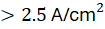 ), where rapid gas bubble generation (
 and
 ) inside the porous transport layers obstructs liquid water mass flux to active catalyst sites. Optimizing PTL micro-pore morphology and hydrophilicity prevents gas bubble blanketing and maintains high Faraday efficiency (
 ), ensuring that nearly all electrical charge passing through the cell contributes directly to hydrogen gas generation rather than parasitic side reactions.
Dynamic Load Flexibility and Renewable Energy Integration
A primary operational advantage of PEM water technology over traditional alkaline systems is superior dynamic load flexibility. Because the solid polymer electrolyte membrane maintains high ionic conductivity without requiring fluid circulation startup delays, PEM electrolyzers ramp power output from 0% to 100% within milliseconds.
This rapid transient capability enables direct, unbuffered coupling with intermittent renewable electricity sources such as utility-scale wind and solar farms. Electrolyzer control systems modulate operational voltage and water feed rates dynamically, tracking fluctuating renewable generation profiles while maintaining high partial-load operating efficiencies and avoiding compressor energy penalties by delivering pressurized hydrogen directly up to  (
 ).
The Final Take
Mastering proton exchange membrane electrolyzer efficiency mechanics optimizes industrial green hydrogen production by reducing cell overpotentials and maximizing noble-metal catalyst durability. Citing IEA hydrogen roadmaps and electrochemical literature, optimizing thermodynamic operating voltages, minimizing membrane ohmic resistance, and enhancing mass transport kinetics yields high-efficiency water splitting. By combining rapid dynamic load tracking with high-pressure hydrogen generation, PEM electrolysis establishes an indispensable technical foundation for global clean energy infrastructure.



Comments (0)
Login to leave a comment.
No comments yet. Be the first to share your thoughts!