
 ) in liquid form requires maintaining extreme cryogenic temperatures below
 (
 or
 ) at standard atmospheric pressure. Because the latent heat of vaporization of liquid hydrogen is exceptionally low—approximately
 —even minute parasitic heat leaks penetrating vacuum-insulated storage vessels cause rapid fluid vaporization, generating boil-off gas (BOG) losses that degrade energy storage efficiency. Mitigating boil-off requires rigorous control over conductive heat transfer, high-vacuum thermal insulation barriers, and catalytic spin-state stabilization.
Cryogenic Boiling Point Physics and Latent Heat Realities
The fundamental thermodynamic challenge of storing liquid hydrogen lies in its extreme physical properties relative to other cryogenic fluids such as liquefied natural gas (LNG) or liquid nitrogen. Molecular hydrogen liquefies at  (
 [
 ]) under a nominal pressure of
 (
 ). The latent heat of vaporization (
 ) of liquid hydrogen is remarkably low at
 (
 ), compared to
 for liquid oxygen and over
 for water.
Because of this minimal latent heat threshold, minimal thermal energy ingress instantly vaporizes a high mass fraction of the stored liquid inventory. Parasitic heat transfer into the storage container—whether driven by thermal conduction through structural support struts, convection across residual gas molecules, or thermal radiation through insulation layers—induces continuous fluid boiling. Unmitigated boil-off rates in standard cryogenic tanks range from 0.4% to 3.0% of total liquid inventory per day, representing substantial energy losses and safety hazards in long-term hydrogen logistics chains.
Ortho-to-Para Hydrogen Conversion and Exothermic Catalysis
A unique thermodynamic phenomenon complicating liquid hydrogen storage is the nuclear spin isomerism of diatomic hydrogen molecules. Molecular hydrogen exists in two distinct nuclear spin configurations:
- Orthohydrogen: The nuclear spins of the two hydrogen atoms are parallel (triplet state, total nuclear spin
 ). At ambient and room temperatures, normal hydrogen consists of an equilibrium ratio of 75% orthohydrogen and 25% parahydrogen.
- Parahydrogen: The nuclear spins are antiparallel (singlet state, total nuclear spin
 ). At liquid hydrogen boiling temperatures (
 ), thermodynamic equilibrium shifts to 99.8% parahydrogen and 0.2% orthohydrogen.
The spontaneous, uncatalyzed conversion from the high-energy ortho state to the low-energy para state is an exothermic reaction releasing approximately  of thermal energy—an amount exceeding the latent heat of vaporization itself. When normal hydrogen is liquefied and stored without prior conversion, the unassisted room-temperature ortho-to-para transition proceeds slowly over days and weeks, releasing internal heat that boils off 1% to 2% of the liquid inventory daily. Cryogenic liquefaction plants eliminate this internal heat source by integrating active ferric oxide (
 ) or hydrous iron oxide catalysts within the liquefaction circuit, ensuring that hydrogen enters storage tanks in a fully converted parahydrogen state.
Multi-Layer Insulation (MLI) and High-Vacuum Thermodynamics
Preventing thermal radiation and conductive heat transfer into cryogenic liquid storage vessels requires advanced multi-layer insulation (MLI) systems deployed inside high-vacuum annular spaces. Storage tanks feature a dual-walled architecture comprising an inner stainless-steel or aluminum vessel containing the liquid hydrogen surrounded by an outer carbon-steel vacuum shell.
The annular space between the inner and outer vessels is evacuated to high-vacuum pressures below  (
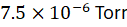 ), virtually eliminating gaseous thermal conduction and convection. To suppress radiative heat transfer—which scales with the fourth power of absolute temperature (
 )—engineers wrap the inner vessel with 30 to 80 reflective radiation shields. These shields consist of ultra-thin aluminized Mylar or crinkled copper foils separated by low-conductivity spacer netting (such as fiberglass scrim or dacron mesh). Effective thermal conductivity (
 ) across advanced MLI blankets drops below
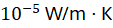 , restricting daily boil-off losses to less than 0.1% to 0.3% in industrial-scale spherical storage tanks.
Technical Data Specifications of Cryogenic Storage Parameters
| Cryogenic & Thermodynamic Parameter | Engineering Specification Standard |
|---|---|
Liquid Hydrogen Boiling Point ( ) |  (  [  ] at  ) |
Latent Heat of Vaporization ( ) |  (  ) low thermal threshold |
| Ortho-to-Para Conversion Heat Release |  exothermic transition energy |
| Annular High-Vacuum Pressure Target |  ( 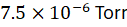 ) residual gas level |
| Multi-Layer Insulation (MLI) Density |  |
Effective Thermal Conductivity ( ) | 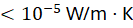 across MLI blanket assembly |
| Unmitigated Boil-Off Rate (BOG) | 0.4% to 3.0% daily liquid inventory vaporization loss |
Boil-Off Gas (BOG) Management, Re-Liquefaction, and Pressure Control
Despite advanced multi-layer insulation and ortho-to-para conversion, residual boil-off gas accumulates continuously within the ullage space of liquid hydrogen storage tanks. Managing this vapor pressure requires engineered recovery systems rather than simple venting.
Large-scale cryogenic storage terminals deploy closed-loop refrigeration re-liquefaction plants. Boil-off gas is drawn from the tank ullage, compressed via oil-free cryogenic compressors, and routed through reverse-Brayton cycle helium refrigerators or Gifford-McMahon cryocoolers. These cryocoolers re-cool the hydrogen vapor down to  , condensing it back into liquid state and returning it to the main storage vessel with zero atmospheric venting. For mobile transportation units (such as cryogenic trailers and maritime bunker ships), auto-frigeration systems or pressure-build vaporizers utilize boil-off gas directly as fuel for dual-footprint propulsion engines, eliminating methane and carbon emissions while maintaining safe ullage pressure thresholds.
The Final Take
Mastering liquid hydrogen cryogenic boil-off mitigation physics secures the energetic viability of large-scale zero-emission hydrogen storage and transport. Citing IEA hydrogen infrastructure roadmaps and cryogenic literature, controlling extreme latent heat thresholds, executing complete ortho-to-para catalytic conversion, and deploying high-vacuum multi-layer insulation suppresses boil-off losses below industrial viability limits. By integrating closed-loop re-liquefaction and advanced thermal barrier engineering, liquid hydrogen storage establishes a dependable foundation for global clean energy logistics.



Comments (0)
Login to leave a comment.
No comments yet. Be the first to share your thoughts!