
 or
 inside multi-layer vacuum vessels. Backed by academic engineering research, this analysis breaks down boil-off mitigation and tank design.
 (
 or
 ), sitting just above absolute zero. According to International Energy Agency (IEA) hydrogen infrastructure analyses and academic cryogenic research, establishing scalable liquid hydrogen supply chains depends directly on overcoming severe thermodynamic barriers. These operational hurdles include high liquefaction energy penalties, intense thermal radiation heat leaks, and inevitable boil-off gas (BOG) losses. Managing liquid hydrogen storage thermodynamics demands precision engineering across vacuum-jacketed vessel architecture, multilayer insulation systems, and ortho-to-para hydrogen catalytic conversion.
Cryogenic Liquefaction Thermodynamics and Exergy Penalties
Hydrogen gas liquefaction is an exceptionally energy-intensive thermodynamic process. At ambient temperature and atmospheric pressure, normal hydrogen exists as a diatomic gas with a boiling point of  (
 or
 ) at
 (
 ). Cooling hydrogen from ambient conditions down to liquid state requires overcoming massive enthalpy and entropy reductions.
The theoretical minimum work required for hydrogen liquefaction is dictated by the Carnot cycle efficiency limit, but actual industrial Claude or reversed Brayton refrigeration cycles operate with significantly lower thermodynamic efficiencies. Specific energy consumption (SEC) for commercial large-scale liquefaction plants ranges from  to
 of hydrogen processed. This electrical energy input represents approximately 30% to 45% of the total lower heating value (LHV) energy content of the hydrogen itself (
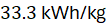 ), imposing a heavy operational efficiency penalty on liquid hydrogen supply chains compared to compressed gaseous storage.
Ortho-Para Spin Isomer Conversion and Exothermic Heat Release
A unique thermodynamic challenge inherent to liquid hydrogen storage involves the nuclear spin states of the diatomic hydrogen molecule. Hydrogen exists in two distinct isomeric forms based on the relative spin alignment of its two protons:
- Ortho-Hydrogen: Nuclear spins of both protons are parallel, representing a triplet state. At room temperature, thermal equilibrium dictates a composition of 75% ortho-hydrogen and 25% para-hydrogen, known as normal hydrogen.
- Para-Hydrogen: Nuclear spins of protons are antiparallel, representing a singlet state. At liquid hydrogen temperatures (
 or
 [
 ]), thermodynamic equilibrium shifts entirely to 99.8% para-hydrogen.
The transition from ortho-hydrogen to para-hydrogen is an exothermic chemical reaction releasing  of thermal energy. Because this heat of conversion exceeds the latent heat of vaporization of liquid hydrogen (
 ), un-catalyzed normal hydrogen stored in cryogenic tanks converts spontaneously to the para state over time. This unmanaged internal heat release vaporizes up to 1.5% of the liquid inventory per hour. Industrial storage systems prevent this catastrophic self-boil-off by passing hydrogen over hydrated iron(III) oxide (
 , or iron oxide) or nickel-silica gel catalysts during the liquefaction phase, forcing complete conversion to para-hydrogen before filling the storage vessel.
Vacuum-Jacketed Vessel Design and Heat Leakage Mechanics
To isolate cryogenic liquid from ambient environmental heat, industrial storage tanks utilize double-walled vacuum-jacketed pressure vessel architecture. The inner vessel, constructed from austenitic stainless steels (such as AISI 304L or 316L) or specialized aluminum alloys (such as Al 5083) that retain ductility at cryogenic temperatures, holds the liquid hydrogen.
The annular space between the inner and outer vessel is evacuated to high vacuum levels below  (
 ). This high vacuum eliminates convective and conductive heat transfer through gas molecules. However, total heat ingress (
 ) into the liquid core comprises three distinct physical pathways:
- Thermal Radiation (
 ): Radiative heat transfer governed by the Stefan-Boltzmann law, scaling with the fourth power of absolute temperature differences between the ambient outer shell (
 or
 [
 ]) and the inner cryogenic liquid (
 or
 [
 ]).
- Solid Conduction (
 ): Heat conducted through structural support struts, piping penetrations, and instrumentation wiring linking the outer ambient shell to the inner cryogenic tank.
- Residual Gas Conduction (
 ): Minor conductive heat transfer contributed by outgassing molecules remaining within the annular vacuum space.
Multilayer Insulation (MLI) and Radiation Shielding Physics
Because thermal radiation dominates heat transfer across cryogenic temperature differentials, liquid hydrogen storage tanks wrap the inner vessel in Multilayer Insulation (MLI) blankets. MLI systems consist of 20 to 80 alternating layers of highly reflective radiation shields—typically thin embossed aluminum or vacuum-deposited silver on polyethylene terephthalate (Mylar) films—separated by low-conductivity spacer materials such as Dacron net, glass paper, or dacron scrim.
Each reflective layer acts as a thermal radiation barrier, intercepting infrared photons and reflecting them back toward the warm outer boundary. The effective thermal conductivity ( ) of high-performance MLI operating under a high vacuum drops below
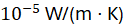 . Industry standards for stationary large-scale spherical storage tanks targeting capacities exceeding
 (
 ) require overall heat flux rates to remain below
 , limiting natural boil-off rates to between 0.05% and 0.2% of total tank volume per day. Mobile transportation trailers and smaller cryogenic vessels experience higher boil-off rates, ranging from 0.3% to 1.0% per day due to structural support bridge connections.
Boil-Off Gas (BOG) Management and Zero Boil-Off Technologies
Despite advanced multilayer insulation and vacuum isolation, parasitic heat ingress causes continuous liquid vaporization, generating boil-off gas (BOG) within the tank ullage space. As BOG accumulates, internal pressure rises. If unmanaged, pressure exceeds design safety limits, forcing venting protocols that waste hydrogen fuel.
Modern cryogenic facilities implement active Boil-Off Gas management and Zero Boil-Off (ZBO) technologies to eliminate venting losses:
- Re-liquefaction Systems: Utilize closed-loop cryogenic refrigerators (such as reversed Brayton cycle helium expanders) to re-condense BOG back into liquid hydrogen, returning it directly to the storage tank.
- Cryogenic Compression: Compresses low-pressure BOG into high-pressure gaseous storage cylinders or delivers it directly to downstream fueling infrastructure at elevated pressures (
 to
 or
 to
 ).
- Active Thermal Shields: Circulate cold boil-off vapor through intermediate thermal radiation shields positioned within the MLI blanket, intercepting conductive and radiative heat leaks before they reach the inner liquid boundary.
Empirical Research and Environmental Assessments
Quantitative assessments published by the IEA and academic research consortia indicate that optimizing liquid hydrogen storage thermodynamics is essential to minimize well-to-tank energy efficiency penalties. While liquid hydrogen provides superior gravimetric energy density ( ) and volumetric storage capacity compared to compressed gaseous hydrogen at
 , parasitic boil-off losses and high liquefaction energy demands reduce total round-trip efficiency to between 40% and 50%. Ongoing materials science research focuses on aerogel-enhanced composite insulations and active magnetic refrigeration (AMR) cycles to reduce liquefaction exergy destruction and achieve true zero boil-off performance across global supply chains.



Comments (0)
Login to leave a comment.
No comments yet. Be the first to share your thoughts!