You look down at the ground beneath your feet.
Buried deep underground, a vast, invisible web of steel pipes snakes its way across the landscape, carrying natural gas to heat homes and power local industries.
That hidden network keeps modern society warm and running.
It also carries a heavy hidden cost.
For over a century, gas pipeline networks transported fossil fuels, pumping methane and carbon emissions straight into our shared atmosphere.
If we want to build a truly clean energy future, we cannot keep pumping fossil gas through those underground veins.
We need to shift our entire energy grid to green hydrogen.
Yet hydrogen is a tricky element. It has the smallest molecules in the universe. It leaks easily through tiny gaps, and it can make standard metal pipes brittle over time.
How do we transport vast amounts of clean hydrogen safely across countries and continents without risking leaks or pipeline failures?
You look at the engineering science of high-pressure transport.
A quiet, brilliant infrastructure revolution is transforming how we move clean energy.
According to global energy reports from the International Energy Agency (IEA), resource protection frameworks from the United Nations Environment Programme (UNEP), efficiency benchmarks from ENERGY STAR, and academic pipeline research, hydrogen pipeline transport safety is changing our energy landscape.
By upgrading steel metallurgy, blending hydrogen into existing gas grids, and deploying advanced monitoring sensors, we move clean fuel securely beneath our feet.
Here is how hydrogen pipelines work, why materials science changes industrial transport, and how safe gas delivery secures our sustainable future.
The Hidden Vulnerability of Old Gas Pipes
To understand why hydrogen pipeline infrastructure matters so much, you have to look at the physical quirks of hydrogen gas.
Hydrogen is the lightest element in existence.
Its tiny molecules are much smaller than natural gas methane molecules.
If you pump pure hydrogen through old, corroded cast-iron pipes built fifty years ago, it slips right through microscopic cracks and seals.
That creates serious safety hazards.
Furthermore, hydrogen interacts with standard carbon steel in a stubborn physical process known as embrittlement.
Over time, hydrogen atoms sneak into the crystalline structure of untreated metal, making the steel stiff, brittle, and prone to cracking under high pressure.
Early pipeline operators worried that building a brand-new hydrogen network from scratch would cost trillions of dollars and tear up millions of miles of land.
Scientists, metallurgists, and pipeline engineers refused to accept those limits.
If we wanted a hydrogen-powered economy, we had to engineer pipes that could contain the smallest atom in the universe safely.
What Is Hydrogen Pipeline Infrastructure?
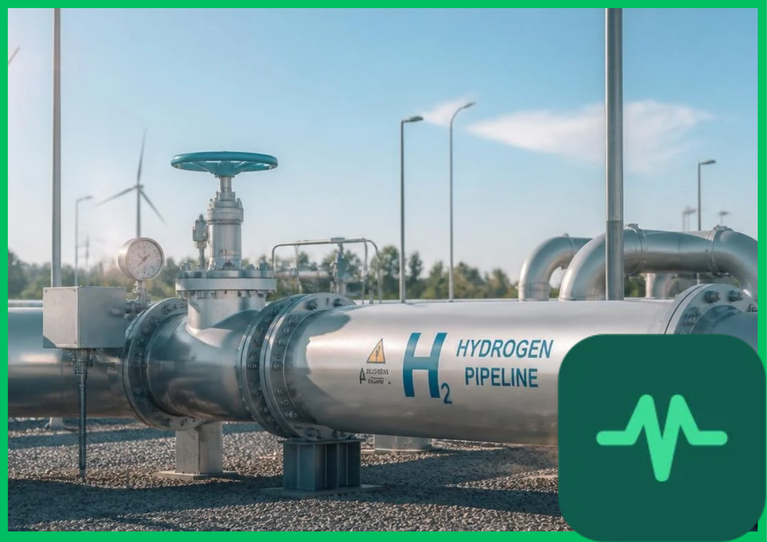
Hydrogen pipeline infrastructure is a specialized, high-pressure underground network of reinforced steel pipes, polymer liners, and automated compressor stations designed to transport pure hydrogen gas or hydrogen-blended fuels safely across long distances from production hubs to end-use industrial and residential markets.
Instead of ripping up every old pipe on Earth, modern engineers use a two-pronged strategy.
First, they blend small percentages of green hydrogen—ranging from 5% to 20% by volume—directly into existing natural gas pipeline networks.
Existing steel pipes handle low-blend concentrations safely without requiring major upgrades.
Second, for dedicated 100% clean hydrogen transmission, engineers construct brand-new pipelines using advanced high-strength steel alloys coated with specialized polymer inner linings.
These internal barriers block hydrogen molecules from sneaking into the metal walls, preventing embrittlement entirely.
Automated shut-off valves and fiber-optic sensors monitor pressure drops in real time, stopping leaks before they ever start.
The Science of Metal Embrittlement and Pressure Control
How do you keep a tiny, high-pressure hydrogen molecule locked securely inside a moving steel pipe for decades?
It comes down to advanced materials science and fluid dynamics.
Academic pipeline research shows that upgrading pipeline metallurgy by reducing carbon content and adding trace elements like chromium and molybdenum stops hydrogen atoms from destabilizing the steel grain boundaries.
Furthermore, compressor stations operating along the route maintain precise pressure levels, measured in bar or pounds per square inch (psi), ensuring that the gas flows smoothly without putting undue stress on the pipe walls.
Unlike liquid fuel trucks rumbling down crowded highways, underground pipelines move massive volumes of energy silently and invisibly with near-zero operational emissions.
According to ENERGY STAR and international industrial efficiency evaluations, moving energy through high-pressure pipelines wastes a fraction of the energy required to compress and haul gas by truck or rail.
Environmental Integrity and Global Grid Integration
The environmental benefits of secure hydrogen transport extend far beyond upgrading industrial gas networks.
They provide the vital connective tissue for the global clean energy transition.
Green hydrogen is often produced in remote desert or offshore locations where wind and solar resources are abundant, far away from the heavy industrial cities that need the fuel.
Without safe, high-pressure pipelines, moving that clean energy across borders would be economically impossible.
According to UNEP resource governance frameworks, upgrading existing gas corridors for hydrogen blending minimizes land disturbance, protecting local ecosystems, forests, and wildlife habitats from the disruption of laying brand-new trenches.
According to IEA clean energy roadmaps, integrating hydrogen pipelines with regional power grids creates a flexible energy storage system, balancing seasonal fluctuations in wind and solar power generation.
When clean gas flows securely underground, our entire energy supply becomes resilient.
Overcoming Regulatory and Construction Realties
Building and updating global pipeline networks involves navigating strict regulatory standards and public safety reviews.
Governments and international engineering bodies enforce rigorous testing protocols, subjecting new pipeline samples to extreme pressure tests, thermal stress, and accelerated hydrogen exposure before a single meter of pipe goes into the ground.
As public awareness grows and engineering standards harmonize across borders, safe hydrogen transport becomes the standard baseline for modern municipal gas utilities.
Flowing Safely Toward a Sustainable Future
Hydrogen pipeline infrastructure proves that human engineering can adapt existing industrial networks to solve the greatest environmental challenges of our time.
We no longer have to rely on leaky fossil gas pipes that poison our atmosphere.
By advancing steel metallurgy, lining pipes with protective polymers, and monitoring pressure with digital sensors, we transport clean green energy securely across the globe.
We step away from fossil fuel leaks, embracing a safe, efficient, and enduring standard of energy distribution.
Through brilliant materials science, rigorous academic research, and a deep respect for our planetary climate, flowing safely secures a clean, bright, and sustainable energy supply for every home on Earth.



Comments (0)
Login to leave a comment.
No comments yet. Be the first to share your thoughts!