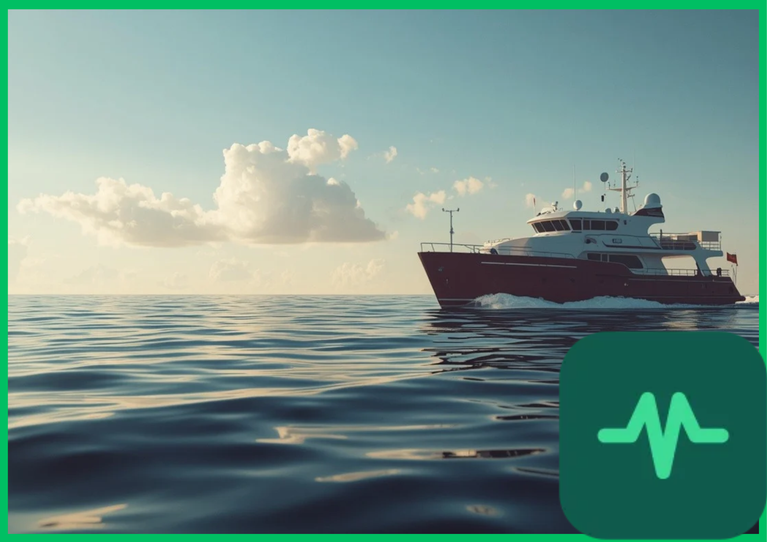
You look out across the vast, rolling blue expanse of the open ocean.
On the distant horizon, a massive cargo ship plows through the waves. It carries thousands of metal containers filled with goods from across the globe.
As it moves, it leaves a long, dark streak of heavy black smoke trailing behind it in the clean sea air.
That dark smoke contains toxic sulfur gases and thick carbon pollution.
For over a century, international shipping kept the global economy running by burning the dirtiest, cheapest leftover fuel from oil refineries.
Bunker fuel is thick, tar-like, and full of pollutants.
When millions of giant container ships, oil tankers, and cruise liners burn that heavy oil day and night, they choke our port cities and pump massive volumes of greenhouse gases straight into our shared atmosphere.
You cannot easily power an ocean-going cargo ship with a standard lithium battery pack. Crossing thousands of kilometers of deep open water demands dense, storable chemical energy.
Burning heavy bunker fuel solved that transport problem for generations, while pushing our global climate toward a dangerous edge.
How do we move heavy cargo across the oceans without burning oil?
You look at the most abundant molecule in our universe.
Water.
A quiet, brilliant maritime revolution is turning green hydrogen into the cleanest fuel on the high seas.
According to global maritime reports from the International Energy Agency (IEA), resource protection frameworks from the United Nations Environment Programme (UNEP), efficiency benchmarks from ENERGY STAR, and academic marine engineering research, green hydrogen transport fuel is transforming our ocean shipping lanes.
By using renewable energy to split water molecules and powering ships with zero-emission fuel cells or clean hydrogen combustion engines, we transport global goods without a drop of oil.
Here is how maritime hydrogen works, why zero-emission shipping changes global logistics, and how clean marine fuel secures our sustainable future.
The Dirty Secret of Global Shipping
To understand why green hydrogen transport fuel matters so much, you have to look at the immense scale of maritime pollution.
International shipping carries over 80% of all global trade.
Without cargo ships, modern society would grind to a halt.
Yet the engines powering those vessels are massive industrial monsters.
They burn heavy bunker fuel—a viscous, low-grade petroleum residue that produces staggering amounts of carbon dioxide, nitrogen oxides, and sulfur dioxide.
For decades, maritime transport operated outside strict environmental regulations.
Ships sailed far out in international waters where nobody monitored their exhaust stacks.
That hidden pollution caused severe respiratory illness in coastal port communities and accelerated global climate change at an alarming rate.
Skeptics once argued that cleaning up ocean transport was impossible because alternative fuels lacked the energy density required for transoceanic voyages.
Physics, marine engineering, and climate reality proved the skeptics wrong.
If we wanted global trade to survive without destroying the biosphere, we had to change how ships are fueled from the ground up.
What Is Green Hydrogen Marine Fuel?
Green hydrogen marine fuel is a zero-emission chemical energy source produced by using renewable electricity from wind, solar, or hydro power to split water molecules through electrolysis, creating pure hydrogen gas that powers ship engines or fuel cells without releasing a single gram of carbon dioxide.
When you burn or react green hydrogen onboard a vessel, the chemical reaction is remarkably simple.
Inside a hydrogen fuel cell, hydrogen molecules combine with oxygen pulled straight from the sea air.
That electrochemical reaction generates clean electricity to spin electric propulsion motors, producing zero toxic exhaust.
The only byproduct dripping from the exhaust pipe is pure, clean water vapor.
Alternatively, engineers adapt internal combustion engines to burn green hydrogen directly, achieving heavy thrust without touching fossil fuels.
The ship sails across the ocean powered entirely by energy captured from the sun and wind, leaving nothing behind except clean sea spray.
The Science of Fuel Cells and Marine Combustion
How do you store enough hydrogen gas onboard a massive cargo ship to cross thousands of kilometers of open ocean?
It comes down to cryogenic storage and advanced fuel cell electrochemistry.
Academic marine research shows that hydrogen has a high energy density by weight, meaning it weighs significantly less than traditional bunker fuel, though it takes up more physical volume.
To store enough fuel for a transoceanic voyage, shipbuilders cool hydrogen gas down to an ultra-low minus 253°C or minus 423°F, turning it into a dense liquid stored in heavily insulated cryogenic tanks.
When routed into proton-exchange membrane fuel cells, that liquid hydrogen converts into electrical power with exceptionally high operating efficiencies.
Unlike noisy, vibrating diesel engines, hydrogen fuel cells operate in total silence with zero mechanical vibration, extending the lifespan of the ship's hull and improving crew comfort.
According to ENERGY STAR and international maritime efficiency evaluations, hydrogen-powered vessels reduce well-to-wake greenhouse gas emissions by up to 100% when fueled by certified renewable energy sources.
Environmental Integrity and Port Air Quality
The environmental benefits of green hydrogen transport fuel extend far beyond reducing global climate emissions.
They provide an immediate, life-saving transformation for busy coastal port cities.
Ports are often choked with toxic smog from idling cargo ships waiting to dock, affecting millions of urban residents living near harbors.
When ships switch to hydrogen fuel cells or zero-emission combustion, local sulfur and particulate pollution drops to zero instantly.
According to UNEP resource circularity frameworks, eliminating heavy bunker fuel protects fragile marine ecosystems from devastating oil spills and toxic chemical leaks.
According to IEA clean shipping roadmaps, scaling up green hydrogen production for maritime transport is an essential pillar to decarbonize the final heavy transport sectors that cannot run on lithium batteries alone.
When global shipping fleets run on water, the oceans breathe a sigh of relief.
Overcoming Bunkering Infrastructure Realties
Transitioning the global maritime fleet to clean hydrogen involves navigating real-world infrastructure hurdles.
Building cryogenic fueling stations at major international ports requires significant capital investment and strict safety protocols, because hydrogen is a light gas that requires careful handling.
Engineers and port authorities solve those challenges by establishing green hydrogen production hubs directly beside major coastal shipping lanes, using surplus renewable electricity from offshore wind farms to manufacture and liquefy hydrogen on site.
As international maritime regulations tighten and carbon pricing penalizes dirty bunker fuel, shipowners are ordering hydrogen-ready vessels in record numbers.
Sailing Toward a Sustainable Future
Green hydrogen in marine transport proves that human ingenuity can clean up even the heaviest, most stubborn industrial sectors on Earth.
We no longer have to accept that international trade requires burning dirty oil and choking our oceans with toxic exhaust.
By harnessing renewable electricity to split water molecules, we create a zero-emission fuel that powers giant cargo ships across the waves safely.
We step away from fossil fuel dependence, embracing a clean, quiet, and enduring standard of maritime travel.
Through brilliant marine engineering, electrochemistry, and a deep respect for our planetary climate, sailing on water secures a clean, thriving, and sustainable future for our global oceans.

Comments (0)
Login to leave a comment.
No comments yet. Be the first to share your thoughts!