 to
 (
 to
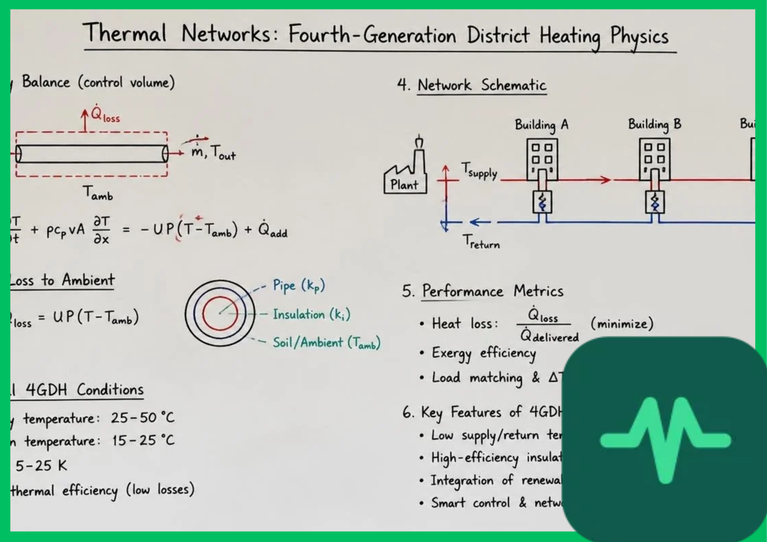
 ), relying on fossil fuel combustion, steam boilers, or high-grade industrial combined heat and power (CHP) plants. These legacy networks suffer from massive thermal transmission heat losses across buried piping networks and poor thermodynamic integration with low-grade renewable energy sources. Fourth-generation district heating (4GDH) systems revolutionize municipal thermal infrastructure by reducing supply temperatures to
 to
 (
 to
 ), enabling direct utilization of industrial waste heat, data center cooling reject heat, deep geothermal loops, and large-scale solar thermal arrays while minimizing distribution thermal decay.
Low-Temperature Network Physics and Transmission Heat Losses
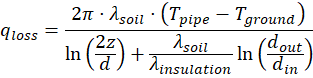
The foundational thermodynamic advantage of fourth-generation district heating is the reduction of thermal transmission losses through lowered supply fluid temperatures. Heat loss ( ) per unit length of a buried twin-pipe district heating network is governed by steady-state conductive heat transfer equations through concentric soil layers:
where  and
 represent the thermal conductivities of surrounding soil and pipe polyurethane foam insulation,
 is the average fluid supply temperature,
 is the undisturbed ground temperature,
 is burial depth, and
 represents pipe diameters.
Operating legacy networks at  (
 ) in a
 (
 ) soil environment creates an aggressive thermal gradient (
 ), driving high continuous conductive heat loss. By lowering network supply temperatures to
 (
 ) in 4GDH configurations, the operating temperature differential drops by over 40%, reducing annual transmission heat losses from 15% to 25% down to less than 5% to 8% of total transported thermal energy.
Decentralized Waste Heat Integration and Prosumer Networks
Fourth-generation district heating transforms traditional unidirectional distribution grids into bidirectional thermal networks capable of integrating decentralized low-grade waste heat sources and building-level "prosumers" (producers-consumers). Industrial manufacturing facilities, supermarkets, wastewater treatment plants, and data centers continuously reject vast quantities of thermal energy at low temperature thresholds ( to
 [
 to
 ]), which cannot be harnessed by high-temperature legacy district heating networks.
In a 4GDH network, decentralised heat pumps installed at substation nodes upgrade low-grade waste heat extracted from industrial return loops to domestic hot water temperatures ( to
 [
 to
 ]). Furthermore, energy-efficient residential buildings equipped with localized solar thermal panels or geothermal heat pump systems can inject surplus thermal energy back into the municipal distribution pipe network, balancing regional thermal supply and demand dynamically.
Technical Data Specifications of 4GDH Parameters
| District Heating Parameter | Legacy 2nd/3rd Generation | Advanced 4th Generation (4GDH) | | :--- | :--- | | Network Supply Temperature |  to
 (
 to
 ) |
 to
 (
 to
 ) | | Network Return Temperature |
 to
 (
 to
 ) |
 to
 (
 to
 ) | | Annual Transmission Heat Loss | 15% to 25% of transported energy | <5% to 8% thermal decay | | Primary Heat Source Integration| Fossil boilers, high-grade CHP | Industrial waste heat, solar thermal, geo-heat | | Piping Material Technology | Steel pipes with rigid polyurethane | Flexible pre-insulated polymer / bonded PEX | | Hydraulic Distribution Topology| Unidirectional central pumping | Bidirectional low-temp ring networks | | Substation Booster Technology | Direct mechanical mixing loops | Decentralized micro-heat pump boosters |
Hydraulic Network Optimization and Flexible Piping Materials
Managing low-temperature thermal networks requires advanced hydraulic distribution management and durable piping materials. Because 4GDH supply temperatures ( [
 ]) approach domestic hot water sanitary legionella prevention thresholds (
 [
 ]), decentralized booster heat pumps or instantaneous electric booster elements are deployed at building substations to elevate domestic tap water temperatures safely without overheating the entire municipal distribution ring.
From a structural standpoint, lower operating temperatures eliminate the severe thermal expansion stresses that plague high-temperature steel piping networks. This thermodynamic relief enables the widespread adoption of flexible, pre-insulated polymer pipes (such as cross-linked polyethylene [PEX] or high-density polyethylene [HDPE] outer jackets bonded with polyurethane foam insulation). Flexible polymer pipes are delivered in continuous multi-hundred-meter coils, eliminating thousands of welded steel joints, accelerating installation trenching speeds, and reducing lifetime pipe corrosion risks.
Smart Energy Management Systems and Predictive Flow Control
Fourth-generation district heating networks operate under centralized digital supervisory control and data acquisition (SCADA) systems coupled with artificial intelligence predictive demand models. Weather forecasts, building thermal inertia constants, and real-time smart meter telemetry feed hydraulic simulation software that modulates central circulation pump speeds and variable frequency drives (VFDs) dynamically.
Predictive flow control minimizes pumping electrical energy consumption (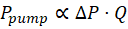 ) by maintaining optimal differential pressure across building substations during off-peak demand intervals. By coordinating multi-source heat generation inputs—dispatching geothermal baseloads, industrial waste heat recovery, and peak-load electric boilers—smart 4GDH networks achieve exergy efficiency levels exceeding 80%, minimizing thermodynamic irreversibilities across municipal heating grids.
The Final Take
Mastering fourth-generation district heating physics transforms municipal thermal infrastructure by replacing high-temperature fossil combustion grids with low-temperature renewable distribution networks. Citing IEA heating assessments and thermodynamic literature, reducing supply temperatures to  slashes transmission heat losses below 8% while unlocking vast industrial waste heat integration. By deploying flexible polymer piping, decentralized booster heat pumps, and smart hydraulic flow control, 4GDH establishes an indispensable technical foundation for low-carbon urban energy systems.



Comments (0)
Login to leave a comment.
No comments yet. Be the first to share your thoughts!