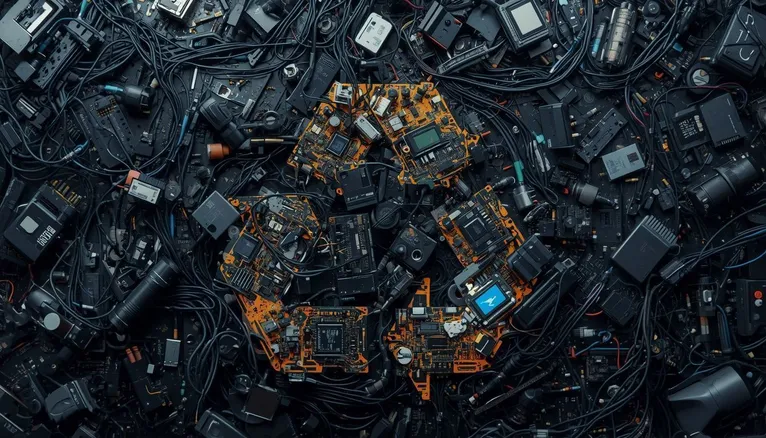
Every year, the world tosses out more than 62 million metric tons of e-waste. Most of it lands in landfills. There, toxic metals slowly leak into the ground and water. This is a quiet, painful problem, one that grows a little bigger every single year.
But there is real hope hiding inside this crisis. Urban mining offers a way to fix it. Old phones are not garbage. They are treasure chests, packed with gold, copper, and rare metals. In this guide, we will explore urban mining in simple terms. We will look at robots. We will look at clean chemistry. By the end, you will understand why urban mining feels like such an exciting, hopeful shift for our planet.
Why Old Electronics Are Secretly Valuable
Let's start with a surprising fact. One metric ton of old smartphones contains up to 100 times more gold than one metric ton of raw gold ore dug from the earth. That number is almost hard to believe.
This is the heart of urban mining. Instead of digging deep into the earth for metal, we can simply look inside the devices already sitting in drawers and landfills. Every old phone. Every dead laptop. Each one holds tiny fragments of something valuable.
When you multiply this across millions of discarded devices, the numbers become staggering. Urban mining turns this hidden wealth into something usable again. It feels like discovering buried treasure, except the treasure was never really hidden. It was just waiting for the right tools to unlock it.
The Painful Cost of Traditional Mining
To understand why urban mining feels so hopeful, it helps to understand the alternative. Traditional mining is brutal on the planet. Digging for gold or rare metals often means tearing apart huge sections of land. It uses massive amounts of water. It can pollute nearby rivers and soil for generations.
Communities near mining sites often suffer the most. Their water gets contaminated. Their landscapes get scarred. This heavy environmental cost has long felt like an unavoidable price for modern technology.
Urban mining offers a gentler path forward. Instead of digging up the earth again and again, it recycles what we already have. This shift feels deeply relieving, almost like breathing out after holding your breath for too long. We do not need to keep wounding the planet just to build the next phone or laptop.
Meet the Robots Powering Urban Mining
Taking apart a smartphone by hand is nearly impossible to do well. Devices are sealed tight with strong glue and tiny screws. Trying to force them open often destroys the valuable parts inside.
This is where robots step in, and honestly, it feels a little like science fiction. Modern urban mining facilities use AI-powered cameras that scan each device instantly. These cameras identify the exact phone model in a split second. Then, robotic arms move in with careful precision.
Freezing air blasts loosen tough adhesives without harming delicate parts. Tiny automated drills open cases cleanly. Within seconds, a single phone gets carefully separated into glass, copper wiring, and gold-coated circuit boards. This process feels oddly beautiful to watch, fast, precise, and quietly impressive.
Thanks to this robotic automation, urban mining can process massive volumes of e-waste quickly. What once took slow, dangerous manual labor now happens in a smooth, efficient flow.
Clean Chemistry: Pulling Out the Precious Metal
Once a circuit board is separated, the real transformation begins. This next step in urban mining relies on chemistry, not brute force. It is called hydrometallurgy.
In the past, factories relied on smelting. This meant burning circuit boards in intense heat to melt out the metal. Unfortunately, this process released toxic gas into the air, harming workers and nearby communities.
Modern urban mining skips this dangerous shortcut entirely. Instead, shredded circuit boards go into a special acid bath. This bath dissolves specific metals at room temperature, with no burning and no toxic smoke. Slowly, gold appears. Then silver. Then copper. Then palladium, each one pulled out carefully, one metal at a time.
This chemical process is remarkably efficient. Modern urban mining facilities can recover over 99 percent of the valuable metal hidden inside old electronics. Even better, the chemical solution gets filtered and reused again and again, creating almost no waste of its own.
Rescuing Rare Earth Metals
Gold and copper are not the only prizes hidden inside old devices. There is also a group of rare, delicate metals called rare earth elements. Neodymium and dysprosium are two important examples.
These metals may sound obscure, but they matter enormously. They power the vibration motor in your phone. They help your laptop speakers produce sound. They even help spin the motors inside electric vehicles. Without them, so much of modern life would simply stop working the way we expect.
Traditional mining for these metals is especially destructive. It often happens in politically unstable regions. It frequently creates radioactive wastewater as a toxic byproduct. This heavy cost makes rare earth mining one of the most troubling parts of our global tech supply chain.
Urban mining offers real relief here too. Advanced facilities carefully demagnetize old motors and speakers, safely removing their trapped rare earth material. That material gets refined back into pure, usable powder, ready to help build the next generation of devices, without a single new mine ever being dug.
Why Urban Mining Feels So Hopeful
There is something deeply moving about urban mining. It takes something we usually see as trash, an old broken phone, a dead laptop, and reveals its hidden value. It turns waste into worth.
This feels especially meaningful in a world often overwhelmed by climate anxiety. So many environmental problems feel too big to fix. Urban mining offers something different: a real, working solution already happening right now, not just a distant hope for the future.
It also protects vulnerable communities. Fewer mines mean fewer polluted rivers. Fewer radioactive waste sites. Fewer families forced to live near dangerous extraction zones. Urban mining quietly protects people who might otherwise bear the heaviest cost of our technology habits.
The Business Case Behind Urban Mining
Beyond the environmental benefits, urban mining also makes strong financial sense. Recovered gold, silver, copper, and rare metals all carry real market value. Companies investing in urban mining are not just doing good. They are also building smart, profitable businesses.
This financial incentive helps urban mining scale faster than pure environmental appeals ever could alone. Investors see real returns. Governments see reduced dependence on unstable foreign mining supply chains. Consumers see a cleaner alternative to traditional resource extraction.
As global demand for electronics keeps rising, urban mining becomes even more valuable. Every new smartphone, laptop, and electric vehicle needs these same core materials. Urban mining offers a steady, renewable source, pulled from our own past purchases instead of the earth's dwindling reserves.
Common Questions About Urban Mining
Is urban mining really better than traditional mining? In most cases, yes. Urban mining avoids the habitat destruction, water pollution, and radioactive waste tied to traditional mining, while recovering metals that are often more concentrated than raw ore.
How efficient is urban mining at recovering metal? Modern hydrometallurgical methods used in urban mining can recover over 99 percent of precious metals from circuit boards, making the process remarkably efficient.
Does urban mining help reduce e-waste in landfills? Yes. By recovering valuable materials before disposal, urban mining reduces the volume of toxic waste sitting in landfills, protecting soil and water from heavy metal contamination.
Will urban mining ever fully replace traditional mining? Probably not entirely, but it can significantly reduce our reliance on it. As urban mining technology improves, it will likely handle a growing share of global metal demand.
Where Urban Mining Is Growing Fastest
Different regions are embracing urban mining at different speeds. Parts of Europe already have strict laws requiring companies to recycle old electronics responsibly. These laws have pushed urban mining forward quickly, turning it into a standard part of doing business.
Asia is investing heavily in urban mining too, since so many electronics are manufactured there in the first place. Having recycling facilities close to manufacturing hubs makes the entire supply chain more efficient, cutting down on shipping and reducing overall environmental impact.
North America is catching up as well, though rules still vary widely between states and cities. As more places adopt clear standards around urban mining, the whole system becomes easier to scale. This steady, global growth is a strong sign that urban mining is becoming a permanent fixture of the tech industry, not just a passing trend.
What the Future Holds for Urban Mining
Looking ahead, the future of urban mining feels genuinely bright. Researchers are constantly improving robotic sorting systems, making disassembly even faster and more precise. Every improvement here means more devices processed, with less waste left behind.
Chemical extraction methods are advancing too. Scientists are working on ways to recover even more types of metal from electronic waste, expanding what urban mining can accomplish. As these methods improve, fewer raw materials will need to come from traditional, destructive mining operations.
Investment is also flowing steadily into this space. Governments are offering grants to support urban mining infrastructure. Private companies are building larger, more advanced recycling facilities every year. This growing momentum suggests that urban mining is not just a hopeful idea. It is quickly becoming a serious, permanent part of how the world manages its growing appetite for technology.
Final Thoughts
Urban mining proves that our old, discarded electronics are not the end of the story. They are the beginning of something new. Thanks to smart robots and clean chemistry, urban mining is quietly transforming a global waste crisis into a genuine opportunity.
From AI-guided disassembly robots to gentle acid baths that recover pure gold, urban mining shows just how far this industry has come. What was once slow, dirty, and dangerous is now fast, clean, and remarkably efficient.
As electronics keep piling up around the world, urban mining will only grow more important. It protects rare earth metals. It shields vulnerable communities from destructive mining. It even turns yesterday's trash into tomorrow's raw material.
The next time you upgrade your phone, remember this. Your old device is not truly gone. Thanks to urban mining, it becomes the quiet beginning of something new, valuable, and hopeful all over again.



Comments (0)
Login to leave a comment.
No comments yet. Be the first to share your thoughts!