
 to
 [
 to
 ]). Conventional steam-Rankine power cycles cannot harness these low-grade thermal streams efficiently due to high pumping work penalties and excessive moisture droplet formation during low-temperature expansion. In contrast, organic Rankine cycle (ORC) systems substitute water with specialized organic working fluids possessing low boiling points and high molecular weights, enabling high-efficiency mechanical power extraction from low-grade waste enthalpy streams.
Thermodynamic Rankine Cycle Physics and Low-Grade Enthalpy Utilization
The foundational thermodynamic principle governing organic Rankine cycle efficiency is the closed-loop vapor-liquid phase change cycle operating across four primary thermodynamic components: an evaporator, an expansion turbine, a condenser, and a feed pump. Low-grade thermal energy is transferred from industrial waste gas streams or cooling jackets to the organic working fluid inside the shell-and-tube evaporator, elevating the fluid to high pressure and temperature.
The thermal efficiency ( ) of an organic Rankine cycle system is governed by the net mechanical work output divided by thermal energy input:
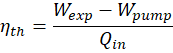
where  represents turbine expansion work,
 denotes liquid feed pump work, and
 is thermal enthalpy absorbed in the evaporator.
Unlike water, which features a steep, positive saturation vapor curve in temperature-entropy ( ) space, many organic working fluids exhibit isentropic or dry saturation curves. A dry working fluid remains in a superheated vapor state throughout expansion across the turbine, preventing liquid droplet condensation on turbine blade tips and eliminating blade erosion hazards without requiring external superheater stages.
Working Fluid Selection and Thermodynamic Classifications
Selecting appropriate organic working fluids is the most critical design parameter in organic Rankine cycle engineering. Working fluids are classified into three thermodynamic categories based on the slope of their saturated vapor line in  coordinates:
- Dry Fluids: Characterized by a positive saturation vapor curve slope (
 ). Examples include siloxanes (such as octamethyltrisiloxane [
 ]) and high-molecular-weight hydrocarbons (such as pentane [
 ] and hexane [
 ]). Dry fluids do not require superheating prior to expansion, making them ideal for low-temperature waste heat recovery.
- Isentropic Fluids: Characterized by a nearly vertical saturation vapor curve (
 ). Fluorinated refrigerants such as R245fa (
 ) and R1233zd(E) operate effectively across moderate temperature ranges.
- Wet Fluids: Characterized by a negative saturation vapor curve (
 ), requiring careful superheating to prevent liquid condensation during turbine expansion.
Technical Data Specifications of ORC Heat Recovery Parameters
| Organic Rankine Cycle Parameter | Engineering Specification Standard |
|---|---|
| Waste Heat Temperature Threshold |  to  (  to  ) low-grade enthalpy |
| Working Fluid Classifications | Dry, isentropic, and wet organic compounds |
| Common Working Fluid Examples | R245fa, R1233zd(E), pentane, siloxane (MDM) |
Net Thermal Conversion Efficiency ( ) | 10% to 25% depending on temperature differential |
| Turbine Expansion Speed Range |  to 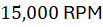 high-speed radial inflow |
| Evaporator Operating Pressure |  to  ( 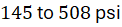 ) |
| Pinch-Point Temperature Difference |  to  (  to  ) heat exchanger optimization |
Heat Exchanger Pinch-Point Analysis and Recuperator Integration
Optimizing organic Rankine cycle energy recovery requires rigorous pinch-point analysis across evaporator and recuperator heat exchanger networks. The pinch-point temperature difference ( ) defines the minimum temperature separation between the hot industrial waste gas stream and the boiling organic working fluid.
To maximize thermodynamic exergetic efficiency, advanced ORC plants integrate internal liquid-to-vapor recuperators. Because high-temperature organic vapor exiting the expansion turbine still possesses substantial thermal enthalpy, routing this exhaust vapor through a plate-type recuperator to pre-heat liquid working fluid before entering the evaporator reduces external thermal energy requirements ( ), elevating overall cycle thermal efficiency by 15% to 30%. Furthermore, matching heat capacity flow rates (
 ) across the evaporator prevents thermal pinch bottlenecks and minimizes exergy destruction.
Turbomachinery Design and Expansion Mechanics
ORC turbomachinery differs significantly from conventional steam turbines due to the high molecular weight and acoustic velocity characteristics of organic working fluids. Because the speed of sound in dense organic vapors is substantially lower than in steam, ORC expansion turbines operate at lower Mach numbers, reducing aerodynamic shock losses and enabling compact single-stage radial-inflow turbine designs.
Turbine rotational speeds range from  for multi-megawatt units up to
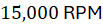 for decentralized micro-ORC systems. Hermetically sealed magnetic couplings and integrated high-speed generators eliminate shaft seal leakage risks, ensuring zero working fluid emissions over multi-year continuous operating intervals.
The Final Take
Mastering industrial waste heat recovery organic rankine cycle thermodynamics transforms low-grade industrial waste streams into valuable electrical power. Citing IEA industrial assessments and thermodynamic literature, selecting dry organic working fluids and integrating internal recuperation optimizes enthalpy conversion across  to
 thermal sources. By resolving heat exchanger pinch-point constraints and deploying high-efficiency radial turbines, ORC systems establish an indispensable foundation for industrial energy efficiency.


Comments (0)
Login to leave a comment.
No comments yet. Be the first to share your thoughts!