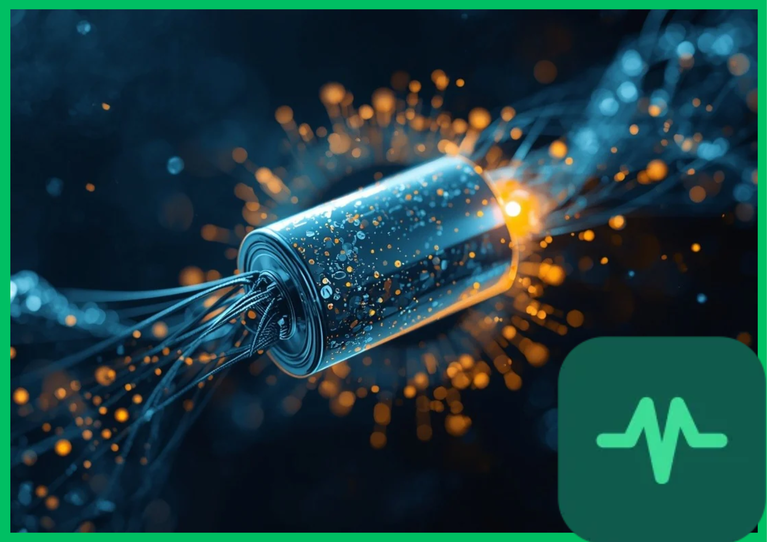
Mechanical Pre-Treatment and Black Mass Production
The foundational initial phase of lithium-ion battery recycling involves dismantling, discharging, and mechanical size reduction to produce an enriched intermediate product known as "black mass." Spent battery packs are initially discharged in saline solution baths to eliminate residual electrical energy and mitigate thermal runaway risks during mechanical processing.
Once discharged, modules and cells enter industrial shredders or hammer mills operating under an inert nitrogen gas atmosphere ( ) or wet chemical spray systems to suppress volatile organic solvent ignition. The mechanical shredding output is separated via multi-stage screening, magnetic separation, and air classification into distinct material fractions:
- Metallic Scrap: Comprising copper foils, aluminum casings, and steel structural housing components recovered via eddy current separators.
- Polymer Separators & Binders: Lightweight plastics and fluoropolymers (such as polyvinylidene fluoride [PVDF]) separated via air cyclones.
- Black Mass: A finely ground powder containing concentrated transition metal oxides from cathode active materials (e.g., lithium nickel manganese cobalt oxides [NMC], lithium iron phosphate [LFP]) and graphite from anode coatings.
Pyrometallurgical Smelting and Slag Refining Chemistry
Pyrometallurgical processing utilizes high-temperature electric arc furnaces or plasma smelting reactors operating between  and
 (
 to
 ) to recover valuable transition metals. In a typical pyrometallurgical smelting circuit, black mass, scrap cells, or whole modules are fed directly into the furnace alongside slag-forming fluxes (such as silica and lime) and carbon reductants.
At these extreme thermal thresholds, the smelting process melts the metallic constituents, producing two distinct phases:
- Metallic Alloy (Bullion): A dense liquid metal phase containing high concentrations of nickel (
 ), cobalt (
 ), and copper (
 ). These metals report to the alloy phase due to their low oxygen affinity relative to iron and lithium.
- Slag Phase: A lighter molten oxide phase containing lithium (
 ), manganese (
 ), aluminum (
 ), and silicon (
 oxides).
While pyrometallurgical smelting achieves high recovery rates for nickel and cobalt (>95%), lithium recovery from the slag phase is historically energy-intensive and economically challenging, often requiring secondary acid leaching of the vitrified slag matrix.
Technical Data Specifications of Battery Recycling Parameters
| Battery Recycling & Recovery Parameter | Engineering Specification Standard |
|---|---|
| Pyrometallurgical Furnace Temperature |  to  (  to  ) |
| Hydrometallurgical Acid Leaching Reagents | Sulfuric acid ( ) with hydrogen peroxide (  ) |
| Nickel and Cobalt Recovery Yield (Pyro) |  bullion alloy collection efficiency |
| Lithium Hydrometallurgical Recovery Yield |  via selective solvent extraction and precipitation |
| Black Mass Specific Surface Area |  to  fine powder particle sizing |
| Leaching Reactor Operating Pressure |  to  ( 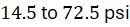 ) |
| Recovered Cathode Purity Threshold |  battery-grade metal salt purity |
Hydrometallurgical Leaching Kinetics and Solvent Extraction
To overcome the high energy consumption and lithium recovery limitations of pyrometallurgical smelting, modern recycling facilities increasingly deploy hydrometallurgical refining circuits. Hydrometallurgy dissolves black mass powders in aqueous acid solutions, separating individual metal ions via selective chemical precipitation, solvent extraction (SX), and ion exchange resins.
The leaching process dissolves transition metal oxides into ionic solution by reacting black mass with mineral acids (such as sulfuric acid [ ] or hydrochloric acid [
 ]) in the presence of a reducing agent (such as hydrogen peroxide [
 ] or sulfur dioxide [
 ]). The reduction-oxidation reaction for leaching trivalent cobalt (
 ) from an NMC cathode matrix into soluble divalent cobalt (
 ) is expressed as:


Following solid-liquid filtration to remove undissolved graphite residues, the pregnant leach solution (PLS) undergoes multi-stage solvent extraction. Organic extractants (such as D2EHPA or Cyanex 272) selectively bond with specific metal ions at controlled pH levels, isolating high-purity nickel sulfate, cobalt sulfate, and manganese sulfate solutions. Finally, lithium is precipitated from the remaining raffinate solution as battery-grade lithium carbonate ( ) or lithium hydroxide monohydrate (
 ) via sodium carbonate addition or evaporative crystallization.
Closed-Loop Material Circularity and Environmental LCA
Evaluating the environmental efficacy of lithium-ion battery recycling requires conducting rigorous life cycle assessments (LCAs) aligned with UNEP circular economy standards. Closed-loop recycling prevents primary mining externalities, including terrestrial habitat destruction, acid mine drainage, and high carbon footprints associated with virgin ore extraction in remote geographic regions.
Academic metallurgical literature confirms that closed-loop hydrometallurgical recycling reduces total greenhouse gas emissions by 50% to 70% compared to refining primary nickel and lithium ores. Furthermore, recovering critical cathode precursors directly re-injects high-purity elements back into cathode synthesis manufacturing plants, establishing a self-sustaining material loop that satisfies tightening global regulatory mandates on battery circularity and critical mineral traceability.
The Final Take
Mastering lithium ion battery pyrometallurgical recycling efficiency and hydrometallurgical refining advances circular economy engineering by converting hazardous battery waste into high-purity cathode precursors. Citing IEA critical mineral assessments and UNEP reports, combining mechanical black mass preparation with selective acid leaching and solvent extraction yields recovery rates exceeding 90% for lithium, nickel, and cobalt. By scaling closed-loop recovery infrastructure, the clean technology sector secures an essential domestic supply of battery-grade metals for global electrification.

Comments (0)
Login to leave a comment.
No comments yet. Be the first to share your thoughts!