 ) annually, while recycling rates remain below 20%. Recovering high-purity gold, palladium, copper, lithium, and rare earth elements from spent printed circuit boards (PCBs) and lithium-ion batteries requires precise chemical engineering pathways. These industrial processes integrate physical pre-treatment, pyrometallurgical smelting, hydrometallurgical leaching, and selective solvent extraction.
Mechanical Pre-Treatment and Physical Beneficiation
Electronic waste processing begins with mechanical liberation and physical separation before chemical refining occurs. Discarded computers, smartphones, and server blades undergo multi-stage shredding using industrial hammer mills and knife cutters to reduce particle sizes below  (
 ).
Following size reduction, physical beneficiation exploits differences in density, magnetic susceptibility, and electrical conductivity:
- Magnetic Separation: Overband electromagnetic pulleys extract ferrous structural steels and iron brackets from the shredded stream.
- Eddy Current Separation: High-frequency rotating magnetic rotors induce repulsive electrical eddy currents in non-ferrous metals (such as aluminum and copper), ejecting them away from inert plastics and ceramic fractions.
- Electrostatic and Density Separation: Air classification tables and sink-float density tanks separate heavy metallic fractions from lightweight brominated flame-retardant plastics.
The resulting metal-rich concentrate—frequently containing high concentrations of copper, gold, silver, and palladium—proceeds directly to pyrometallurgical or hydrometallurgical refineries.
Pyrometallurgical Smelting and Slag Chemistry
Traditional primary metallurgical processing utilizes high-temperature pyrometallurgical smelting inside IsaSmelt or Ausmelt furnaces operating at temperatures between  and
 (
 to
 ). Shredded electronic scrap is fed into the furnace along with silica (
 ) and limestone (
 ) fluxes.
Inside the smelting vessel, materials partition into three distinct phases:
- Copper-Nickel Matte: A molten metallic phase that collects precious metals including gold, silver, platinum, and palladium.
- Slag Phase: A molten silicate-oxide slag that absorbs iron, zinc, aluminum, and silicon impurities.
- Flue Gas Phase: Volatilized elements (such as lead, cadmium, and mercury) captured via baghouse filters and electrostatic precipitators.
While pyrometallurgical smelting efficiently consolidates precious metals into a copper-rich anode for subsequent electrorefining, it incurs massive thermal energy penalties and releases volatile organic compounds if flue gas scrubbers fail. Consequently, modern closed-loop recycling plants increasingly prioritize direct hydrometallurgical routes to minimize energy consumption and eliminate direct emissions.
Hydrometallurgical Leaching and Acid Chemistry
Hydrometallurgical refining dissolves metallic components into aqueous liquid solutions using chemical leaching agents, operating at significantly lower temperatures ( to
 or
 to
 ) than pyrometallurgical smelting.
Leaching shredded printed circuit boards requires tailored acidic or alkaline reagents depending on the target metal matrix:
- Cyanide and Thiosulfate Leaching: Dissolves gold and silver by forming stable aqueous dicyanoaurate complexes in the presence of dissolved oxygen.
- Aqua Regia and Nitric Acid Leaching: Dissolves base metals and precious metal coatings, though corrosive nitrous gas emissions require closed-loop gas scrubbing absorption towers.
- Hydrogen Peroxide and Sulfuric Acid (
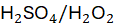 ): Dissolves copper and base metals rapidly through oxidative dissolution:

Controlling pH levels, oxidation-reduction potential (ORP), and reagent stoichiometry is mandatory to maximize dissolution selectivity while preventing unwanted silica gel precipitation.
Technical Data Specifications of E-Waste Refining Parameters
| Processing Parameter | Engineering Specification Range |
|---|---|
| Pyrometallurgical Furnace Temperature |  to  (  to  ) |
| Hydrometallurgical Leaching Temp |  to  (  to  ) |
| Copper Recovery Efficiency |  via electrowinning and solvent extraction |
| Gold Recovery Purity |  via chemical precipitation and refining |
| Acid Consumption Rate |  to   per kg of scrap |
| Solvent Extraction Stages | 3 to 6 counter-current mixer-settler stages |
Solvent Extraction (SX) and Ion-Exchange Separation
Once metals are dissolved into aqueous leachate solutions, selective separation requires liquid-liquid extraction—commonly known as solvent extraction (SX). The aqueous leachate is mixed with an organic phase comprising an organic diluent (such as kerosene) and specialized chelating extractants (such as oximes for copper, or organophosphorus acids like D2EHPA for nickel and cobalt).
During counter-current contact in multi-stage mixer-settlers, target metal ions transfer selectively from the acidic aqueous phase into the organic phase based on pH-dependent distribution coefficients. Subsequent stripping stages using concentrated mineral acids recover high-purity metal ions into a clean aqueous strip solution.
Following solvent extraction, high-purity metal powders are recovered via electrowinning or chemical reduction. Applying direct electrical current through titanium cathode plates electrochemically plates out pure copper ( purity) from copper sulfate electrolyte solutions, while selective chemical reductants precipitate high-purity gold and palladium powders from solution.
Environmental Governance and Circular Economy Realities
Quantitative assessments published by the UNEP and academic metallurgical consortia confirm that closed-loop e-waste recycling chemistry requires up to 85% less energy and generates significantly lower greenhouse gas emissions than primary ore mining. For critical transition metals like lithium, cobalt, and rare earth elements, urban mining provides an indispensable secondary supply chain, mitigating geopolitical mineral bottlenecks and preventing toxic heavy metal leaching into municipal landfills. Industrial adoption of hydrometallurgical closed-loop circuits ensures that electronic waste transforms from an ecological hazard into a sustainable urban resource.

Comments (0)
Login to leave a comment.
No comments yet. Be the first to share your thoughts!