You pick up your smartphone.
The screen flickers and dims. The battery dies halfway through the afternoon, struggling to hold a charge for more than an hour.
You sigh, opening your web browser to check upgrade options.
Then you discover a frustrating truth.
The battery is glued shut inside a sealed aluminum case.
The manufacturer designed the phone so you cannot open it, cannot swap the worn-out power cell, and cannot upgrade the internal camera.
When one small part fails, you are forced to toss the entire expensive device into the trash and buy a brand-new one.
That experience feels all too familiar.
For decades, consumer electronics, home appliances, and power tools operated on a cynical commercial rule known as planned obsolescence.
Manufacturers built products to break down after a few short years, deliberately making repairs impossible so consumers would keep running back to the store to buy replacements.
That throwaway design philosophy filled our global landfills with mountains of toxic electronic waste, poisoning soil and water supplies while mining companies stripped the earth bare to extract fresh raw minerals.
We cannot build a sustainable future while designing products to become garbage.
What if everyday electronics were built like Lego bricks?
What if you could open your devices easily, snap out a worn part, and slide in an upgrade in seconds?
A quiet, brilliant design revolution is sweeping through engineering labs across the globe.
According to global resource efficiency reports from the International Energy Agency (IEA), waste governance frameworks from the United Nations Environment Programme (UNEP), efficiency benchmarks from ENERGY STAR, and academic product lifecycle research, modular product design for repair is changing our manufacturing landscape.
By building consumer goods out of standardized, snap-fit components, we eliminate planned obsolescence and keep items out of landfills for good.
Here is how modular design works, why right-to-repair engineering changes global commerce, and how building products to last secures our sustainable future.
The Wasteful Trap of Planned Obsolescence
To understand why modular product design matters so much, you have to look at the staggering scale of modern electronic waste.
Every single year, humanity discards tens of millions of tons of computers, phones, kitchen appliances, and power tools.
Most of those devices end up in giant open dumps in developing nations, where toxic heavy metals like lead, mercury, and lithium leach into local groundwater.
For generations, electronics manufacturers defended sealed device designs, claiming that gluing cases shut made gadgets thinner, lighter, and more water-resistant.
Consumers accepted that excuse, believing that slim designs required disposable hardware.
Engineers and circular economy advocates proved that excuse wrong.
You can build durable, weather-resistant devices that open easily with standard tools.
Skeptics once argued that consumers would never bother fixing their own electronics, claiming that people preferred buying new replacements over repairing old gear.
The global right-to-repair movement shattered that myth.
Millions of people want the ability to maintain and upgrade their belongings. They want tools built to last.
What Is Modular Product Design?
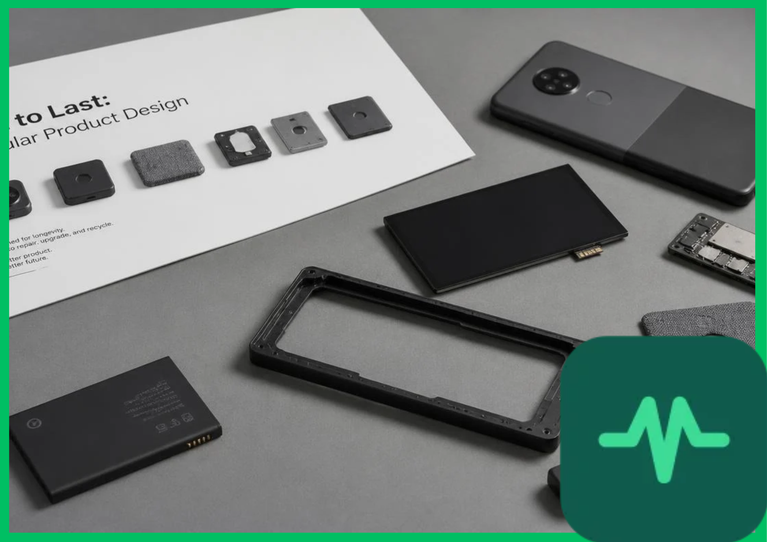
Modular product design is an engineering methodology that constructs consumer electronics, appliances, and machinery using standardized, interchangeable components connected through snap-fit interfaces and universal screws, allowing individual parts to be repaired, replaced, or upgraded independently.
Instead of fusing every circuit board, battery, and screen into a single solid block of plastic and glue, a modular device separates every functional subsystem.
If your speaker breaks, you unscrew two fasteners, pop out the old audio module, and click in a replacement part in under sixty seconds.
If camera technology advances next year, you do not buy a new phone; you slide in an upgraded camera module while keeping your existing display and housing.
The device evolves with you.
Waste drops to zero, and your investment retains its value for years.
The Science of Product Lifecycles and Material Efficiency
How does designing snap-fit modular electronics reduce global resource extraction and lower industrial carbon emissions so dramatically?
It comes down to material circularity and embodied energy preservation.
Academic product lifecycle research shows that extending the active lifespan of a smartphone or laptop from two years to six years cuts its total carbon footprint by over 50%.
Manufacturing the microchips, mining the rare earth metals, and smelting the aluminum casing accounts for the vast majority of an electronics product's lifetime environmental impact.
When a product lasts three times longer, the environmental cost of manufacturing gets amortized across years of reliable daily use.
Furthermore, ENERGY STAR and international appliance efficiency evaluations show that modular appliances use standardized power management chips that are easy to service, reducing energy waste caused by failing components.
When parts are easy to fix, appliances stay out of the scrap yard.
Environmental Integrity and Global Right-to-Repair
The benefits of modular product design extend far beyond saving money on replacement gadgets or cutting household clutter.
They provide a powerful economic defense for global resource security.
According to UNEP resource governance frameworks, adopting universal right-to-repair standards reduces the frantic demand for virgin mining minerals, protecting sensitive ecosystems from destructive open-pit mining operations.
When manufacturers design products with standardized parts, independent repair shops thrive in local communities worldwide, creating skilled green jobs instead of shipping broken items across oceans for disposal.
According to IEA energy transition roadmaps, closing the manufacturing loop through modular design is an essential pillar to lower industrial energy consumption and achieve global circularity targets.
When items are built to be repaired, our entire economy steps away from the destructive trap of disposable consumption.
Overcoming Corporate and Manufacturing Realties
Transitioning global manufacturing from disposable electronics to modular product design involves navigating real-world corporate resistance.
Many legacy technology companies built their entire business models on forced annual upgrades, fighting tooth and nail against right-to-repair legislation.
Governments and international consumer advocacy bodies overcome this resistance by passing universal right-to-repair laws that mandate spare part availability, transparent repair manuals, and modular component standards.
As consumer demand surges for durable, repairable goods, forward-thinking brands are marketing modular designs as a premium badge of honor.
As supply chains adapt, building products to last is transitioning from a niche activist movement into standard global industrial design.
Building Our Products to Last a Sustainable Future
Modular product design proves that human engineering can redesign consumer goods to honor the physical limits of our planet.
We no longer have to accept that owning a smartphone or a kitchen blender means buying a disposable item designed to break down in a few short years.
By building devices out of standardized, snap-fit components that anyone can repair, we close the loop on modern manufacturing.
We step away from planned obsolescence, embracing a smart, durable, and enduring standard of product ownership.
Through brilliant circular engineering, rigorous academic research, and a deep respect for our shared environment, building products to last secures a clean, resourceful, and sustainable future for every home on Earth.




Comments (0)
Login to leave a comment.
No comments yet. Be the first to share your thoughts!