 ) operate above the critical point of carbon dioxide (
 [
 ],
 [
 ]), exploiting extreme fluid density variations near the critical pseudo-boiling region. This thermodynamic optimization elevates thermal conversion efficiencies past 50% while reducing turbomachinery footprint dimensions by over 90% relative to conventional steam turbines.
Thermodynamic Brayton Cycle Physics and Critical Fluid Properties
The foundational thermodynamic principle governing supercritical carbon dioxide power generation is the closed-loop Brayton cycle operating near the thermodynamic critical point of  . Unlike ideal gases, a supercritical fluid exhibits extreme compressibility variations while maintaining single-phase liquid-like density coupled with gas-like dynamic viscosity.
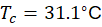
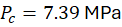
The physical state of carbon dioxide shifts dramatically when operating near its critical pressure ( [
 ]) and critical temperature (
 [
 ]). Near this pseudo-critical region, specific heat capacity (
 ) spikes exponentially, while compressibility factor (
 ) deviates sharply from unity. In a closed-loop
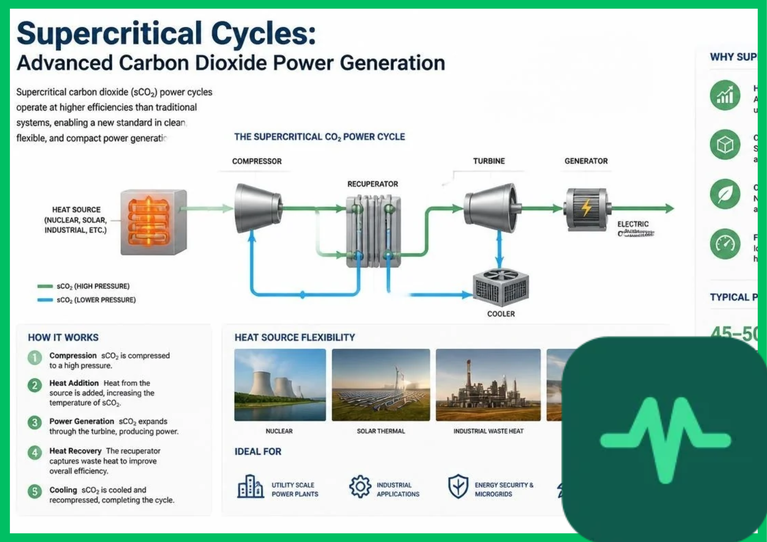
 recompression Brayton cycle, carbon dioxide is pressurized by a main compressor operating just above critical pressure, requiring drastically less specific compression work compared to subcritical gas turbines or steam pumps. The reduction in compression work (
 ) directly enhances net thermal cycle efficiency (
 ), formulated as:
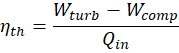
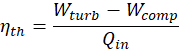
where  represents turbine expansion work and
 denotes thermal energy input delivered via nuclear reactors, concentrated solar thermal (CSP) receivers, or industrial waste heat combustion exchangers.
Recompression Layouts and Recuperator Heat Exchange
Achieving peak thermal efficiency in supercritical carbon dioxide power systems requires moving beyond simple recuperated Brayton cycles toward advanced recompression circuit architectures. Because the specific heat capacity of  on the low-pressure turbine exhaust side of the main recuperator is significantly higher than on the high-pressure compressor side, a simple recuperator cannot exchange heat effectively without incurring massive pinch-point temperature mismatches and thermodynamic irreversibilities.
Advanced  power plants resolve this thermal imbalance by splitting the low-pressure fluid stream exiting the recuperator into two distinct pathways:
- Main Compressor Loop: Flows through a precooler and main compressor to reset fluid density prior to high-pressure injection.
- Recompressor Loop: Bypasses the low-temperature precooler entirely, routing high-density fluid directly into a secondary high-pressure recuperator.
This recompression split balances mass flow heat capacities across the recuperators, maximizing internal thermal regeneration and driving cycle thermal efficiencies beyond 50% at turbine inlet temperatures of  to
 (
 to
 ).
Technical Data Specifications of  Power Cycle Parameters
Supercritical  Cycle Parameter | Engineering Specification Standard |
|---|---|
Critical Temperature ( ) of  |  (  ) thermodynamic threshold |
Critical Pressure ( ) of  |  (  ) critical limit |
| Compressor Inlet Operating Pressure |  to  (  ) |
| Turbine Inlet Operating Pressure |  to  (  ) |
| Turbine Inlet Temperature Range |  to  (  to  ) |
| Target Thermal Conversion Efficiency |  net electrical efficiency output |
| Turbomachinery Volumetric Footprint |  of equivalent steam turbine machinery volume |
Turbomachinery Design, Sealing, and Materials Engineering
Designing supercritical carbon dioxide turbomachinery requires advanced metallurgical engineering and precise aerodynamic clearance control. Because  fluid densities approach liquid-like levels (
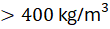 at the compressor inlet), volumetric flow rates are extremely compact. A multi-megawatt
 turbine rotor measures a fraction of the physical size of a comparable steam turbine, rotating at ultra-high rotational speeds exceeding
 to
 .
High rotational speeds combined with high operating pressures ( [
 ]) impose severe mechanical stresses on compressor impellers and turbine blades. Furthermore, operating at elevated temperatures (
 [
 ]) in high-pressure carbon dioxide environments triggers aggressive metal carburization and oxidation. Engineers deploy advanced nickel-based superalloys—such as Inconel 740H and Haynes 282—alongside dry gas labyrinth seals and electromagnetic active magnetic bearings (AMB) to eliminate lubricating oil contamination and maintain hermetic sealing across high-speed rotating shafts.
Printed Circuit Heat Exchanger (PCHE) Integration
Recuperative heat exchange within supercritical carbon dioxide power systems demands compact, high-integrity heat exchangers capable of withstanding extreme thermal gradients and high internal pressures without mechanical failure. Traditional shell-and-tube heat exchangers are structurally inadequate for  duty cycles due to volumetric sizing constraints and high thermal stress fatigue.
Power plants utilize Printed Circuit Heat Exchangers (PCHEs) fabricated via photochemical etching and diffusion bonding. Micro-channels with hydraulic diameters ranging from  to
 (
 ) are etched chemically into stainless steel or nickel alloy plates, which are subsequently bonded under heat and pressure into a monolithic solid block. PCHEs deliver surface area densities exceeding
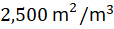 , handling pressure differentials up to
 (
 ) and thermal effectiveness values exceeding 98%, ensuring minimal exergy destruction across the recuperation loop.
The Final Take
Mastering supercritical carbon dioxide power cycle efficiency transforms thermal power generation by replacing bulky steam-Rankine systems with compact, high-efficiency closed-loop Brayton architectures. Citing IEA power generation roadmaps and thermodynamic engineering literature, exploiting pseudo-critical fluid compressibility and recompression layouts elevates thermal conversion yields beyond 50%. By integrating printed circuit heat exchangers and advanced nickel superalloy turbomachinery,  power generation establishes an indispensable foundation for high-efficiency clean energy infrastructure.



Comments (0)
Login to leave a comment.
No comments yet. Be the first to share your thoughts!