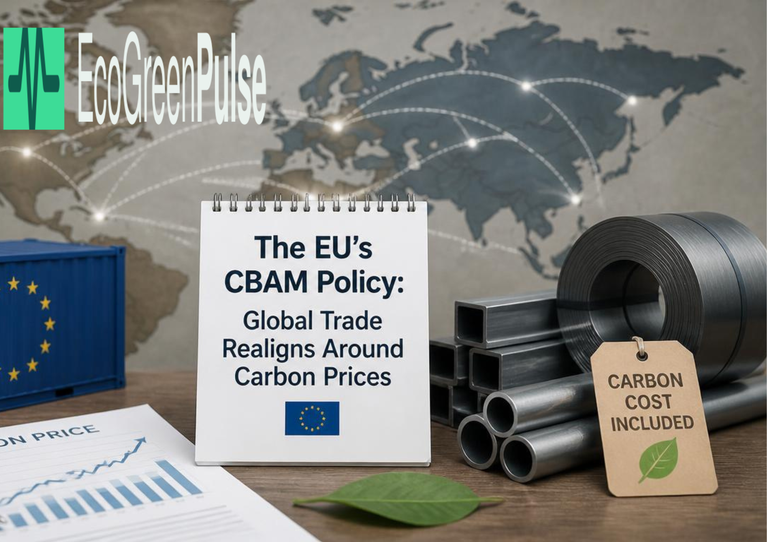
This old loophole had a name: carbon leakage. It felt deeply frustrating for honest manufacturers trying to do the right thing. They followed the rules. They paid the costs. Meanwhile, competitors abroad kept polluting freely, selling cheaper goods into the very markets trying to fight climate change. It felt like being punished for good behavior.
Europe finally said enough. The carbon border adjustment mechanism, often shortened to CBAM, is the world's first real attempt to close this painful gap. In this guide, we will explore how the carbon border adjustment mechanism works. We will look at who it affects. We will look at why it feels like such an important, hopeful shift in global trade. By the end, you will understand why so many industries are scrambling to adapt.
Why Carbon Leakage Felt So Unfair
Let's start with the old problem. Imagine two steel factories. One sits in Europe, following strict emissions rules. The other sits somewhere with no climate laws at all. The European factory pays real money to cut its pollution. The other factory pays nothing and pollutes freely.
Both factories ship their steel to the same European customers. Guess which one wins on price? This unfair advantage pushed European factories to shut down or relocate, just to survive. Jobs disappeared. Communities suffered. And worst of all, global emissions did not even drop. Pollution simply moved somewhere else.
This painful cycle is exactly what the carbon border adjustment mechanism was designed to stop. It refuses to let dirty imports quietly undercut cleaner, more responsible producers. That single idea feels almost like simple justice, finally applied to global trade.
What Exactly Is the Carbon Border Adjustment Mechanism?
So what is the carbon border adjustment mechanism, in plain terms? It is essentially a carbon tariff. It applies to goods entering Europe from countries without strong climate rules of their own.
The carbon border adjustment mechanism targets some of the dirtiest, heaviest industries first. This includes iron, steel, cement, aluminum, fertilizers, electricity, and hydrogen. These sectors produce massive amounts of carbon dioxide during manufacturing, making them a natural starting point for this bold new policy.
Instead of letting these products enter Europe tariff-free, the carbon border adjustment mechanism forces importers to pay a price matching what European manufacturers already pay internally. This levels the playing field. Suddenly, cutting corners on emissions no longer offers a competitive advantage.
How the Border Tariff Actually Works
Understanding the mechanics helps make this feel less abstract. The carbon border adjustment mechanism links directly to Europe's internal carbon market, known as the Emissions Trading System, or ETS.
When a foreign company ships materials like steel or cement into an EU port, they must report the emissions created while making those goods. If their home country has no internal carbon tax, the importer must buy special certificates instead. These certificates track the same price European factories already pay for their own emissions.
Here is where the carbon border adjustment mechanism gets genuinely clever. If a company can prove they already paid a carbon tax back home, that amount gets deducted from what they owe at the European border. This creates a powerful incentive. Countries suddenly have a real reason to create their own carbon taxes, keeping that revenue at home instead of losing it to European customs.
The Global Wake-Up Call
The ripple effects of the carbon border adjustment mechanism are already spreading across the world. Manufacturers in Asia, South America, and other regions outside the EU are facing a difficult choice. Clean up their operations, or lose access to one of the largest, wealthiest markets on the planet.
This is not a small threat. Europe represents an enormous share of global trade. Losing access there could cripple entire industries overnight. So companies are moving fast, driven by genuine fear of falling behind.
Steel producers are investing heavily in green hydrogen technology, hoping to replace old, dirty coal-fired furnaces. Cement manufacturers are adopting carbon mineralization techniques, trapping emissions directly inside their products instead of releasing them into the sky. These changes were unthinkable just a few years ago. Now, thanks to the carbon border adjustment mechanism, they feel absolutely necessary.
Winners and Losers in This New System
Not every company is reacting the same way to the carbon border adjustment mechanism. Some see genuine opportunity here. Companies that invested early in clean technology are suddenly gaining a real competitive edge. They can export to Europe without extra tariffs, while slower competitors get stuck paying steep fees.
This creates a powerful, almost thrilling incentive for innovation. Businesses that once saw sustainability as an expensive burden now see it as a genuine financial advantage. That shift in mindset feels significant, turning environmental responsibility into smart, competitive strategy.
Of course, not everyone feels excited about this change. Smaller manufacturers, especially in developing nations, may struggle to afford the upgrades needed to comply. This raises real concerns about fairness on a global scale. The carbon border adjustment mechanism aims to punish pollution, but it risks placing heavy new costs on countries that simply lack the resources to modernize quickly.
The Emotional Weight Behind This Policy
There is something deeply meaningful about watching trade policy finally take climate change seriously. For decades, environmental goals often felt secondary to economic priorities. Companies talked about sustainability, but rarely faced real financial consequences for ignoring it.
The carbon border adjustment mechanism changes that story. It sends a clear, emotional message: pollution now has a real price, no matter where it happens. That message feels satisfying to workers in cleaner factories who spent years watching cheaper, dirtier competitors undercut their hard work.
At the same time, this policy carries real weight for struggling economies trying to catch up. It forces uncomfortable questions about fairness, opportunity, and who truly bears the burden of fixing a global problem. These are not easy tensions to resolve, and the carbon border adjustment mechanism sits right in the middle of that difficult conversation.
Why Other Countries Are Watching Closely
Europe is not acting entirely alone in this shift. Other major economies are watching the carbon border adjustment mechanism closely, studying its effects before deciding whether to build similar systems of their own.
If more regions adopt their own version of this policy, the impact could become truly massive. Pollution could no longer simply hide behind cheap labor or lax regulations in distant countries. Instead, a coordinated global system could finally make carbon emissions a real, consistent cost everywhere, not just within European borders.
This possibility feels genuinely hopeful for anyone worried about the pace of global climate action. The carbon border adjustment mechanism might just be the opening move in a much larger, worldwide shift toward taking emissions seriously in trade policy.
Common Questions About the Carbon Border Adjustment Mechanism
Which industries does the carbon border adjustment mechanism affect most? It currently targets iron, steel, cement, aluminum, fertilizers, electricity, and hydrogen, industries known for high carbon emissions during production.
Can companies avoid paying the carbon border adjustment mechanism tariff? Yes, if they can prove they already paid a carbon tax in their home country. That amount gets deducted from what they owe at the European border.
Will other countries create their own version of the carbon border adjustment mechanism? Many experts believe so. Several major economies are already studying Europe's approach, considering similar carbon tariffs of their own in the coming years.
Does the carbon border adjustment mechanism unfairly punish developing countries? This remains a genuine concern. Smaller or developing nations may struggle to afford rapid industrial upgrades, raising real questions about fairness within this new system.
The Economic Ripple Effects Beyond Trade
Beyond individual factories, the carbon border adjustment mechanism is starting to reshape entire national economies. Countries heavily dependent on exporting steel, cement, or aluminum to Europe now face pressure to rethink their entire industrial strategy. This is not a small adjustment. It touches jobs, investment decisions, and long-term economic planning.
Some nations are responding by accelerating their own clean energy transitions, hoping to lower the carbon intensity of their exports before the carbon border adjustment mechanism costs become too painful. This creates an unexpected side effect. A policy designed to protect European industry is quietly pushing other countries toward faster decarbonization, even outside their own borders.
Financial markets are paying attention too. Investors are increasingly factoring the carbon border adjustment mechanism into their risk assessments for heavy industry stocks. Companies slow to adapt may find themselves viewed as riskier investments, while early movers toward clean production methods often attract more favorable attention from environmentally conscious funds and shareholders.
Looking Ahead: What Comes Next
The carbon border adjustment mechanism is still relatively new, and its full impact will likely take years to fully unfold. Early compliance periods often come with grace periods and gradual phase-ins, giving companies time to adjust before facing the harshest penalties.
Over time, expect the scope of the carbon border adjustment mechanism to expand. Additional industries beyond the current list could eventually fall under its rules, especially if the initial rollout proves successful at reducing emissions without severely damaging trade relationships.
There is also a real possibility that this policy inspires a wave of similar mechanisms worldwide. If major economies like the United States, Japan, or China eventually build their own versions, a genuinely coordinated global system could emerge. That kind of alignment feels ambitious, even a little idealistic, but the carbon border adjustment mechanism proves it is no longer just a theoretical idea. It is a working, functioning policy already reshaping real trade flows today.
Final Thoughts
The carbon border adjustment mechanism represents a genuine turning point in global trade. For the first time, pollution carries a real, unavoidable price at Europe's border, no matter where a product was made or how it got there.
This shift feels both hopeful and complicated at once. It rewards companies bold enough to invest in cleaner technology early. It challenges struggling economies to modernize faster than they might be ready for. Both realities exist together, wrapped inside the same policy.
As more countries watch and consider similar systems, the carbon border adjustment mechanism could mark the beginning of something much larger: a genuinely global effort to make carbon emissions matter everywhere, not just within a single continent's borders.
In the end, the carbon border adjustment mechanism sends a message that feels long overdue. Pollution is no longer free. That single shift, quiet as it might seem on paper, could end up reshaping how the entire world builds, trades, and manufactures for decades to come.
Comments (0)
Login to leave a comment.
No comments yet. Be the first to share your thoughts!