What district heating actually means
District heating means one central system produces heat, then distributes it through underground pipes to many buildings across a neighborhood or even an entire city. Instead of every building having its own separate heating system, they all share one larger, central source.
Adding heat pumps to this existing concept means that central heat source can now come from electricity-powered heat pumps, rather than burning fossil fuels directly.
A real example already working at massive scale
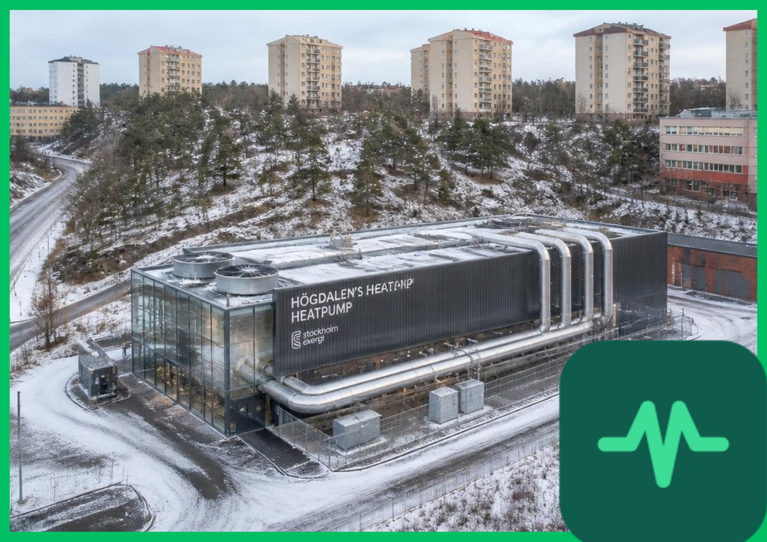
One well-documented example involves Stockholm, where a combined network of heat pumps totaling 500 megawatts supplies between 10 and 20 percent of the entire city's district heat demand. This ranks among the largest deployments of this kind of technology anywhere in the world.
This isn't a small pilot project. It's a substantial, functioning part of how a major city actually heats a significant portion of its buildings every single day.
Where these large-scale heat pumps get their heat from
Unlike a home heat pump pulling heat from outdoor air, these large systems often pull heat from unusual, plentiful sources. Sewage systems, subway tunnels, and even industrial waste heat can all serve as starting points for a large-scale heat pump network.
One documented example in China uses a 200 megawatt heat pump specifically to recover waste heat from a nearby steel mill, turning what would otherwise be wasted industrial heat into useful warmth for surrounding buildings.
Why using these particular heat sources makes such good sense
Sewage, subway tunnels, and industrial processes all naturally produce consistent, low-grade heat as an unavoidable byproduct of their normal operation. This heat exists whether anyone uses it or not, making it a genuinely efficient starting point for a heat pump to boost into something more useful.
Rather than starting from cold outdoor air, which takes more energy for heat pumps to work with, these mild, already-warm sources give large heat pump systems a genuine head start.
Why this approach scales so well for cities
A single large heat pump system serving thousands of buildings is often considerably more efficient than thousands of individual home systems all operating separately. Centralizing this process means better technology, more careful maintenance, and generally higher overall efficiency become realistic to achieve.
This mirrors how large power plants can often operate more efficiently than countless individual, small generators, even though individual home systems remain a genuinely practical choice in many other situations.
Why this system also supports the broader electricity grid
Large-scale heat pump networks paired with thermal storage can also help absorb excess renewable electricity, similar to what we've discussed with individual home heat pumps, just at a considerably larger scale.
This means district heating systems using heat pumps can serve double duty, warming buildings efficiently while also helping stabilize the broader electricity grid during periods of excess solar or wind generation.
The honest limitations of this approach
District heating networks require substantial upfront infrastructure investment, including the underground pipe networks needed to actually distribute heat across a city. This makes the approach considerably more practical for new developments or cities already having some existing district heating infrastructure in place.
Retrofitting this kind of system into a city that never had district heating before represents a much larger, more disruptive undertaking than simply installing individual home heat pumps one building at a time.
Why this matters for cities planning future growth
For rapidly growing cities, or those planning major new developments, incorporating district heating with heat pumps from the very beginning offers real efficiency advantages compared to building thousands of separate, individual heating systems later.
This kind of forward-thinking infrastructure planning can meaningfully shape a city's energy efficiency and emissions for decades into the future, similar to how thoughtful building design choices matter so much precisely because buildings last so long.
Why this represents genuinely creative, resourceful thinking
Finding usable heat in sewage, subway tunnels, and industrial waste reflects the same resourceful thinking we've seen elsewhere in heat pump technology, treating overlooked, existing heat sources as valuable resources rather than simply ignoring them.
Applying this thinking at a citywide scale, rather than just individual buildings, multiplies the potential impact considerably, since a single well-designed system can serve thousands of homes simultaneously.
What this could mean for more cities going forward
As more cities look for ways to reduce heating-related emissions, examples like Stockholm's large-scale heat pump network offer a genuinely proven, working model worth studying and potentially adapting elsewhere.
This won't work identically everywhere, since local infrastructure, climate, and available heat sources all vary considerably. But the core concept, capturing existing waste heat at scale using heat pumps, offers real, transferable lessons for cities around the world.
The bottom line
Some cities already heat significant portions of their buildings using massive, shared heat pump networks, drawing heat from sources like sewage systems, subway tunnels, and industrial waste heat rather than starting from cold outdoor air.
Examples like Stockholm's substantial heat pump network prove this approach genuinely works at real, meaningful scale, offering a proven model that other growing cities could study and adapt as they plan their own future heating infrastructure.


Comments (0)
Login to leave a comment.
No comments yet. Be the first to share your thoughts!