 and
 (
 to
 ) at depths exceeding
 (
 ). Unlike air source heat pumps that experience wide capacity swings during extreme outdoor ambient weather fluctuations, geothermal heat pumps (GSHPs) leverage this subsurface thermal inertia to maintain high coefficients of performance across all operating seasons. Designing high-efficiency closed-loop geothermal systems requires rigorous control over vertical borehole heat exchangers, subsurface thermal energy extraction, grouting thermal resistance, and ground-source thermodynamic cycles.
Subsurface Thermodynamics and Ground Temperature Stability
The operational advantage of geothermal heat pumps stems from the thermal capacity of the earth. Solar radiation absorbed by the upper crust establishes a seasonal temperature wave that attenuates with depth due to thermal diffusivity of soil and rock formations. At depths beyond  (
 ), the annual ambient temperature variation drops below
 (
 ), creating a stable heat sink during summer cooling cycles and a stable heat source during winter heating cycles.
Subsurface heat transfer is governed by Fourier's law of thermal conduction:
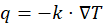
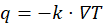
where  represents the heat flux vector,
 is the thermal conductivity of the geological formation measured in
 , and
 is the local temperature gradient. High thermal conductivity in the surrounding bedrock, quartz-rich sandstones, or saturated crystalline rock accelerates heat diffusion, preventing local thermal depletion or accumulation around buried pipe networks.
Vertical Borehole Heat Exchangers and Conduction Physics
Residential and commercial installations frequently utilize vertical borehole heat exchangers (VBHEs) drilled to depths between  and
 (
 to
 ). Each borehole contains a closed-loop high-density polyethylene (HDPE) U-tube pipe assembly through which a circulating heat carrier fluid—typically a water-glycol mixture (such as aqueous propylene glycol)—is pumped.
Heat transfer within the borehole involves multiple thermal resistances in series:
- Convective Resistance: Internal forced convection heat transfer between the circulating fluid and the inner wall of the HDPE U-tube pipe.
- Conductive Wall Resistance: Solid conduction resistance across the HDPE pipe wall thickness.
- Annular Grout Resistance: Conductive heat transfer resistance through the cementitious or bentonite grout backfill sealing the annular space between the pipes and the borehole wall.
- Geological Formation Resistance: Radial conductive heat transfer through the surrounding native soil or rock matrix.
Minimizing each thermal resistance layer is mandatory to maximize total system heat exchange efficiency and prevent excessive fluid temperature penalties.
Grouting Thermal Resistance and Backfill Physics
The annular space between the HDPE U-tube pipes and the raw borehole wall is sealed using specialized thermal grout mixtures composed of sodium bentonite clay, high-purity silica sand (quartz aggregates), and water. Standard un-enhanced bentonite grout exhibits low thermal conductivity ( to
 ), acting as a thermal insulator that traps heat inside the borehole and degrades system performance.
Adding high-conductivity quartz sand increases the effective thermal conductivity of the grout to  to
 . Lowering grouting thermal resistance reduces the effective borehole thermal resistance (
 ), enabling tighter borehole spacing arrays and reducing total drilling length requirements by 10% to 20%. Furthermore, low-permeability grout prevents cross-contamination between distinct subterranean aquifers, satisfying strict environmental protection regulations.
Technical Data Specifications of Geothermal Parameters
| Geothermal Parameter | Engineering Specification Range |
|---|---|
| Vertical Borehole Depth |  to  (  to  ) |
| Thermal Conductivity of Thermal Grout |  to  |
| Ground-Source Heating COP | 3.8 to 5.2 seasonal coefficient of performance |
| Ground-Source Cooling EER | 16 to 25 energy efficiency ratio |
| Circulating Fluid Velocity |  to  (  to  ) |
| HDPE U-Tube Pipe Diameter |  to  (  to  ) |
| Undisturbed Ground Temperature |  to  (  to  ) |
Ground-Source Coefficient of Performance (COP) and Thermodynamic Efficiency
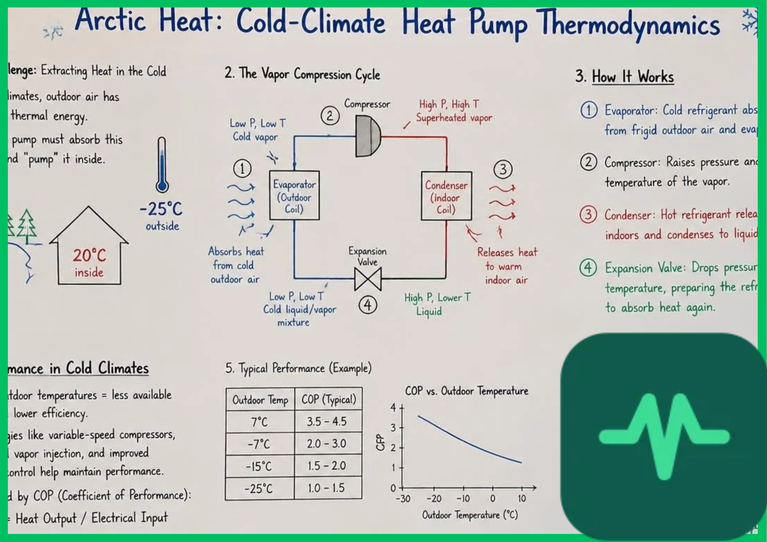
The thermodynamic efficiency of geothermal heat pumps significantly surpasses air source alternatives due to favorable source temperatures. The heating coefficient of performance ( ) is expressed as:
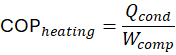
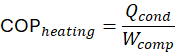
where  is the thermal energy delivered by the condenser to the indoor space and
 is the electrical work input consumed by the compressor. Because ground temperatures remain stable (
 [
 ]) during winter when outdoor air temperatures drop below freezing, the evaporating temperature (
 ) of the refrigerant remains high.
Higher evaporating temperatures yield lower compression ratios across the compressor, reducing electrical work ( ) and driving ground-source COP values between 3.8 and 5.2. This high thermodynamic efficiency means geothermal systems deliver nearly four to five units of thermal energy for every single unit of electrical energy consumed.
Thermal Imbalance and Long-Term Subsurface Degradation
Long-term operational reliability requires balancing annual heat extraction and heat rejection loads within the subterranean volume. In commercial buildings with cooling-dominated or heating-dominated profiles, unmanaged net thermal imbalances cause long-term thermal migration.
If a building injects more heat into the ground than it extracts annually (common in data centers or southern commercial spaces), the local ground temperature rises progressively over multi-year operational cycles, degrading summer cooling efficiency. Conversely, heating-dominant northern installations can cause ground temperature depletion, freezing the surrounding soil and reducing winter evaporation capacity.
Mitigating thermal imbalance requires hybrid geothermal systems combining closed-loop boreholes with auxiliary fluid coolers, dry coolers, or cooling towers to reject excess thermal energy. Quantitative engineering research published by the IEA and academic geothermics consortia confirms that optimized geothermal heat pump ground loop thermal conductivity ensures high thermodynamic efficiency and multi-decade asset durability. By mastering subsurface thermal energy extraction and grouting physics, geothermal systems deliver ultra-low carbon heating and cooling across global building applications.
Comments (0)
Login to leave a comment.
No comments yet. Be the first to share your thoughts!