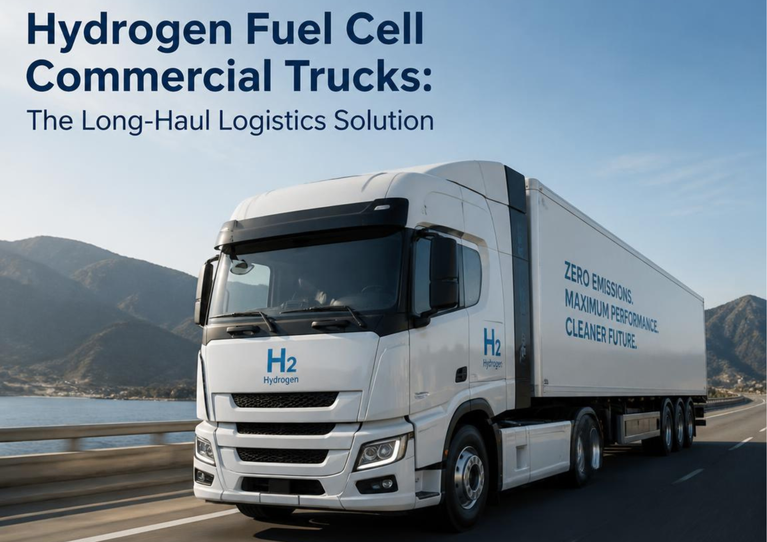
Picture a semi-truck carrying forty tons of freight. That truck needs a huge amount of steady power to make it across the country. Load it up with lithium batteries, and you get a serious problem. The battery pack alone can weigh up to ten thousand pounds. That weight eats directly into how much cargo the truck can legally carry.
This is where hydrogen fuel cell trucks step in with real promise. They skip the heavy battery altogether. Instead, they make electricity right on board, using hydrogen gas. In this guide, we will explore how hydrogen fuel cell trucks work. We will look at the weight they save. We will look at how fast they refuel. By the end, you will understand why so many logistics companies feel hopeful about this technology.
Why Batteries Struggle With Big Trucks
Let's start with the core problem. Batteries work beautifully in cars. Cars are light. Cars travel short daily distances. None of that holds true for big rigs hauling freight across state lines.
A heavy truck needs a massive amount of energy just to move forward. Packing that much energy into lithium batteries means packing in a lot of weight. Every extra pound of battery is a pound the truck cannot use for actual cargo.
This creates a painful trade-off. More battery means more range. But more battery also means less freight per trip. For companies running tight logistics schedules, this trade-off feels almost impossible to accept. Hydrogen fuel cell trucks were built to solve exactly this kind of frustrating math.
What Makes Hydrogen Fuel Cell Trucks Different
So what exactly are hydrogen fuel cell trucks? At their core, they are still electric vehicles. They still use electric motors to turn the wheels, just like a battery-powered truck.
The big difference sits in how the electricity gets made. Instead of storing power in a heavy battery, hydrogen fuel cell trucks build electricity on the spot, right inside the truck itself. This happens inside something called a fuel cell stack.
This shift feels almost like magic the first time you hear it explained. No giant battery block weighing the truck down. Just hydrogen gas, quietly turned into power as the truck drives, mile after mile.
How the Fuel Cell Actually Works
Let's break this down simply. Hydrogen fuel cell trucks use a design called a Proton-Exchange Membrane fuel cell, often shortened to PEM. Inside this cell, compressed hydrogen gas flows in from onboard tanks.
At the same time, regular air gets pulled in from outside the truck. A special material called a catalyst splits the hydrogen apart into two tiny pieces, protons and electrons. The protons slip through a thin membrane. The electrons cannot follow that same path. Instead, they must travel around an outside circuit.
This forced detour is exactly what creates electricity. As the electrons flow around this circuit, they generate a steady current, powering the truck's electric motors. At the very end, the electrons and protons meet back up with the air, forming pure water vapor. That is it. No smoke. No soot. Just quiet electricity and a little harmless water.
The Weight Advantage That Changes Everything
Here is where hydrogen fuel cell trucks truly shine. Hydrogen packs an incredible amount of energy into very little weight. This matters enormously for freight companies watching every single pound.
A full hydrogen fuel cell system, including tanks, cooling parts, and the cell stack itself, weighs thousands of pounds less than a comparable battery pack. That weight savings goes straight back into cargo space. More freight per trip means more revenue per trip, without breaking any legal weight limits.
For an industry built on tight margins, this weight advantage feels like real, tangible relief. Hydrogen fuel cell trucks let companies keep hauling full loads, without sacrificing space just to carry their own power source around.
Refueling in Minutes, Not Hours
Weight is not the only win here. Speed matters just as much in the trucking world. Time spent charging is time spent not driving, and time is money in this business.
A large battery-electric truck can take several hours to recharge, even at powerful public charging stations. That kind of delay disrupts tight delivery schedules and frustrates drivers trying to stay on route.
Hydrogen fuel cell trucks skip this painful wait entirely. A driver can pull into a hydrogen station and fill the tanks completely in just 10 to 15 minutes. That is barely longer than a typical diesel fill-up. This fast turnaround lets fleets keep moving at nearly the same pace they always have, without losing hours to slow charging stops.
Why This Feels Like Real Hope for Truckers
There is something genuinely comforting about a technology that fits so naturally into an existing routine. Truckers already know how to pull in, refuel, and get back on the road quickly. Hydrogen fuel cell trucks barely change that habit at all.
This matters emotionally, not just practically. Drivers worried about long charging waits can breathe easier. Fleet managers stressed about lost cargo space can finally see a real path forward. Hydrogen fuel cell trucks offer a rare kind of relief, solving two major headaches, weight and refueling speed, at the exact same time.
The Big Challenge: Building Hydrogen Infrastructure
As promising as this all sounds, hydrogen fuel cell trucks face a real, honest obstacle. Hydrogen fueling stations are still rare. Unlike gas stations, which sit on nearly every highway exit, hydrogen infrastructure remains limited to a small number of locations.
This creates a frustrating chicken-and-egg problem. Companies hesitate to buy hydrogen fuel cell trucks without enough fueling stations along their routes. Meanwhile, fuel companies hesitate to build new stations without enough trucks on the road to use them.
Breaking this cycle takes real investment and coordination. Governments and private companies are starting to work together, funding early fueling corridors along major freight routes. Each new station built makes hydrogen fuel cell trucks a little more practical for the next company considering the switch.
Why Clean Hydrogen Matters Too
It is worth noting that not all hydrogen is created equally clean. Some hydrogen gets made using fossil fuels, which cuts into the environmental benefits significantly. For hydrogen fuel cell trucks to truly deliver on their clean energy promise, the hydrogen itself needs to come from renewable sources.
Green hydrogen, made using renewable electricity to split water molecules apart, offers the cleanest possible option. As more renewable energy comes online worldwide, green hydrogen production is expected to grow alongside it. This growth matters enormously for the long-term success of hydrogen fuel cell trucks as a genuinely sustainable solution, not just a cleaner alternative to diesel.
Where This Technology Fits Best
Hydrogen fuel cell trucks are not necessarily meant to replace every single vehicle on the road. Instead, they shine brightest in specific situations where their strengths matter most.
Long-haul freight routes are the clearest fit. These trucks travel hundreds of miles daily, making fast refueling and low weight especially valuable. Heavy cargo runs, where every pound of payload counts, also benefit enormously from the weight savings hydrogen fuel cell trucks offer over battery alternatives.
Battery-electric trucks may still make more sense for shorter, local delivery routes, where overnight charging fits naturally into a driver's schedule. This creates a sensible split, letting each technology serve the routes where it performs best, rather than forcing one single solution onto every type of trucking job.
Common Questions About Hydrogen Fuel Cell Trucks
How long does it take to refuel hydrogen fuel cell trucks? Most trucks can fully refuel in about 10 to 15 minutes, similar to a traditional diesel fill-up.
Are hydrogen fuel cell trucks truly zero-emission? Yes, at the tailpipe. The only byproduct is water vapor. However, the cleanliness of the hydrogen itself depends on how it was produced, with green hydrogen being the cleanest option.
Why are hydrogen fuel cell trucks better than batteries for long-haul freight? They weigh significantly less than large battery packs, preserving cargo capacity, and they refuel much faster, keeping trucks on schedule.
What is holding back wider adoption of hydrogen fuel cell trucks? The biggest barrier is limited hydrogen fueling infrastructure. Expanding stations along major freight corridors is essential for wider adoption.
The Cost Question Fleets Are Watching Closely
Cost matters just as much as weight and speed when it comes to hydrogen fuel cell trucks. Right now, these trucks cost more upfront than a comparable diesel or battery-electric model. This higher price tag comes from the specialized fuel cell stack and high-pressure tanks required to store hydrogen safely.
Fuel prices also vary depending on location and hydrogen source. In regions with limited infrastructure, hydrogen can cost more per mile than diesel, at least for now. As production scales up and more stations come online, prices are expected to fall, following a pattern seen with many new energy technologies before they reached mainstream use.
Fleet operators are increasingly looking at total cost of ownership rather than just the sticker price alone. Fewer lost hours from slow charging, combined with maximized cargo capacity, can offset a higher upfront cost over time. For companies running high-mileage, heavy-freight routes, hydrogen fuel cell trucks may already make strong financial sense, even before prices drop further.
Final Thoughts
Hydrogen fuel cell trucks offer a genuinely practical answer to one of trucking's toughest challenges. By generating electricity on board instead of hauling around a heavy battery, these trucks preserve precious cargo space while still delivering clean, quiet power.
Real challenges remain, especially around building out fueling infrastructure. Yet this feels like a solvable problem, not a permanent roadblock. Just as diesel stations once had to be built out across the country decades ago, hydrogen networks are steadily expanding along key freight corridors today.
As green hydrogen production grows and refueling stations spread, expect hydrogen fuel cell trucks to become an increasingly common sight on major highways. This technology offers exactly what the freight industry has needed for years: fast refueling, lighter weight, and genuinely clean emissions, all working together without disrupting the pace of modern logistics.
In the end, hydrogen fuel cell trucks remind us that the cleanest solution is not always the most obvious one. Sometimes, the answer is not a bigger battery. Sometimes, it is a smarter, lighter way to make power right where you need it.


Comments (0)
Login to leave a comment.
No comments yet. Be the first to share your thoughts!