Why disassembly is the crucial first step
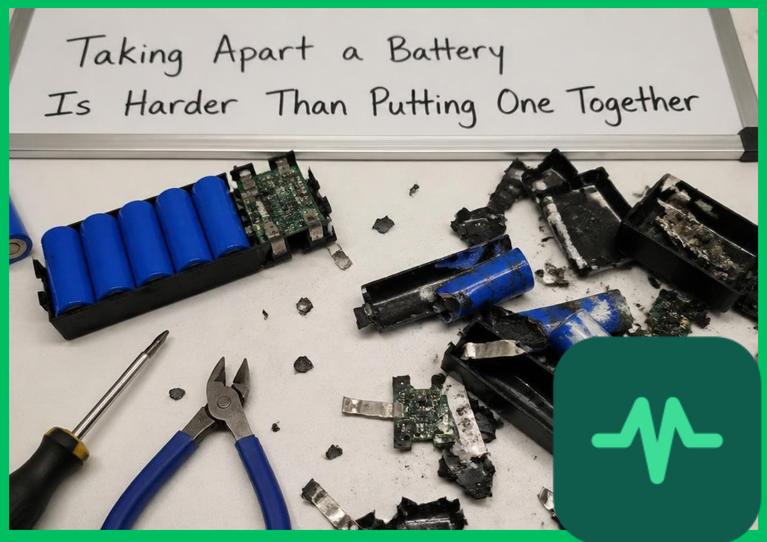
An electric vehicle battery isn't one simple object. It's made of many individual cells, packed tightly together, wired in complex patterns, and sealed for safety and durability during years of driving.
Before any material can be recovered for recycling, someone needs to carefully separate all these components, without damaging the valuable materials inside or creating any safety hazards during the process.
Why this is genuinely more difficult than it sounds
Batteries are deliberately built to be sturdy and secure, since they need to survive years of vibration, temperature changes, and general wear during a vehicle's normal driving life. This same sturdiness that makes them reliable also makes them genuinely difficult to safely take apart later.
Different manufacturers also design their battery packs differently, meaning there's no single universal disassembly process that works identically for every single battery type coming through a recycling facility.
Why robots are increasingly handling this specific job
Given the complexity and genuine safety concerns involved, researchers have been developing robotic systems specifically designed to handle battery disassembly. These systems can work with more precision and consistency than manual disassembly alone typically allows.
Some approaches specifically combine human workers and robots together, dividing tasks based on which parts of the process benefit most from human judgment versus robotic precision and repeatability.
Why getting this step right matters so much
A poorly disassembled battery risks damaging valuable materials inside, reducing how much can actually be recovered for reuse afterward. It can also create genuine safety hazards, since damaged battery cells can pose real fire or chemical exposure risks if handled improperly.
Getting disassembly right the first time genuinely maximizes both the value recovered and the safety of everyone involved in the broader recycling process.
Why battery design itself is starting to change because of this
Recognizing these disassembly challenges, researchers and manufacturers have increasingly emphasized designing batteries with easier future disassembly in mind from the very beginning, rather than treating this concern as an afterthought addressed only once a battery reaches the end of its life.
This means using more standardized components and connection methods that make future separation genuinely easier, without compromising the battery's necessary durability and safety during its actual years of use.
Why second-life uses come before final recycling
Not every retired battery goes straight to full recycling. Many still hold meaningful usable capacity, making them suitable for a second life in less demanding applications, like stationary energy storage, before eventually needing full material recovery.
Proper disassembly and honest assessment of a battery's remaining condition helps determine which retired batteries are still good candidates for this kind of second-life reuse, versus which should move directly toward full material recycling instead.
Why recovery rates have been genuinely improving
Modern battery recycling facilities have reported impressive recovery rates for valuable materials like nickel, copper, and cobalt, recovering the significant majority of these materials from batteries that reach the end of their full useful life.
This kind of high recovery rate depends heavily on getting the earlier disassembly process right, since damaged or improperly separated materials are considerably harder to recover cleanly during the later recycling stages.
Why this matters for the growing scale of the challenge
As electric vehicles continue growing in number worldwide, the volume of batteries eventually needing proper end-of-life handling will grow substantially in the coming years. Some projections suggest millions of tons of battery waste could need processing annually within just the next couple of decades.
This growing scale makes efficient, reliable disassembly processes increasingly important, since manual approaches alone likely can't handle this volume efficiently or safely at the scale that will eventually be required.
Why this represents genuinely important, if unglamorous, engineering work
Battery disassembly rarely generates exciting headlines compared to flashier topics like new vehicle models or exciting battery chemistry breakthroughs. Yet solving this specific, practical challenge is essential for making the entire circular battery economy genuinely function at meaningful scale.
Sometimes the most important progress happens in these less visible, more technical corners of an industry, quietly enabling everything else that depends on it working properly.
What this means for the future of battery recycling generally
As disassembly technology continues improving, alongside batteries increasingly designed with easier future disassembly already built in, the entire recycling process should become more efficient, safer, and capable of recovering more value from each retired battery over time.
This creates a genuinely positive cycle, where better disassembly leads to better material recovery, which in turn supports a more genuinely functional, valuable circular economy for battery materials overall.
The bottom line
Taking apart an old battery safely and efficiently is a genuinely harder engineering challenge than it might first appear, given how securely these components are built to survive years of actual use. Robotic systems and smarter, more disassembly-friendly battery designs are helping address this challenge directly.
Getting this step right matters enormously for the entire circular battery economy, since it determines how much valuable material can actually be recovered and reused, turning old batteries into genuine resources for building new ones rather than simply waste to manage.


Comments (0)
Login to leave a comment.
No comments yet. Be the first to share your thoughts!