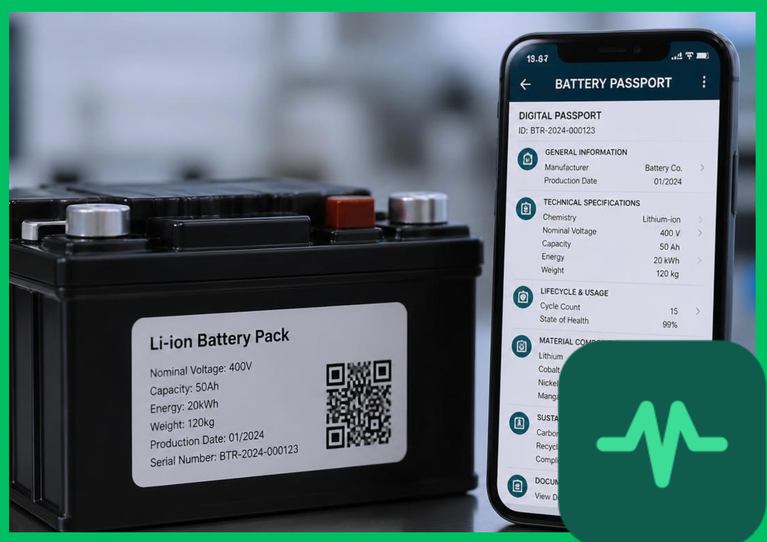
What a battery passport actually is
A battery passport is a digital record that follows a specific battery throughout its entire life, from the raw materials used to make it, through manufacturing, years of use in a vehicle, and eventually into recycling or reuse.
Instead of a battery's history disappearing once it leaves the factory, this digital record keeps track of key details the whole way through, creating genuine transparency across the entire journey.
Why this idea has gained genuine momentum recently
As circular economy efforts around batteries have grown more serious, researchers and industry groups have increasingly highlighted traceability as an essential piece of making the whole system actually work effectively.
Without knowing a battery's history, its exact materials, how it was used, and its current condition, it becomes genuinely harder to make good decisions about whether it's suitable for continued use, second-life applications, or full recycling.
What information this record actually includes
A battery passport typically includes details about the raw materials used, where they came from, how the battery was manufactured, and ongoing performance data collected throughout its years of actual use in a vehicle.
This creates a genuinely complete picture, rather than relying on guesswork or incomplete records when a battery eventually reaches the end of its first useful life in a car.
Why this matters so much for recycling decisions
When a battery reaches end of life, recyclers need to make important decisions quickly. Should it go toward a second-life application, like stationary energy storage, or does it need full material recycling instead?
Having detailed, reliable historical data available through a battery passport makes this decision considerably easier and more accurate than trying to assess an unknown battery's condition from scratch with limited information.
Why this connects to broader supply chain concerns
Beyond just recycling decisions, this kind of traceability also helps address genuine concerns about where battery materials originally came from, supporting efforts to verify responsible sourcing practices throughout the entire supply chain.
This matters increasingly to both regulators and buyers who care about the ethical and environmental practices behind the products they purchase, not just the final product's performance alone.
Why implementing this idea involves real, honest challenges
Creating a reliable, secure digital record that follows a battery across multiple companies, countries, and years of ownership requires genuine technical coordination between many different parties who don't always share data easily or willingly with each other today.
Standardizing exactly what information gets tracked, and ensuring this data remains accurate and genuinely trustworthy throughout a battery's long life, represents real, ongoing work rather than a simple, one-time technical fix.
Why this idea fits within the broader circular economy movement
A genuine circular economy for batteries depends on being able to reliably assess a battery's condition and history when deciding its next use. Without good information, decisions default toward simpler, more conservative choices, often full recycling even when a battery might genuinely still have useful second-life capacity remaining.
Better information, through something like a battery passport, allows for smarter, more nuanced decisions that can extend a battery's useful life considerably longer before it truly needs full material recovery.
Why this benefits multiple different parties simultaneously
Manufacturers benefit from better data about how their batteries actually perform in real-world conditions over time. Recyclers benefit from clearer information supporting better, faster decisions. Buyers benefit from greater confidence in a product's genuine history and origin.
This kind of shared benefit across multiple parties helps explain why this idea has gained genuine traction, rather than being pushed by just one single group with a narrow, specific interest in seeing it succeed.
Why this concept extends beyond just electric vehicle batteries
While much of the current attention focuses specifically on electric vehicle batteries, given their scale and value, similar traceability concepts could eventually apply to other types of batteries too, including those used in home energy storage or other growing applications.
This suggests battery passports could become a genuinely standard feature across the broader battery industry over time, rather than remaining specific to just one particular vehicle category.
What this could mean for you as a future battery owner
You likely won't interact directly with a battery passport yourself. This technology works quietly behind the scenes, informing decisions made by manufacturers, recyclers, and other industry participants throughout a battery's life.
Its ultimate benefit to you comes indirectly, through a more efficient, more genuinely circular battery industry that recovers more value and creates less waste overall, potentially supporting more sustainable, more affordable products over time.
The bottom line
A battery passport creates a genuine digital record following a battery through its entire life, from raw materials to eventual recycling. This traceability helps recyclers make smarter decisions, supports responsible sourcing verification, and strengthens the broader circular economy for batteries overall.
While real implementation challenges remain, this idea reflects a genuinely thoughtful approach to an increasingly important problem, ensuring valuable batteries get tracked carefully enough to extract their full, genuine value before anything gets wasted unnecessarily.



Comments (0)
Login to leave a comment.
No comments yet. Be the first to share your thoughts!