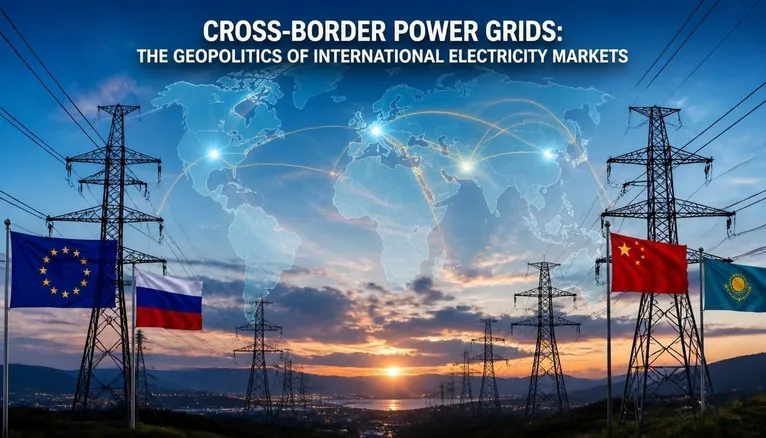
For years, countries kept their power grids separate. Each nation generated its own electricity. Each nation managed its own risk alone. This felt safe, but it also felt limiting. A cloudy week in one country could mean blackouts, even while a neighboring country sat drowning in unused solar power.
Cross-border power grids changed this story. They let nations share power across invisible lines on a map. When one country has too much clean energy, it can send the extra somewhere else. When another country runs low, it can pull power in return. It sounds beautifully simple. But underneath this simple idea sits something far more complicated: trust.
In this guide, we will explore how cross-border power grids work. We will look at the technology making them possible. We will also look at the fear hiding behind all that promise. By the end, you will understand why cross-border power grids feel like both a hopeful gift and a genuine risk, all at once.
Why Nations Need Each Other's Power
Let's start with the basic problem. Renewable energy is picky about location. The best solar spots sit in wide, empty deserts. The best wind spots sit along remote coastlines or high mountain passes. Almost none of these places are near big cities.
This creates a painful gap. Cities need huge amounts of power. Yet the cleanest energy often sits far away, sometimes across an entire border. Without a way to move that power, it simply goes to waste.
Cross-border power grids close this gap. They let clean energy travel across huge distances, connecting sunny deserts to distant factories, or windy coastlines to hungry city grids. This connection feels almost hopeful. It means one country's excess can become another country's relief.
The Technology Making This Possible
None of this would work without a major technical breakthrough. Old power lines simply could not handle long-distance trading. Regular alternating current, or AC, loses huge amounts of energy as heat over long distances. For decades, this made large-scale power trading nearly impossible.
Then came High-Voltage Direct Current technology, often called HVDC. This breakthrough changed everything. HVDC lines can send electricity thousands of miles with barely any loss, often under 3 percent for every 1,000 kilometers traveled. That efficiency feels almost magical compared to older systems.
Thanks to HVDC, cross-border power grids became a real, practical possibility instead of just a hopeful idea on paper. Countries could finally share power reliably, across oceans, mountains, and long stretches of open land.
Real Projects Already Connecting Nations
This is not just theory anymore. Cross-border power grids already exist, quietly working behind the scenes right now. The EuroAsia Interconnector is one striking example. This massive undersea cable links Israel, Cyprus, and Greece, creating a shared energy market across the Mediterranean Sea.
Another powerful example lies beneath the North Sea. Cables there connect Norway's enormous hydro-power reservoirs directly to the United Kingdom. When Norway has extra water power, it can send electricity to the UK. When British wind farms overflow with power, some of that energy can flow back the other way. It feels like a quiet, steady partnership between two very different energy systems.
These real projects prove something important. Cross-border power grids are not a distant dream. They are already reshaping how nations share resources, working quietly beneath oceans and across borders every single day.
The Beautiful Promise Behind the Wires
There is something genuinely moving about this idea. Cross-border power grids represent cooperation at a massive scale. Instead of every nation fighting alone against its own energy struggles, countries can lean on each other during difficult moments.
Picture a cloudy, windless week in one country. Normally, this might mean blackouts or expensive emergency backup power. But with cross-border power grids in place, that same country can simply pull clean energy from a neighboring nation instead. Nobody suffers unnecessarily. Nobody wastes fuel on dirty backup plants. The system quietly balances itself, almost like neighbors helping each other through a hard week.
This kind of shared resilience feels hopeful in a world often divided by conflict and competition. Cross-border power grids show what is possible when nations choose collaboration over isolation, even if just for something as practical as electricity.
The Fear Hiding Behind the Promise
But here is where the story turns more complicated, even a little unsettling. Sharing power means sharing vulnerability too. The moment a country depends on cross-border power grids for a meaningful share of its electricity, it gives up a piece of its independence.
This dependency creates real anxiety among national security experts. What happens if political relations sour between two connected nations? What happens during a serious conflict or diplomatic crisis? In theory, one country could simply switch off its transmission lines, instantly plunging its neighbor into painful energy shortages.
This is not just a hypothetical fear. It is a very real strategic concern shaping how governments approach cross-border power grids today. Energy, once seen as a purely practical resource, suddenly becomes a political weapon, capable of applying pressure without a single shot fired.
Trust: The Real Currency Behind Power Sharing
This is why trust matters so deeply here. Building a cross-border power grid is not just an engineering project. It is a profound act of political faith between two nations. Each country must genuinely believe the other will act fairly, even during tense or uncertain times.
This trust does not come easily. It requires strong legal treaties, clear agreements, and stable diplomatic relationships built over years, sometimes decades. Without that foundation, cross-border power grids remain fragile, vulnerable to collapse the moment political winds shift unexpectedly.
This emotional weight adds real tension to what might otherwise seem like a simple technical solution. Wires and cables alone cannot guarantee peace or cooperation. Only genuine, sustained trust between nations can make cross-border power grids truly safe and reliable over the long run.
Balancing Hope and Caution
So how do nations move forward, given both this incredible promise and this genuine risk? Most countries are choosing careful, gradual expansion rather than reckless rapid growth. Cross-border power grids are being built with strict capacity limits, ensuring no single nation becomes too dependent on another all at once.
Regulatory agencies now treat these interconnections as critical infrastructure, deserving intense scrutiny and careful oversight. This caution feels wise, even if it slows progress slightly. Nobody wants to build a beautiful, efficient system, only to have it weaponized during a future crisis.
This balance between hope and caution defines much of the modern conversation around cross-border power grids. Engineers see incredible potential. Diplomats see real, lingering risk. Both perspectives matter, and both must be respected as this technology continues expanding across the globe.
Why This Matters for the Future of Clean Energy
Despite these real risks, most experts agree that cross-border power grids remain essential for a fully decarbonized future. Renewable energy simply cannot reach its full potential locked inside isolated national borders. Sharing power across regions helps stabilize grids, reduce waste, and accelerate the shift away from fossil fuels.
Without cross-border power grids, countries with poor solar or wind resources might struggle to fully embrace clean energy at all. With them, even less sunny or less windy nations can tap into a much larger, shared renewable resource pool, spread across an entire continent or region.
This matters enormously for global climate goals. A world connected through cross-border power grids is a world better equipped to handle the unpredictable nature of renewable energy, working together instead of struggling alone against the same shared challenge.
Common Questions About Cross-Border Power Grids
Are cross-border power grids safe from political conflict? Not entirely. While they offer real benefits, they also introduce genuine security risks if diplomatic relations break down between connected nations. Strict treaties and capacity limits help reduce, but not eliminate, this risk.
What technology makes cross-border power grids possible? High-Voltage Direct Current, or HVDC, technology allows electricity to travel long distances with minimal energy loss, making large-scale international power trading realistic and efficient.
Which countries already use cross-border power grids? Several projects already exist, including the EuroAsia Interconnector linking Israel, Cyprus, and Greece, and undersea cables connecting Norway's hydro-power reservoirs to the United Kingdom.
Will cross-border power grids continue expanding in the future? Most experts believe so, especially as renewable energy adoption grows. However, expansion will likely remain gradual and cautious, shaped as much by political trust as by engineering capability.
The Economic Case for Sharing Power
Beyond politics and climate goals, there is also a strong financial argument behind cross-border power grids. Electricity prices can swing wildly depending on local supply and demand. A sudden heatwave might spike prices in one country, while a neighboring nation sits on a surplus of cheap renewable power.
Cross-border power grids allow this imbalance to correct itself. Instead of one country paying painfully high prices while another wastes excess energy, power can flow to wherever it is needed most. This creates a more efficient, more affordable market overall, benefiting consumers on both sides of the border.
Businesses benefit too. Industries that rely on stable, predictable energy costs, like manufacturing or data centers, gain real confidence knowing that cross-border power grids can help smooth out sudden price spikes. This financial stability often matters just as much to policymakers as the environmental benefits, making cross-border power grids an easier sell politically, even amid lingering security concerns.
The Practical Challenges of Building Bigger Grids
Even when the political will exists, building cross-border power grids is not simple. These projects require massive amounts of physical infrastructure. Undersea cables must survive harsh ocean conditions for decades. Underground lines must cross difficult terrain, sometimes spanning mountains or dense urban areas.
Construction costs run into the billions of dollars for major interconnection projects. Financing these massive undertakings often requires cooperation not just between governments, but among private investors and international financial institutions as well. This adds another layer of complexity to an already difficult diplomatic puzzle.
Permitting and regulatory approval can also take years. Environmental reviews, local community concerns, and competing national interests all slow down the timeline for new cross-border power grids. Despite the clear long-term benefits, these practical hurdles mean that expanding this kind of infrastructure rarely happens quickly, no matter how badly a region might need it.
Final Thoughts
Cross-border power grids represent something genuinely rare: a technology built on both hope and vulnerability at the same time. They offer nations a real path toward shared, resilient clean energy, letting sunny deserts support cloudy cities, and windy coastlines support calmer neighbors during quiet weeks.
Yet this same interconnection also demands deep trust, the kind that cannot be engineered, only earned slowly through diplomacy and shared commitment. Cross-border power grids remind us that even the most advanced technology still depends on something deeply human: the willingness of nations to trust one another.
As the world continues racing toward a cleaner energy future, cross-border power grids will likely keep growing, cable by cable, treaty by treaty. Each new connection carries both real promise and real risk, woven together across borders that electricity, unlike politics, does not naturally recognize.
In the end, cross-border power grids ask something bold of the world: to choose cooperation over isolation, even when trust feels fragile. That choice, difficult as it is, may be exactly what our shared, warming planet needs most right now.


Comments (0)
Login to leave a comment.
No comments yet. Be the first to share your thoughts!