

 ), usable depth of discharge, calendar and cycle degradation, thermal management loads, and interconnection queue timelines. Evaluating levelized cost of storage, capital expenditure intensity, power-to-grid bottlenecks, and project finance risk is essential for analyzing global clean energy capital allocation and grid storage economics.
Levelized Cost of Storage and Thermodynamic Efficiency Mechanics
Project sponsors and utilities compare stationary storage technologies using levelized cost of storage ( ), which expresses discounted total lifecycle costs per unit of delivered electrical energy (typically
 or
 discharged, where
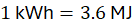 and
 ). A standard formulation relates capital expenditure (
 ), fixed and variable operating/maintenance costs (
 ), charging electricity cost (
 ), round-trip efficiency (
 ), discount rate (
 ), annual discharge energy (
 ), and project lifetime (
 ):
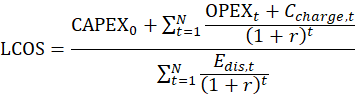
Charging cost depends directly on round-trip efficiency (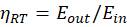 ), because every megawatt-hour delivered to the grid requires
 megawatt-hours of charging energy plus any auxiliary thermal-management or parasitic draw. A battery energy storage system (
 ) with
 requires roughly
 of input per
 discharged, whereas a longer-duration flow or thermal system at
 requires
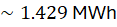 of input per
 discharged.
When wholesale electricity prices exhibit wide spread between low-price solar/wind surplus hours and high-price evening or winter peak hours, charging cost stays low relative to discharge revenue; when price spreads narrow or charging power is expensive, round-trip losses and charge costs weigh heavily on project economics.
Capital Expenditure Intensity and Duration Scaling
Evaluating capital expenditure intensity requires separating power-related costs ( or
 for inverters, transformers, switchgear, civil works, and protection) from energy-related costs (
 or
 for battery cells, racks, electrolyte tanks, or thermal reservoirs). Total system capital cost scales across discharge duration (
 , measured in hours):

where  is power-specific capital cost (
 ) and
 is energy-specific capital cost (
 ).
This linear-duration structure explains why capital allocation shifts across storage technologies as required discharge duration increases. Lithium-ion batteries—such as lithium iron phosphate ( ,
 ) chemistries widely used in stationary utility racks—combine high power capability, high round-trip efficiency, and compact footprint for short- to medium-duration duty (
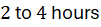 , and increasingly
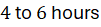 ). As storage duration stretches toward
 , technologies with lower energy-specific cost (
 )—such as pumped hydro storage, vanadium redox flow batteries, or iron-air/thermal storage—become more competitive on energy capacity, provided round-trip efficiency, footprint, and siting conditions support the duty cycle.
Technical Data Specifications of Grid Storage Investment & Physics
| Storage & Finance Parameter | Engineering & Capital Allocation Benchmark |
|---|---|
| Primary Economic Metric | Levelized cost of storage ( ,  or  ) |
| Power & Energy Unit Basis |  ; 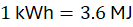 |
| Thermal Operating Envelope |  to  (  to  ) ambient enclosure range |
| Key Technical Cost Drivers |  , cycle/calendar degradation, augmentation,  loads |
| Duration Scaling Levers | Power block ( ) vs. energy capacity (   hours) |
| Grid Revenue / Value Streams | Arbitrage, peak capacity, ancillary services, congestion relief |
| Primary Execution Bottleneck | Grid interconnection queues, transformers, permitting lead times |
Power-to-Grid Bottlenecks and Interconnection Realities
Even when cell or module costs fall, physical power-to-grid bottlenecks can delay commercial operation and lock up committed capital. Connecting a multi-megawatt or hundred-megawatt storage facility to high-voltage substations requires medium- and high-voltage transformers, circuit breakers, relay protection, SCADA integration, and grid-impact studies.
Supply-chain constraints on grain-oriented electrical steel, high-voltage power transformers, and switchgear—alongside multi-year interconnection study backlogs in congested transmission zones—can stretch project timelines from financial close to commercial operation. Thermal boundary conditions also influence balance-of-plant design: operating battery containers in hot climates ( to
 [
 to
 ]) increases active cooling power and accelerates calendar aging if cell temperatures drift upward, while cold environments (
 to
 [
 to
 ]) require thermal conditioning to protect charge acceptance and performance.
Project Finance Risk and Revenue Stack Bankability
Structuring project finance for grid storage requires matching revenue certainty with technical performance guarantees. Unlike a solar or wind asset operating under a long-term fixed-price power purchase agreement ( ), a merchant or partially contracted storage asset often earns value across multiple shifting grid services—energy arbitrage, frequency regulation, voltage support, reserve markets, and transmission congestion relief.
Lenders and equity investors evaluate project finance risk across several technical and market dimensions:
- Degradation & Augmentation Risk: Capacity fade from cycling and calendar aging reduces usable energy over time; contracts must specify clear augmentation schedules, state-of-health warranties, and degradation modeling under expected duty cycles.
- Market & Dispatch Volatility: Narrowing peak-to-off-peak price spreads as more storage enters a grid can compress arbitrage margins, making contracted capacity payments, tolling agreements, or grid-services contracts important for debt service coverage.
- Safety, Insurance & Compliance: Rigorous thermal runaway prevention, gas/fire suppression design, cybersecurity compliance, and adherence to international grid codes govern insurability and lender bankability.
Aligning capital allocation with accurate round-trip efficiency modeling, realistic augmentation budgets, and grid-ready interconnection pathways turns physical storage capabilities into bankable power-system infrastructure.


Comments (0)
Login to leave a comment.
No comments yet. Be the first to share your thoughts!