
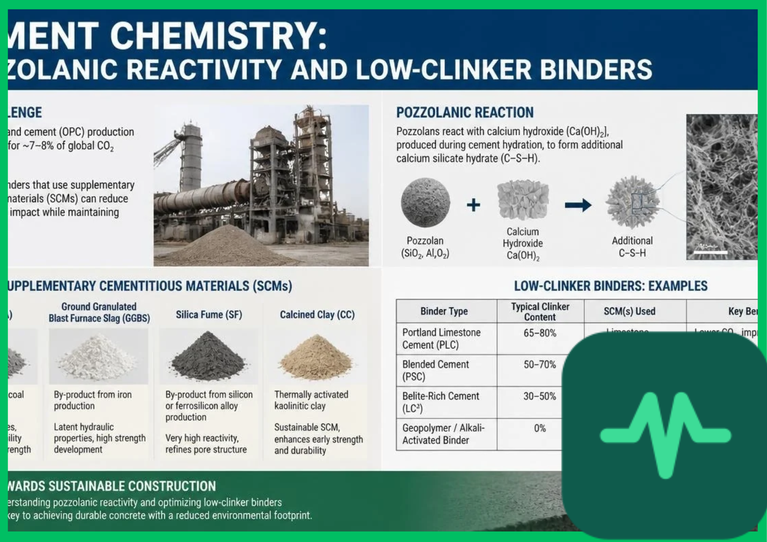
 per tonne of clinker (
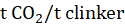 ), driven by high-temperature calcination of limestone (
 ) at kiln material temperatures near
 to
 (
 to
 ) alongside fossil fuel combustion. Because global concrete demand continues to expand with urban infrastructure and housing, lowering the clinker-to-cement ratio (clinker factor) represents a primary near-term lever to cut industrial emissions without waiting for radical kiln replacements. Low-clinker supplementary cementitious materials pozzolanic reactivity enables partial replacement of ordinary Portland cement (
 ) clinker while generating strength-giving hydrate phases and refining capillary porosity. Evaluating calcined clay metakaolin, amorphous silica reaction, calcium silicate hydrate formation, and clinker factor reduction is essential for analyzing low-clinker binder chemistry.
Clinker Hydration and Pozzolanic Reactivity Mechanics
Ordinary Portland cement clinker consists primarily of tricalcium silicate ( , alite,
 ), dicalcium silicate (
 , belite,
 ), tricalcium aluminate (
 , aluminate phase,
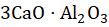 ), and tetracalcium aluminoferrite (
 , ferrite phase,
 ). Upon mixing with water, silicate phases hydrate to form calcium silicate hydrate (
 ) gel—the principal binding phase responsible for mechanical strength—while liberating substantial quantities of crystalline calcium hydroxide (
 , portlandite,
 ):

Portlandite contributes little to strength and increases vulnerability to leaching and sulfate or acid attack because it is relatively soluble and lacks cohesive binding strength.
Pozzolanic materials are siliceous or aluminosilicate substances that possess minimal cementitious value on their own but react chemically in the presence of moisture at ambient curing temperatures ( to
 [
 to
 ]) with calcium hydroxide (
 ) released during clinker hydration. Through the amorphous silica reaction and aluminosilicate dissolution-precipitation pathways, pozzolans consume portlandite and form secondary
 gel and calcium aluminosilicate hydrate (
 ) phases:

In aluminosilicate pozzolans, aluminum incorporates into the silicate chain structure to form  and stratlingite (
 ) or AFm phases, altering gel stoichiometry (
 ratio) and binding alkalis and chloride ions more tightly than pure
 alone.
Calcined Clay Metakaolin and Amorphous Phase Activation
Natural clays—such as kaolinite (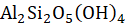 ), illite, or montmorillonite—require thermal dehydroxylation to become reactive pozzolans. Heating kaolinitic clay in a flash or rotary calciner within roughly
 to
 (
 to
 ) drives off structural hydroxyl water (dehydroxylation) and collapses crystalline sheet order into disordered, high-surface-area calcined clay metakaolin (
 , or
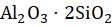 ).
Calcination temperature control is critical. Insufficient heating leaves un-dehydroxylated kaolinite with low reactivity, whereas over-calcination above roughly  (
 ) sinters the disordered phase into inert crystalline mullite or spinel, destroying pozzolanic activity. Pairing calcined clay with ground limestone (
 ) in ternary blends—such as limestone calcined clay cement (
 )—enables synergistic reactions between alumina from metakaolin, carbonate from limestone, and calcium hydroxide from clinker hydration to form carboaluminate phases (
 ), preserving early and later-age compressive strength at substantially lower clinker factors.
Other supplementary cementitious materials ( ) follow distinct physicochemical paths:
- Silica Fume: Condensed amorphous
 microspheres (
 mean diameter) with high specific surface area and rapid amorphous silica reaction kinetics that densify the interfacial transition zone around aggregates.
- Ground Granulated Blast-Furnace Slag (
 ): Vitreous calcium-magnesium aluminosilicate glass quenched rapidly from iron blast furnaces; exhibits latent hydraulic behavior alongside pozzolanic reaction when activated by alkaline pore solutions and sulfate.
- Natural Pozzolans & Volcanic Glasses: Pumice, volcanic ash, or diatomaceous/calcined earths containing reactive amorphous silica and alumina where availability and grinding energy govern regional viability.
Technical Data Specifications of Low-Clinker Binder Systems
| Binder & Reaction Parameter | Low-Clinker Pozzolanic System Specification |
|---|---|
| Clinker Calcination Temp |  to  (  to  ) kiln feed |
| Clay Calcination Window |  to  (  to  ) metakaolin activation |
| Concrete Curing Temp Span |  to  (  to  ) hydration/pozzolanic rate |
| Key Hydrate Reaction Products |  ,  , carboaluminates (  phases) |
| Microstructural Effect | Capillary pore refinement, tortuosity increase,  consumption |
| Energy & Power Unit Basis | 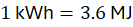 ;  (grinding/milling) |
| Primary Decarbonization Lever | Clinker factor reduction + lower-temperature clay activation |
Calcium Silicate Hydrate Microstructure and Durability
As secondary calcium silicate hydrate and  gel precipitate within water-filled spaces between cement and aggregate particles, they subdivide large capillary pores into finer gel pores and discontinuous networks. This pore refinement lowers matrix permeability and ionic diffusivity, slowing ingress of aggressive external agents such as chloride ions (
 ), sulfates (
 ), and atmospheric carbon dioxide.
Reduced portlandite content also lowers susceptibility to calcium leaching in soft or flowing water and limits expansive ettringite or thaumasite formation under sulfate exposure. However, because pozzolanic reactions depend on prior clinker hydration to release  and require adequate moisture and time, high-replacement mixes can exhibit slower early-age strength gain at cool temperatures (
 [
 ]) and higher chemical admixture or water demand when fine, high-surface-area calcined clays or silica fumes are incorporated. Adjusting particle packing, superplasticizer dosage, and curing moisture controls workability and strength development across structural applications.
Clinker Factor Reduction and Industrial Scaling Realities
Achieving meaningful clinker factor reduction across global construction requires aligning material chemistry with regional raw-material availability, grinding energy, and structural code requirements. Where industrial slag or fly ash supplies are constrained or declining relative to cement demand, abundant kaolinitic and mixed clays offer scalable alternatives when paired with controlled thermal activation and limestone additions.
Grinding fineness, calciner fuel efficiency, and consistent raw-material mineralogy determine whether low-clinker binders deliver net carbon savings and reliable mechanical performance without excessive electrical grinding energy (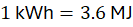 ;
 ). Standardizing performance-based specifications—evaluating compressive strength, durability indices, and lifecycle emissions intensity rather than rigid prescriptive clinker minimums alone—accelerates adoption of low-clinker cements across residential, commercial, and civil infrastructure.

Comments (0)
Login to leave a comment.
No comments yet. Be the first to share your thoughts!