
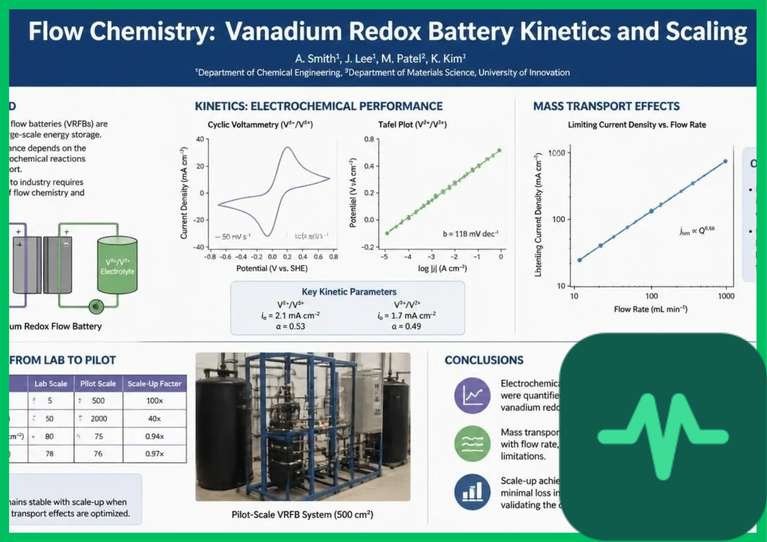
 ) capable of deep daily cycling without rapid cell degradation. Conventional lithium-ion battery packs couple power capability and energy capacity inside fixed cell enclosures, whereas a vanadium redox flow battery long-duration electrolyte kinetics architecture separates power rating (stack active area and cell count) from energy capacity (tank volume and electrolyte concentration), allowing independent scaling for multi-hour energy discharge. Evaluating vanadium oxidation states, membrane proton transport, stack polarization resistance, and multi-hour energy discharge is essential for analyzing vanadium redox flow battery kinetics and scaling.
Vanadium Oxidation States and Half-Cell Redox Kinetics
An all-vanadium redox flow battery ( ) stores electrical charge chemically in liquid electrolytes containing vanadium ions across four oxidation states dissolved in sulfuric acid (
 ) supporting solution:
 ,
 ,
 (
 ), and
 (
 ). Using the same element on both positive and negative sides prevents cross-contamination from permanently ruining electrolyte chemistry if ions permeate across the separator.
During discharge, oxidation occurs at the negative electrode while reduction occurs at the positive electrode across porous carbon or graphite felt electrodes:


The standard open-circuit cell potential at unit activities is approximately  (shifting with state of charge, acid concentration, and temperature according to the Nernst equation, typically around
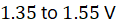 at high state of charge). Because electrode reactions in aqueous
 occur heterogeneously at carbon fiber surfaces without phase changes in solid crystal lattices, charge-transfer kinetics depend on active surface area, surface oxygen/nitrogen functional groups, electrolyte flow velocity, and mass transport of vanadium species to the electrode interface.
Membrane Proton Transport and Crossover Dynamics
Between the positive and negative half-cells sits an ion-exchange membrane—commonly a perfluorosulfonic acid membrane such as Nafion or a modified hydrocarbon/anion-exchange membrane—that conducts protons ( ) or sulfate/bisulfate ions to complete the internal ionic circuit while restricting bulk mixing of positive and negative electrolytes.
Membrane proton transport governs ionic resistance across the separator and influences coulombic and voltage efficiency. However, no commercial membrane is completely impermeable to vanadium cations ( ,
 ,
 ,
 ) and water molecules. Vanadium crossover driven by concentration gradients, migration under electric field, and electro-osmotic drag across the membrane causes self-discharge, gradual capacity decay over time, and state-of-charge imbalance between the positive and negative tanks. Periodic electrolyte rebalancing or remixing restores capacity balance and supports multi-decade stack operation when paired with sound thermal management.
Stack Polarization Resistance and Thermal Precipitation Limits
Under load or charging current, operating cell voltage ( ) deviates from open-circuit voltage (
 ) due to stack polarization resistance—comprising activation overpotential (
 ), ohmic resistance across membranes, bipolar plates, and contact interfaces (
 ), and concentration overpotential (
 ) when reactant depletion occurs at high current density or low flow rate:

Raising flow rates via variable-speed centrifugal pumps improves mass transport and lowers concentration polarization, yet increases parasitic pumping power—creating an optimal pump-flow operating point that maximizes net round-trip DC-to-DC efficiency (typically 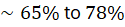 depending on current density, stack design, and pumping duty).
Electrolyte thermal stability sets a key physical boundary on energy density. In standard sulfuric acid vanadium electrolytes,  (
 ) can precipitate endothermically when electrolyte temperature exceeds roughly
 (
 ) at high state of charge, while
 or
 salts can crystallize at low temperatures (
 to
 [
 to
 ]) at high vanadium molarity (
 ). Maintaining electrolyte temperature within roughly
 to
 (
 to
 ) via heat exchangers or thermal control prevents solid precipitation that could clog porous electrodes or flow channels.
Technical Data Specifications of Vanadium Redox Flow Batteries
| VRFB Parameter | Engineering & Grid Storage Specification Standard |
|---|---|
| Active Redox Chemistry |  (neg.) &  (pos.) in  |
| Nominal Cell Voltage Span |  (state-of-charge dependent) |
| Typical Discharge Duration | 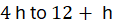 (decoupled power  & energy  ) |
| Power & Energy Unit Basis |  ; 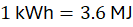 |
| Electrolyte Temp Window | 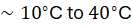 ( 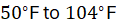 ) to prevent precipitation |
| DC-to-DC Round-Trip Eff. | Typically 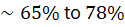 (including pumping load) |
| Key Scaling Trade-Off | Low volumetric  vs. long life & multi-hour scaling |
Multi-Hour Energy Discharge and Industrial Scaling Realities
Because liquid electrolyte energy capacity scales by expanding tank volume and electrolyte inventory rather than multiplying cell stacks, vanadium redox flow batteries are well suited to multi-hour energy discharge and stationary utility or commercial microgrid applications where footprint constraints are less restrictive than weight or volume limits. Volumetric energy density of aqueous vanadium electrolyte is lower than lithium-ion battery cells, making  bulkier per kilowatt-hour or megawatt-hour (
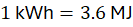 ;
 ).
Scaling deployments to utility gigawatt-hour equivalents also requires attention to vanadium raw material supply, electrolyte leasing or financing structures, shunt currents across shared manifold channels in multi-cell stacks, and auxiliary balance-of-plant reliability (pumps, valves, sensors, and heat exchangers). Where stationary grids need long calendar life, frequent deep cycling, non-flammable aqueous chemistry, and independent power-versus-energy sizing, flow battery physics provides a distinct operational profile.


Comments (0)
Login to leave a comment.
No comments yet. Be the first to share your thoughts!