
Intercalation Physics and Ionic Radius Diffusion Mechanics
The foundational physical difference governing sodium-ion insertion compared to lithium-ion systems stems directly from the intrinsic ionic radius of the alkali metal cation. The uncoordinated sodium ion ( ) possesses an ionic radius of
 (
 ), significantly larger than the lithium ion (
 ), which measures
 (
 ).
This volumetric discrepancy alters thermodynamic desolvation energies and solid-state diffusion kinetics across host electrode crystal lattices. Because the charge-to-radius ratio of  is lower than that of
 , sodium ions exhibit a smaller Stokes radius in polar organic carbonate liquid electrolytes. Consequently, solvated
 ions shed their solvent shell sheath more easily at the electrode-electrolyte interface, yielding lower desolvation activation energies and supporting exceptionally fast charge transfer kinetics at high current rates.
However, the larger physical volume of  ions imposes severe mechanical stress on host crystal structures during continuous intercalation and deintercalation cycles. Solid-state diffusion coefficients (
 ) within transition metal oxide and Prussian blue crystal lattices range between
 , requiring engineered sub-micron particle sizing and conductive carbon coatings to minimize diffusion path lengths and prevent structural lattice fracturing.
Prussian Blue Analogue Cathodes and Open Frameworks
Achieving high operational voltage and reversible capacity in sodium-ion cells requires advanced cathode materials capable of sustaining rapid ion insertion. Among prospective cathode chemistries, Prussian blue analogues (PBAs)—represented chemically by the general formula  (where
 represents an alkali metal and
 represents a transition metal such as iron, manganese, or nickel)—exhibit exceptional performance metrics.
Prussian blue analogues possess a rigid, open 3D framework structured around face-centered cubic crystal lattices with large interstitial channels and interstitial water vacancy sites. These expansive tunnels permit unhindered diffusion of bulky  ions without inducing catastrophic phase transitions or volumetric lattice expansion. The transition metal redox couples (
 and
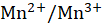 ) deliver high operating cell voltages exceeding
 to
 versus
 .
To prevent capacity fading caused by coordinated water molecules occupying framework vacancy sites during synthesis, advanced manufacturing protocols utilize high-temperature vacuum dehydration, ensuring high structural integrity and coulombic efficiencies exceeding 99%.
Technical Data Specifications of Sodium-Ion Parameters
| Sodium-Ion Battery Parameter | Engineering & Electrochemical Specification Standard |
|---|---|
Sodium Ionic Radius ( ) |  (  ) uncoordinated ionic scale |
| Prussian Blue Operating Voltage |  to  versus  reference |
| Hard Carbon Anode Intercalation Potential | Near  to  vs.  |
Solid-State Diffusion Coefficient ( ) |  crystal lattice mobility |
| Low-Temperature Discharge Retention |  capacity retention at  (  ) |
| Electrolyte Supporting Salt Formulation | Sodium hexafluorophosphate ( ) in carbonate blends |
| Cell-Level Volumetric Energy Density |  commercial stationary target |
Hard Carbon Anode Structure and Intercalation Mechanisms
While traditional lithium-ion batteries utilize graphitic carbon anodes where lithium ions intercalate smoothly between ordered graphene sheets (forming  ), standard graphite fails to intercalate sodium ions effectively. The interlayer spacing of natural graphite (
 ) is thermodynamically too narrow to accommodate the larger ionic radius of
 , resulting in negligible reversible capacity and severe staging instability.
To overcome this thermodynamic limitation, sodium-ion technology utilizes disordered hard carbon anodes derived from pyrolyzed biomass, synthetic polymers, or pitch precursors. Hard carbon exhibits a disturbed turbostratic carbon structure characterized by short-range graphene layers oriented randomly alongside extensive expanded interlayer spacing ( ) and closed nanoscale internal pores.
The sodium storage mechanism in hard carbon operates via a dual-stage "adsorption-insertion" model:
- Sloping Voltage Region (
 ): Sodium ions intercalate into expanded graphene interlayer galleries via conventional solid-state diffusion.
- Plateau Voltage Region (
 ): Sodium ions undergo pore-filling and cluster adsorption into closed nanopores within the disordered carbon matrix.
This dual mechanism yields reversible specific capacities ranging from  , providing stable long-term cycling kinetics across thousands of stationary charge-discharge cycles.
Low-Temperature Discharge Capacity and Thermal Stability
Stationary energy storage systems deployed across diverse global climates require robust performance under extreme meteorological conditions. Traditional lithium-ion batteries experience severe capacity collapse and lithium plating risks when charged or discharged at sub-zero temperatures due to sluggish liquid electrolyte desolvation and sluggish ionic diffusion through solid electrolyte interphase (SEI) layers.
Sodium-ion batteries demonstrate superior low-temperature discharge capacity retention. Because sodium-based organic carbonate electrolytes—typically utilizing sodium hexafluorophosphate ( ) dissolved in ethylene carbonate and dimethyl carbonate mixtures—exhibit lower desolvation activation energies and higher ionic conductivity at reduced temperatures, sodium cells maintain over 85% of their nominal discharge capacity at
 (
 ).
Furthermore, thermodynamic stability studies published in electrochemical literature confirm that sodium-ion cells release significantly less heat during thermal runaway events. The absence of copper current collector dissolution at low voltages allows sodium batteries to be discharged entirely to  for safe transport, storage, and maintenance.

Comments (0)
Login to leave a comment.
No comments yet. Be the first to share your thoughts!