
Gravitational Potential Energy Physics and Mass Dynamics
The foundational physical principle governing gravity energy storage is the conversion of mechanical work into gravitational potential energy. When surplus electrical energy is available on the grid, industrial winches or automated crane mechanisms lift massive solid weights from ground level or the bottom of an underground shaft to a designated vertical elevation.
The storable potential energy ( ) of a lifted mass is quantified by the standard gravitational equation:
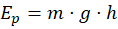
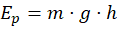
where  represents the total mass of the lifted blocks measured in kilograms (
 ) or metric tons,
 is the local acceleration due to gravity (
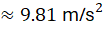 [
 ]), and
 is the vertical displacement height measured in meters (
 ) or feet (
 ).
To achieve grid-scale energy storage capacities on the order of gigawatt-hours ( ), gravity storage installations require massive aggregate mass volumes combined with substantial vertical elevation spans. For instance, raising a cumulative mass of
 (
 ) across a vertical shaft depth of
 (
 ) stores approximately
 of theoretical potential energy.
Mechanical Lifting Systems and Hoisting Architecture
Executing high-capacity mass lifting and descent cycles requires rugged mechanical hoisting infrastructure capable of operating under continuous high-tension mechanical loads. Gravity energy storage architectures are deployed primarily in two structural configurations: surface-based automated crane towers and subsurface underground shaft systems.
- Subsurface Shaft Systems: Utilizing abandoned deep-mine shafts, these systems suspend heavy composite blocks via high-strength steel wire ropes or carbon-fiber composite tethers coupled to multi-drum winding hoists. Subsurface installations benefit from existing geological reinforcement and deep vertical elevation spans exceeding
 (
 ).
- Surface Crane Towers: Engineered lattice-steel or reinforced concrete crane structures utilize synchronized robotic multi-hook trolleys to stack heavy blocks vertically in structured storage columns, establishing controlled gravitational potential fields without requiring subterranean excavation.
Hoisting cables and winch mechanisms are engineered to withstand tensile stress limits exceeding  (
 ). Automated braking systems and electronic load sensors monitor tension distribution across all tether lines, preventing catastrophic cable slip or dynamic overload during sudden grid power interruptions.
Kinetic Energy Recovery and Regenerative Braking
During the discharge phase, the heavy mass descends under the influence of gravity, driving the hoisting winch drum to spin. The rotating winch shaft is coupled directly to a multi-stage gearbox connected to a permanent-magnet synchronous generator (PMSM) or a doubly-fed induction generator (DFIG).
As the descending mass pulls against the winch mechanism, the generator operates in regenerative braking mode, converting mechanical rotational kinetic energy into multi-phase alternating current (AC). Wide-bandgap silicon carbide ( ) power inverters rectify and condition this generated electrical output, matching grid frequency (
 or
 ) and voltage parameters before injecting power into the transmission bus.
Controlling descent velocity requires precise closed-loop feedback algorithms. Maintaining a constant descent speed (typically  to
 [
 ]) ensures steady mechanical power output (
 ) and stable electrical frequency synchronization:


where  represents the downward velocity vector and
 accounts for mechanical transmission, gearbox, and generator conversion efficiencies.
Technical Data Specifications of Gravity Energy Storage Parameters
| Mechanical & Physical Parameter | Engineering Specification Range |
|---|---|
| Cumulative Lifted Mass Volume |  to  (  ) |
Vertical Displacement Span ( ) |  to  (  to  ) |
Descent Velocity ( ) |  to  (  to  ) |
| Aggregate Round-Trip Efficiency | 75% to 85% mechanical-to-electrical recovery |
| Tether Tensile Strength Limit |  to  (  ) |
| Discharge Power Output Capacity |  to  (  ) |
| Block Material Density |  to  (reinforced composite aggregate) |
Structural Materials Science and Foundation Mechanics
The structural integrity of gravity energy storage systems depends on the durability and density of the lifted weights. Fabricating millions of tons of blocks from standard Portland cement incurs a massive embodied carbon footprint that undermines clean-energy decarbonization objectives.
Modern GESS engineering replaces traditional cement with low-carbon composite blocks manufactured from industrial byproducts, including fly ash, slag from steel manufacturing, excavated tunnel rock, and compacted aggregate bound with geopolymer matrices. These high-density composite blocks achieve dry densities between  and
 , maximizing potential energy density per unit volume.
Furthermore, foundation mechanics at the base of surface crane towers or underground shafts must withstand severe cyclic compressive loading. Geotechnical engineering analyses utilize finite element method (FEM) modeling to evaluate soil and rock strata bearing capacity, ensuring foundation settlement remains within strict sub-millimeter tolerances across decades of continuous mass lifting and stacking operations.
Round-Trip Efficiency Optimization and Economic Viability
Evaluating the commercial scalability of gravity energy storage requires analyzing aggregate round-trip efficiency ( ) and levelized cost of storage (LCOS). Mechanical energy storage avoids the chemical degradation, thermal runaway risks, and electrolyte capacity fade that constrain lithium-ion battery lifespans.
Aggregate round-trip efficiency for modern gravity energy storage installations ranges between 75% and 85%. Energy losses stem primarily from mechanical friction within winch gearboxes, aerodynamic drag of suspended blocks moving through vertical shafts, electrical resistance in generator windings, and inverter conversion overheads.
Quantitative clean-energy assessments published by academic engineering consortia and the IEA confirm that gravity energy storage exhibits exceptionally low long-term operation and maintenance (O&M) costs. Because solid composite blocks experience zero chemical wear, mechanical systems achieve operational lifespans exceeding 30 to 50 years without requiring material replacement. By mastering gravitational potential energy conversion, mechanical hoisting dynamics, and high-density composite materials, gravity energy storage establishes an indispensable technical foundation for long-duration grid decarbonization.

Comments (0)
Login to leave a comment.
No comments yet. Be the first to share your thoughts!