
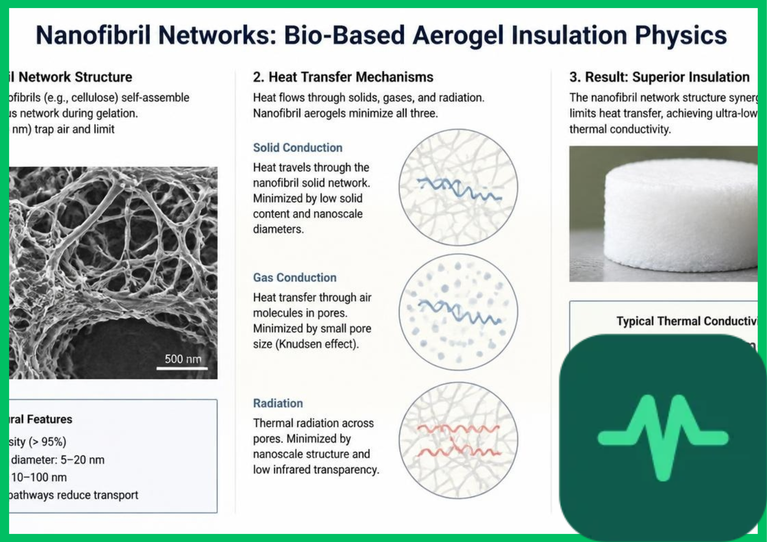
Thermal Conduction Physics and the Knudsen Effect in Nanofibril Networks
Heat transfer through porous insulation materials occurs simultaneously via three primary physical mechanisms: solid conduction through the solid matrix skeleton, gaseous conduction through trapped air pockets within pores, and thermal radiation across pore walls. Total effective thermal conductivity ( ) is formulated mathematically as the sum of these distinct heat transfer vectors:

In standard fibrous insulation—such as glass wool or mineral wool—gaseous conduction dominates because open pore diameters exceed the mean free path of air molecules ( at standard temperature and pressure), allowing unrestricted molecular collisions. Cellulose nanofibril aerogels restrict this thermal transfer by engineering tortuous, open-cell nanostructures with average pore diameters significantly smaller than
 (
 ).
This structural confinement induces the Knudsen effect, where gas molecules collide more frequently with the solid cellulose nanofibril cell walls than with each other. This molecular restriction dampens thermal kinetic energy transfer, suppressing gaseous thermal conductivity ( ) well below the static thermal conductivity of free air (
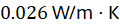 at
 [
 ]). Furthermore, the tortuous nanofibril network increases solid conduction path length, minimizing solid thermal conductivity (
 ) despite low material density.
Cellulose Nanofibril Extraction and Cryogenic Drying Mechanics
Fabricating high-porosity cellulose nanofibril aerogels requires precise chemical and mechanical processing of plant biomass, wood pulp, or agricultural waste residues. Raw plant cell walls are composed of hierarchical bundles of crystalline and amorphous cellulose microfibrils bound together by hemicellulose and lignin matrix polymers. Chemical bleaching and mechanical high-pressure homogenization disintegrate plant fibers into individual cellulose nanofibrils (CNFs) possessing lateral dimensions of  to
 (
 ) and lengths spanning several micrometers.
Following aqueous dispersion, water within the nanofibril suspension must be removed without inducing capillary pressure collapse of the fragile porous network. Capillary forces during standard ambient evaporation generate immense meniscus pressures that crush nano-scale pores, causing severe structural densification and destroying porosity. To prevent structural collapse, manufacturers utilize solvent exchange (transitioning water to tert-butanol or ethanol) followed by cryogenic freeze-drying (lyophilization) or supercritical carbon dioxide ( ) extraction.
Cryogenic drying mechanics sublimate frozen solvent crystals directly from solid to vapor phase under vacuum, bypassing the liquid-vapor phase boundary entirely. This preserves a high-porosity open-cell aerogel skeleton exceeding 95% to 98% air volume fraction, maintaining ultra-low bulk density (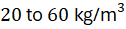 [
 ]).
Technical Data Specifications of Bio-Based Aerogel Insulation Parameters
| Bio-Based Aerogel Insulation Parameter | Engineering & Material Specification Standard |
|---|---|
Thermal Conductivity ( ) |  at  (  ) |
| Thermal Resistance (R-Value) |  (  ) thickness |
| Porous Network Porosity | 95% to 98% gas-filled void fraction |
Bulk Aerogel Density ( ) | 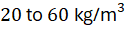 (  ) |
| Cellulose Nanofibril Diameter |  to  (  ) |
| Embodied Carbon Footprint | Negative to near-zero biogenic carbon balance |
| Maximum Operating Temperature |  to  (  to  ) |
Thermal Resistance R-Value and Structural Density Metrics
The thermal efficiency of building insulation materials is quantified by thermal resistance, commonly measured as R-value per unit thickness ( or
 ). Cellulose nanofibril aerogels achieve exceptional thermal resistance values due to their nano-porous architecture, yielding R-values ranging from
 to
 per inch of thickness.
This thermal performance matches or exceeds traditional petrochemical rigid foam insulation while occupying significantly thinner profile dimensions. In building retrofit applications where spatial constraints limit exterior insulation thickness, high-performance bio-based aerogels provide maximum thermal resistance without requiring bulky framing modifications.
Embodied Carbon Reduction and Life Cycle Assessment Metrics
Manufacturing synthetic petrochemical insulation involves energy-intensive polymerization processes and chemical blowing agents that contribute significant embodied carbon to building construction. Conversely, cellulose nanofibril aerogels utilize biogenic carbon sequestered naturally by plants during growth, neutralizing initial manufacturing emissions.
According to UNEP life cycle assessments (LCAs), substituting traditional extruded polystyrene insulation with bio-based cellulose nanofibril aerogels reduces building envelope embodied carbon by 60% to 80%. Furthermore, plant-derived feedstocks are fully renewable, bypassing the depletion of fossil reserves and supporting circular economy construction principles.
Moisture Adsorption and Chemical Hydrophobic Modification
Cellulose is inherently hydrophilic due to an abundance of exposed hydroxyl ( ) groups along its polymer chains. Unmodified cellulose aerogels readily absorb ambient water vapor, which swells the nanofibril matrix, degrades thermal resistance, and compromises structural integrity.
To achieve long-term durability in building envelopes, manufacturers apply chemical surface modifications—such as silane grafting, fluoropolymer coating, or cross-linking with bio-resins. These chemical treatments bond hydrophobic functional groups to the nanofibril surfaces, repelling liquid water and preventing moisture condensation while maintaining high vapor permeability ( -value), ensuring the building envelope breathes safely.
Comments (0)
Login to leave a comment.
No comments yet. Be the first to share your thoughts!