
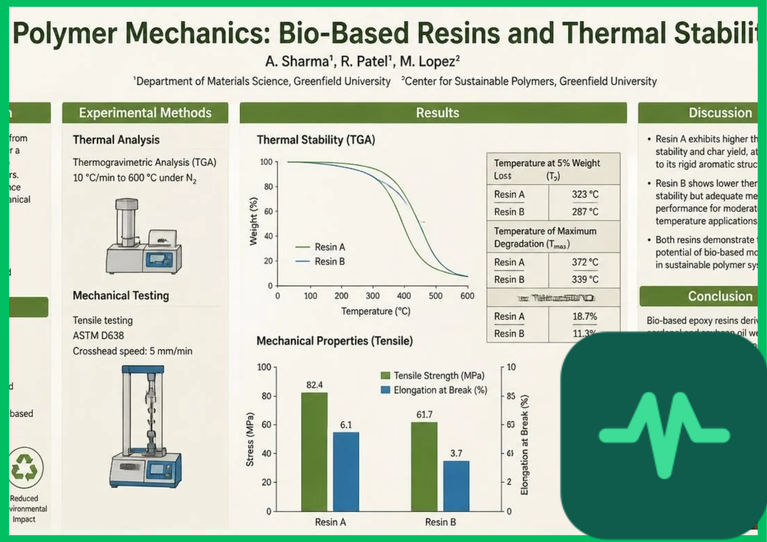
 annually and relies predominantly on fossil hydrocarbons for monomer synthesis and thermal process heat. Substituting petroleum-derived monomers with bio-based feedstocks—such as lignin aromatics, plant-oil fatty acids, furan derivatives like
 (
 ), isosorbide, or itaconic acid—reduces fossil carbon intensity only if resulting polymer networks match mechanical stiffness, thermal softening resistance, and environmental durability over multi-decade service spans. Evaluating bio-based structural polymers glass transition temperature mechanics, monomer feedstock chemistry, cross-link density modulus, hydrolytic thermal stability, and mechanical creep resistance is essential for analyzing bio-based resins and thermal stability.
Monomer Feedstock Chemistry and Macromolecular Backbone Rigidity
Replacing petrochemical building blocks—such as bisphenol A ( ), epichlorohydrin, phthalic anhydride, or styrene—with bio-derived monomers alters chain flexibility, steric hindrance, and intermolecular forces across the polymer backbone. Rigid cyclic structures, aromatic rings, or fused bicyclic diols (such as isosorbide derived from sorbitol/starch, or furan rings derived from lignocellulosic pentoses/hexoses) restrict rotational freedom around backbone covalent bonds, whereas long aliphatic chains from triglyceride vegetable oils (such as epoxidized soybean oil or castor-oil-derived sebacic acid) introduce flexible methylene sequences that plasticize networks if uncompensated.
In thermoset epoxy, unsaturated polyester, vinyl ester, or polyurethane resin systems, monomer functionality ( , the number of reactive sites per molecule) and backbone stiffness set the baseline architecture before curing. Aromatic or cycloaliphatic backbones raise chain stiffness and thermal resistance, whereas flexible aliphatic segments lower viscosity during infusion or pultrusion and improve impact toughness at the expense of elevated-temperature modulus retention unless balanced by rigid co-monomers or high cross-link functionality.
Glass Transition Temperature Mechanics and Cross-Link Density Modulus
The glass transition temperature ( , measured in
 or
 via differential scanning calorimetry or dynamic mechanical thermal analysis) marks the reversible transition in amorphous or semi-crystalline domains between a rigid, cooperative-motion-restricted glassy state and a softer, segmented-mobility rubbery state. Below
 , cooperative segmental motions of polymer chains are frozen on experimental timescales, yielding a high storage modulus (
 , typically on the order of
 for neat structural thermosets and higher in continuous fiber-reinforced composites). Above
 , thermal energy overcomes local rotational barriers, causing
 to drop sharply across the glass transition region.
In cross-linked thermoset networks, cross-link density ( , moles of elastically active network chains per unit volume,
 ) and average molecular weight between cross-links (
 ) govern both
 and rubbery-plateau modulus (
 ). From classical rubber elasticity theory, shear and tensile moduli above
 scale with cross-link density and absolute temperature (
 in kelvin):
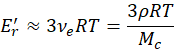
where  is polymer density and
 is the universal gas constant (
 ). Higher cross-link density shortens chain segments between junction points, restricts segmental mobility, elevates
 (following DiMarzio-type relationships where
 increases with cross-link density), and increases rubbery stiffness. However, excessive cross-link density without toughening domains can embrittle the network, lowering fracture toughness (
 ) and strain at break under impact or cyclic loading.
Hydrolytic Thermal Stability and Thermo-Oxidative Degradation
Structural components operate across wide environmental temperatures—often from  to
 (
 to
 ) in automotive under-hood/exterior panels or wind rotor blades, and up to
 to
 (
 to
 ) in specialized thermal or electrical hardware. Maintaining hydrolytic thermal stability requires protecting chemically susceptible linkages—such as ester (
 ), carbonate (
 ), or urethane (
 ) groups—against moisture ingress and elevated-temperature bond cleavage.
Water absorbed into free volume or along hydrophilic polar groups acts as a plasticizer—depressing  via free-volume expansion and hydrogen-bond disruption—and can trigger hydrolytic chain scission in polyesters, polycarbonates, or bio-polyamides, especially under combined heat and humidity or alkaline/acidic exposure. Concurrently, elevated temperatures accelerate thermo-oxidative radical chain reactions where oxygen reacts with polymer macroradicals to form hydroperoxides (
 ), causing chain scission, post-cure cross-linking shift, discoloration, surface chalking, and loss of tensile/flexural strength. Incorporating sterically hindered phenols, phosphite hydroperoxide decomposers, or moisture-scavenging stabilizers slows oxidative and hydrolytic degradation rates.
Technical Data Specifications of Bio-Based Structural Resins
| Polymer & Thermal Parameter | Structural Resin Engineering Specification |
|---|---|
Glass Transition Target ( ) | Typically  to  (  to  ) structural thermosets |
| Ambient & Service Temp Span |  to  (  to  ) application-dependent |
| Key Stiffness & Creep Metrics | Storage modulus  (  ),  peak, creep compliance  |
| Primary Chemical Bonds | Ester, ether, urethane, or aromatic/cycloaliphatic networks |
| Moisture & Aging Mechanisms | Plasticization ( drop), ester hydrolysis, thermo-oxidation |
| Process Energy & Power Basis | Cure/extrusion heat & power (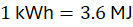 ;  ) |
| Circularity & Lifecycle Metric | Bio-based carbon fraction, cradle-to-gate  , recyclability |
Mechanical Creep Resistance and Viscoelastic Design
Under sustained mechanical stress—such as structural beams, pressurized vessels, bolted composite joints, or rotating blades—polymers exhibit time-dependent deformation known as creep. Mechanical creep resistance depends on proximity of service temperature to  , degree of cross-linking or crystallinity, and secondary molecular relaxations (
 or
 transitions).
In viscoelastic characterization, creep compliance 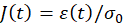 (strain divided by constant applied stress) increases over time as polymer chains undergo slow conformational rearrangements. Raising operating temperature toward
 accelerates viscoelastic relaxation times (
 ) exponentially—often modeled via Arrhenius behavior below
 or Williams-Landel-Ferry (
 ) kinetics near
 —causing creep strain to accumulate rapidly. A bio-based resin with an insufficiently high
 or low cross-link density can suffer unacceptable dimensional drift or buckling under sustained load even if short-term room-temperature modulus appears adequate.
Cure Kinetics, Processability, and Industrial Scaling
Translating bio-based structural polymers from laboratory formulations to industrial manufacturing—such as resin transfer molding, vacuum infusion, pultrusion, or compounding—requires matching resin viscosity, gelation time, and exothermic cure profile to existing equipment. Bio-derived monomers or reactive diluents often carry higher viscosity or batch-to-batch compositional variability from agricultural or lignocellulosic feedstocks, requiring tight monomer purification and formulation control.
Cure conversion ( ) must advance sufficiently during molding and post-cure so the network approaches its ultimate
 without thermal runaway from exothermic cross-linking or excessive process heat input (
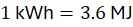 ;
 ). Balancing bio-based carbon content, high-
 monomer architecture, hydrolytic thermal stability, and end-of-life recyclability or circular recovery determines whether bio-based resins compete reliably in structural engineering markets.



Comments (0)
Login to leave a comment.
No comments yet. Be the first to share your thoughts!