 ), extended hardware prototyping cycles, and rigorous regulatory compliance hurdles. Venture capital investors evaluate these capital-intensive enterprises using bespoke financial metrics, risk-adjusted hurdle rates, and technological milestone validation rather than relying exclusively on monthly recurring revenue (MRR) multiples.
Technology Readiness Level (TRL) and Valuation Discounting
The foundational metric governing early-stage clean technology valuation is the Technology Readiness Level (TRL) scale, originally established by aerospace engineering standards and adapted universally across venture capital green financing models. The TRL scale spans a nine-tier continuum from fundamental scientific research (TRL 1) to fully commercialized industrial deployment (TRL 9).
Venture capital investors apply steep risk-adjusted valuation discounts to early-stage clean tech startups operating at low TRL thresholds (TRL 3 to TRL 5) due to the high probability of technical failure during scale-up from laboratory benchtop prototypes to pilot manufacturing plants. The enterprise valuation ( ) at early funding stages is modeled via discounted cash flow (DCF) equations incorporating heightened risk-adjusted discount rates (
 ):
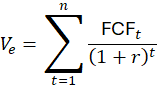
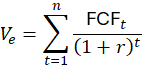
where  represents projected future free cash flows, and
 incorporates technology risk premiums ranging from 25% to 40% annually for pre-commercial hardware ventures. As startups successfully validate core chemistry, material stability, and manufacturing yield at pilot scale (TRL 6 to TRL 7), technology risk subsides, driving a compression in discount rates and a rapid expansion of post-money valuation multiples.
Enterprise Value Multiples and Hardware Capital Efficiency
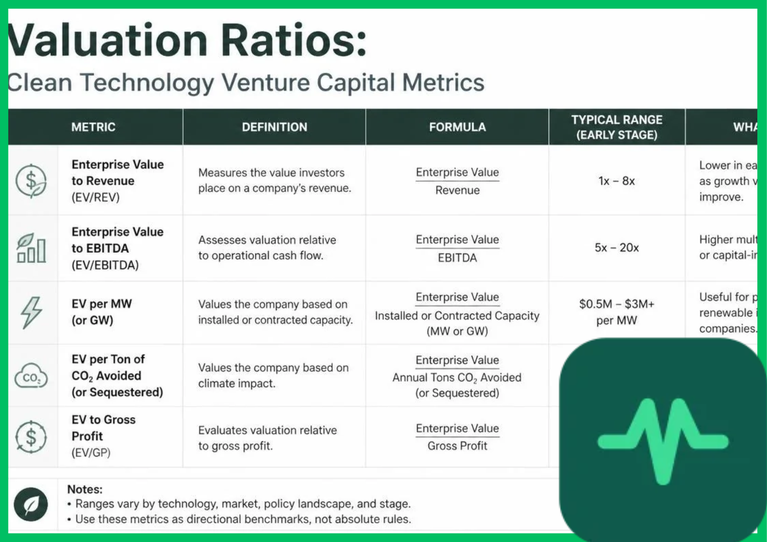
Unlike software startups evaluated on enterprise value-to-revenue ( ) multiples exceeding 10x to 20x, clean technology venture capital metrics evaluate hardware enterprises based on asset productivity, gross margin expansion, and capital efficiency ratios. Key financial ratios governing clean tech venture financing include:
- Burn Rate Efficiency Ratio: Measures the ratio of net cash burned per dollar of verified technological milestone achieved, evaluating how effectively management converts equity capital into tangible physical assets.
- Capital Expenditure Intensity (
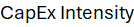 ): Quantifies total capital required to construct pilot and commercial manufacturing facilities relative to projected nameplate production capacity (
 or
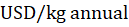 ).
- Gross Margin at Scale: Evaluates unit economic viability once supply chains achieve mass production maturity, distinguishing between high-margin proprietary membrane technologies and low-margin commodity assembly operations.
Venture capital syndicates demand clear pathways to positive unit economics, ensuring that manufacturing variable costs ( ) and fixed overheads (
 ) allow competitive pricing against incumbent fossil fuel alternatives without relying indefinitely on sovereign subsidies.
Technical Data Specifications of Clean Tech Venture Metrics
| Venture Capital Valuation Parameter | Clean Technology Investment Standard |
|---|---|
| Technology Readiness Level (TRL) Target | TRL 6 to TRL 7 pilot-scale validation for Series B |
Early-Stage Risk-Adjusted Discount Rate ( ) | 25% to 40% annual DCF hurdle rate |
Hardware Enterprise Value Multiple ( ) | 3x to 8x revenue upon commercial scale-up |
| Pilot Plant Capital Intensity Benchmark |  to  for TRL 6 manufacturing validation |
| Target Gross Margin at Full Scale | 35% to 55% gross profitability threshold |
| Average Hardware Commercialization Timeline | 5 to 8 years from initial seed round to commercial revenue |
| Venture Syndicate Co-Investment Ratio | 40% institutional VC / 60% strategic industrial capital |
Dilution Mechanics, Down-Rounds, and Milestone-Based Financing
Executing clean technology venture financing requires navigating complex capitalization table dilution mechanics and milestone-based tranching structures. Because hardware development cycles require multi-year engineering validation phases before generating commercial sales, venture capital investors mitigate risk by structuring equity rounds into distinct operational tranches tied to quantitative technical milestones (e.g., achieving 1,000 continuous operating hours on an electrolyzer stack or demonstrating a coulombic efficiency exceeding 99% in a battery cell).
If a portfolio company fails to achieve its designated engineering milestone within the agreed timeframe, subsequent capital tranches are withheld, triggering severe equity dilution or mandatory down-rounds. Furthermore, managing the "valley of death" between laboratory prototyping and commercial factory construction requires blending traditional venture capital equity with strategic corporate venture capital (CVC) from industrial conglomerates, non-dilutive government innovation grants, and project finance debt instruments.
Environmental, Social, and Governance (ESG) Impact Metrics and Additionality
Institutional venture capital funds specializing in clean technology must satisfy rigorous ESG compliance reporting and carbon impact accounting standards. Beyond traditional financial return on investment ( ), venture capitalists evaluate portfolio companies on quantified impact metrics, including absolute greenhouse gas emissions reduction potential (
 ) and resource circularity coefficients.
Investors audit carbon "additionality"—verifying that the startup's technology delivers structural emissions reductions that would not have occurred under baseline business-as-usual market trends. Quantifiable decarbonization impact metrics increasingly dictate access to institutional limited partner (LP) capital, pension fund allocations, and climate-focused sovereign wealth co-investments.
The Final Take
Mastering venture capital clean tech valuation metrics ensures rigorous risk assessment and capital allocation discipline across sustainable technology portfolios. Citing IEA clean energy investment reports and venture financing literature, evaluating hardware ventures requires balancing Technology Readiness Level progression, capital expenditure intensity, and risk-adjusted discounting. By aligning equity milestones with tangible industrial engineering achievements, clean technology venture capital establishes an indispensable financial foundation for global decarbonization.



Comments (0)
Login to leave a comment.
No comments yet. Be the first to share your thoughts!