
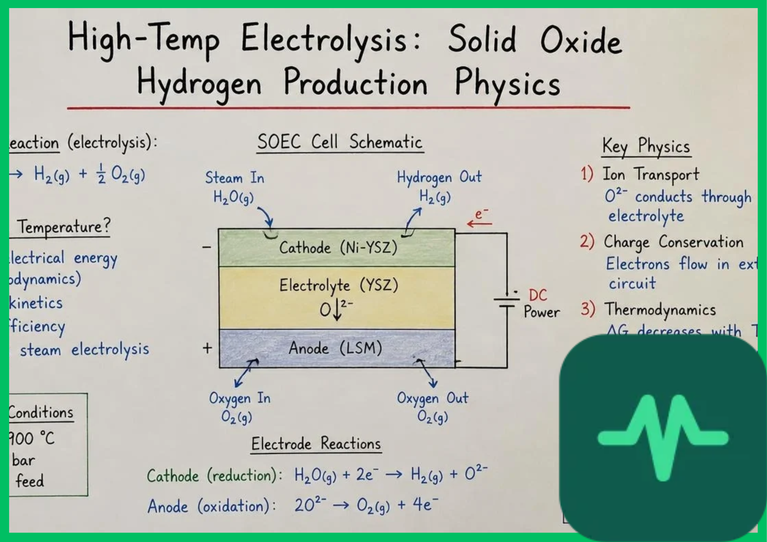
 to
 [
 to
 ]), leveraging industrial waste heat or nuclear thermal energy to substitute a significant fraction of electrical energy input with thermal energy. Unlike low-temperature proton exchange membrane (PEM) or alkaline electrolyzers that rely entirely on electrical work to split water molecules, high-temperature solid oxide systems exploit favorable thermodynamic shifts where the electrical energy demand (
 ) decreases while the thermal energy requirement (
 ) increases. Analyzing steam electrolysis thermodynamics, oxygen-ion conducting ceramic perovskite electrolytes, and degradation kinetics is essential for evaluating high-temperature solid oxide hydrogen production efficiency.
Thermodynamic Realities and Steam Electrolysis Fundamentals
The foundational thermodynamic advantage governing solid oxide electrolysis cells stems from the Gibbs free energy relationship governing water splitting. The total enthalpy change ( ) required to dissociate liquid water into hydrogen and oxygen at standard conditions is formulated mathematically as:

where  represents the Gibbs free energy (representing electrical work input required),
 is absolute temperature (
 ), and
 is the entropy change of the reaction. In low-temperature electrolysis, the electrical energy demand (
 ) dominates total energy consumption.
As operating temperatures escalate to  (
 ), the thermal energy term (
 ) increases substantially. Because high-grade thermal heat is thermodynamically cheaper and more abundant in industrial settings than electricity, supplying thermal energy directly to the cell lowers the required electrical potential. The reversible cell voltage (
 ) drops from
 at room temperature down to approximately
 to
 at
 (
 ).
Furthermore, at these elevated thermal thresholds, water is fed to the cathode as superheated steam. Supplying water in the gaseous vapor phase bypasses the high latent heat of vaporization (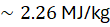 ), raising overall electrical-to-hydrogen conversion efficiency and lowering specific electrical power consumption to
 of hydrogen produced.
Ceramic Perovskite Electrolytes and Oxygen-Ion Conduction
The core solid-state architecture of a solid oxide electrolysis cell consists of a dense ceramic electrolyte sandwiched between a porous fuel electrode (cathode) and an oxygen-evolving electrode (anode). Unlike polymer electrolyte membranes that conduct protons ( ), standard solid oxide cells utilize ceramic oxide ion conductors—predominantly yttria-stabilized zirconia (
 , typically
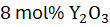 -doped
 ) or scandia-stabilized zirconia (
 ).
Oxygen-ion conduction through the dense ceramic crystal lattice occurs via vacancy-diffusion mechanisms at high operating temperatures. Trivalent yttrium ions substituting for tetravalent zirconium ions create oxygen vacancies within the fluorite crystal structure. When steam ( ) is introduced at the cathode, water molecules accept electrons from the external circuit, dissociating into hydrogen gas (
 ) and oxygen ions (
 ):

The generated oxygen ions migrate through the ceramic YSZ crystal lattice under an applied electrical potential gradient toward the anode. Upon reaching the porous ceramic anode—typically composed of lanthanum strontium manganite ( ) or lanthanum strontium cobalt ferrite (
 )—the oxygen ions recombine to release molecular oxygen gas (
 ), completing the circuit.
Technical Data Specifications of Solid Oxide Electrolysis Cells
| Solid Oxide Electrolysis Parameter | Engineering & Electrochemical Specification Standard |
|---|---|
| Operating Temperature Range |  to  (  to  ) |
| Electrolyte Material Composition | Yttria-Stabilized Zirconia ( ) or  |
Reversible Cell Voltage ( ) |  to  at  (  ) |
| Specific Electrical Energy Consumption |  via thermal integration |
| System Electrical Efficiency (LHV) | 75% to 85% high-temperature conversion efficiency |
| Cathode Electrode Material | Nickel-YSZ ( ) cermet porous structure |
| Anode Electrode Material |  or  perovskite composite |
| Electrolyte Thickness Standard |  (  ) |
Waste Heat Integration and Industrial Cogeneration
A primary economic and thermodynamic driver for solid oxide hydrogen production is waste heat integration and industrial cogeneration. Heavy industrial processes—such as high-temperature steel manufacturing, chemical synthesis, glass smelting, and advanced nuclear reactor cooling loops—discharge massive volumes of high-grade waste gas and thermal energy ranging from  to
 (
 to
 ).
By coupling SOEC stacks directly with these industrial thermal streams or modular high-temperature nuclear reactors (such as very-high-temperature gas-cooled reactors), the thermal energy required to superheat steam and maintain cell operating temperatures is supplied without burning fossil fuels or consuming premium electrical power. According to IEA industrial decarbonization assessments, integrating industrial waste heat reduces the levelized cost of green hydrogen ( ) by 20% to 30% compared to standalone low-temperature electrolysis plants that rely entirely on grid electricity for thermal management.
Faraday Efficiency Gains and High Current Density Operation
Solid oxide electrolysis cells achieve exceptional Faraday efficiencies approaching 99% to 100%. Because operating temperatures are exceptionally high, reaction kinetics at the triple-phase boundaries (where gas, electrode, and electrolyte meet) are extremely rapid, eliminating the need for expensive platinum group metal catalysts. Instead, SOECs utilize low-cost nickel-YSZ cermets for the cathode and earth-abundant perovskite oxides for the anode.
Furthermore, high operating temperatures reduce activation and ohmic overpotentials across the cell. Electrolyte thickness is minimized ( [
 ]) using tape-casting and sintering manufacturing techniques, lowering ionic resistance and allowing current densities to exceed
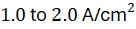 (
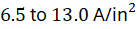 ) while maintaining cell operating voltages below thermoneutral thresholds.
Degradation Kinetics and Thermo-Mechanical Failure Modes
Despite superior thermodynamic efficiency, commercializing solid oxide electrolysis technology requires overcoming severe materials degradation challenges induced by extreme thermal and chemical operating environments. Long-term continuous operation at  (
 ) accelerates several failure modes:
- Nickel Agglomeration: Nickel particles within the porous
 cathode undergo coarsening and particle agglomeration over thousands of operational hours, reducing active triple-phase boundary length and increasing ohmic resistance.
- Chromium Poisoning: High-temperature interconnector plates containing steel alloys release volatile chromium species (
 and
 ), which deposit onto the oxygen electrode and poison catalytic active sites.
- Thermo-Mechanical Mismatch: Thermal expansion coefficient (TEC) mismatches between ceramic electrolyte layers, metallic interconnects, and sealing glasses generate severe internal mechanical stresses during startup, shutdown, and transient load cycling, leading to micro-cracking and gas leakage.
To mitigate degradation, advanced SOEC manufacturing protocols apply protective ceramic coating layers (such as manganese-cobalt spinel oxides) on interconnect plates to block chromium vaporization, and optimize nano-structured nickel-scandia cermets to inhibit particle agglomeration, ensuring stable multi-year operational lifespans required for industrial-scale deployment.


Comments (0)
Login to leave a comment.
No comments yet. Be the first to share your thoughts!