
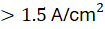
 ), rapid dynamic response capabilities, and the ability to produce pressurized hydrogen gas directly up to
 (
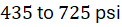 ) without external mechanical compressors. Analyzing current density polarization curves, catalyst kinetics, and membrane hydration dynamics is essential for evaluating proton exchange membrane green hydrogen electrolyzer efficiency.
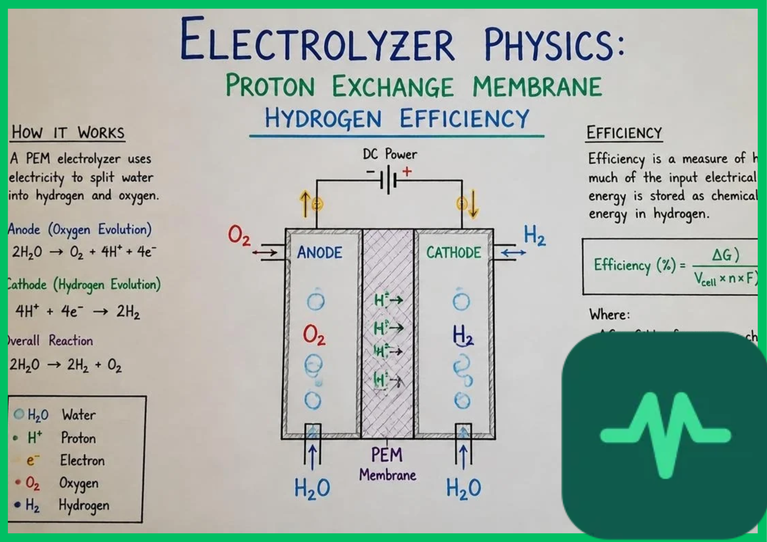
Electrochemical Kinetics and Current Density Polarization Curves
The foundational operational behavior of a proton exchange membrane electrolyzer is characterized by current density polarization curves. A polarization curve maps cell operating voltage ( ) as a function of operating current density (
 ). The actual operating voltage required to drive the electrochemical splitting of water exceeds the thermodynamic reversible cell voltage (
 at standard conditions) due to three primary overpotential losses: activation overpotential, ohmic overpotential, and mass transport overpotential. The composite cell voltage equation is formulated mathematically as:

where  represents the reversible cell potential,
 denotes activation losses associated with the sluggish kinetics of the oxygen evolution reaction (OER) at the anode,
 accounts for ionic and electronic resistance losses across the solid polymer electrolyte and current collectors, and
 captures mass transport limitations caused by gas bubble accumulation obstructing reactant water diffusion at high current densities (
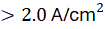 [
 ]).
Operating PEM electrolyzers at elevated current densities reduces the specific stack capital cost per kilogram of hydrogen produced by increasing volumetric productivity. However, higher current densities increase ohmic and activation overpotentials, raising cell operating voltages from a thermoneutral voltage of  up to
 or higher. This voltage escalation increases electrical energy consumption per unit of hydrogen generated (
 ), reducing overall electrical-to-chemical conversion efficiency.
Proton Conductivity Membranes and Hydration Mechanics
The solid electrolyte separating the anode and cathode compartments in a PEM electrolyzer is a thin, proton-conducting perfluorosulfonic acid (PFSA) polymer membrane—such as Nafion. The primary function of the membrane is to conduct protons ( ) generated at the catalytic anode to the cathode while physically separating product gases hydrogen and oxygen to prevent explosive gas mixing.
Proton conductivity ( ) through the PFSA membrane is heavily dependent on internal hydration levels and operating temperatures (
 to
 [
 to
 ]). Water molecules cluster around sulfonic acid (
 ) functional groups, facilitating vehicular and Grotthuss proton hopping mechanisms.
When electric current flows, protons drag associated hydration water molecules across the membrane via electro-osmotic drag, while concentration gradients drive back-diffusion of water from cathode to anode. If local water management fails and membrane dehydration occurs, ionic resistance spikes, causing severe local overheating, polymer chemical degradation, and premature membrane pinhole failure.
Technical Data Specifications of PEM Electrolyzers
| PEM Electrolyzer Parameter | Engineering & Electrochemical Specification Standard |
|---|---|
| Operating Current Density Range | 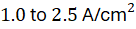 ( 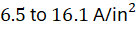 ) active area |
| Cell Operating Voltage Range |  to  at operational load |
Thermoneutral Cell Voltage ( ) |  at standard temperature and pressure |
| Stack Electrical Efficiency (LHV) | 60% to 68% conversion efficiency boundary |
| Operating Temperature Threshold |  to  (  to  ) |
| Anode Electrocatalyst Material | Iridium oxide ( ) nanoparticle coatings |
| Cathode Electrocatalyst Material | Platinum-on-carbon ( ) nanoparticle dispersion |
| Membrane Thickness Standard |  (  ) |
Platinum Group Metal Catalysts and Charge Transfer Kinetics
Catalytic activity at the triple-phase boundaries dictates the activation overpotential of the electrochemical cell. Because acidic operating environments inside PFSA membranes corrode standard base metals, PEM electrolyzers require noble platinum group metal catalysts to withstand corrosive potentials and acidic conditions.
At the cathode, hydrogen evolution reaction (HER) kinetics are exceptionally rapid, utilizing platinum nanoparticles dispersed on high-surface-area conductive carbon supports ( ) with low platinum loadings (
 ). Conversely, the anode oxygen evolution reaction (OER) involves a complex four-electron transfer mechanism characterized by sluggish reaction kinetics and high activation barriers. Anode catalysts rely exclusively on iridium oxide (
 ) or ruthenium-iridium binary metal oxides.
Recent research cited in IEA and academic clean energy literature focuses heavily on reducing expensive iridium group metal loadings from  down to
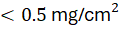 via nanostructured core-shell architectures and titanium suboxide supports, mitigating supply chain bottlenecks for gigawatt-scale manufacturing.
Faraday Efficiency Optimization and Gas Crossover Mitigation
Faraday efficiency measures the ratio of actual hydrogen gas produced experimentally compared to the theoretical yield predicted by Faraday's law of electrolysis. Modern PEM electrolyzers achieve exceptional Faraday efficiencies exceeding 98% to 99% under normal operating windows.
However, parasitic losses occur due to gas crossover, where dissolved hydrogen gas and oxygen gas diffuse molecularly through the solid PFSA membrane from high-pressure compartments to low-pressure adjacent compartments. Gas crossover creates safety risks and lowers Faraday efficiency, particularly when operating at high differential pressures ( [
 ]) or at low partial current loads.
To mitigate gas crossover, engineers deploy advanced reinforcement sublayers, radical scavenger additives to prevent chemical thinning of the polymer backbone, and thicker membrane profiles ( [
 ]) in high-pressure electrolysis configurations.
System Efficiency Metrics and Thermal Management Realities
Evaluating overall commercial viability requires analyzing stack electrical efficiency relative to hydrogen heating values. Stack efficiency is typically expressed using the lower heating value (LHV) of hydrogen ( or
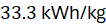 ) or the higher heating value (HHV) (
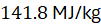 or
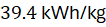 ). At the thermoneutral voltage of
 , electrical-to-chemical conversion efficiency reaches 100% on an LHV basis; operating voltages above
 drop stack electrical efficiencies to 60% to 68%.
This voltage-dependent thermal loss generates significant waste heat ( to
 per megawatt of input power), requiring closed-loop deionized water cooling circuits. Maintaining optimal stack temperatures between
 and
 (
 and
 ) via titanium plate heat exchangers ensures stable membrane hydration, prevents localized boiling, and optimizes overall green hydrogen production economics.


Comments (0)
Login to leave a comment.
No comments yet. Be the first to share your thoughts!