
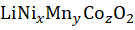
 , or
 ) and lithium iron phosphate (
 , or
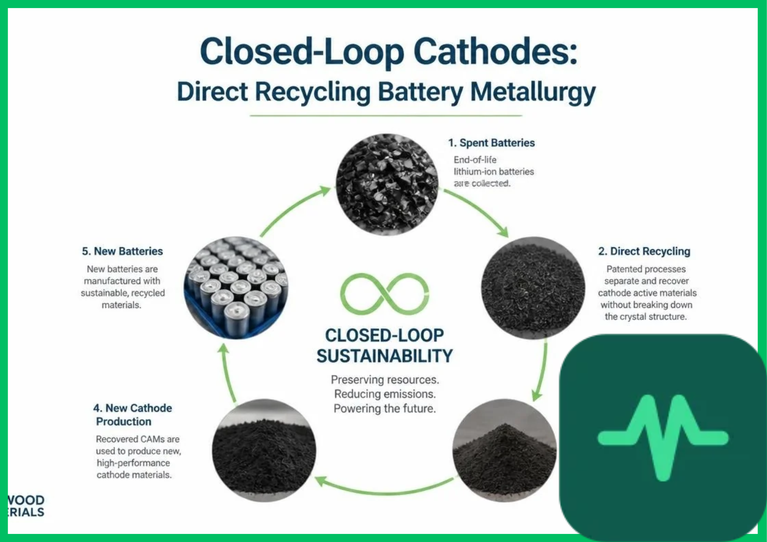
 )—account for a major share of cell material cost and upstream processing energy. Conventional hydrometallurgical and pyrometallurgical recycling routes break spent cathodes down into constituent metal salts or alloy streams before rebuilding fresh precursor powders, incurring multi-stage chemical reagent demand or high-temperature smelting energy. Direct cathode recycling preserves the intact crystalline lattice of active cathode particles and replenishes depleted lithium directly, lowering energy intensity and retaining embedded structural value. Evaluating black mass refining, relithiation crystal recovery, solvent extraction leaching, and closed-loop critical minerals is essential for analyzing direct cathode recycling lithium-ion battery hydrometallurgy.
Direct Recycling Versus Hydrometallurgy and Pyrometallurgy
Conventional lithium-ion battery recycling follows two dominant industrial pathways: pyrometallurgy and hydrometallurgy. Pyrometallurgical smelting heats shredded cells or modules inside high-temperature furnaces ( to
 [
 to
 ]), melting nickel, cobalt, and copper into a mixed metal alloy while driving off lithium, aluminum, and manganese into slag or flue dust that requires secondary recovery. Hydrometallurgy leaches ground electrode material—known as black mass—using strong mineral acids (such as sulfuric acid,
 ) and reducing agents (such as hydrogen peroxide,
 , or sodium metabisulfite,
 ), followed by impurity precipitation and solvent extraction leaching to isolate purified salts for re-synthesis.
Both conventional approaches dismantle the layered or olivine crystal lattice of the cathode material, requiring energy-intensive coprecipitation, calcination, and lithiation steps to reconstruct functional active particles. Direct cathode recycling bypasses full lattice destruction. During cycling and aging, lithium-ion batteries lose cyclable lithium to solid electrolyte interphase (SEI) growth and structural degradation, leaving cathode particles lithium-deficient while retaining their underlying transition-metal framework. Direct regeneration restores stoichiometric lithium content and repairs crystal defects at moderate temperatures ( to
 [
 to
 ] depending on the method), cutting process energy demand and greenhouse gas emissions per kilogram of recovered cathode material.
Black Mass Refining and Liberation Metallurgy
Effective direct cathode recycling begins with cell discharge, disassembly, delamination, and black mass refining. Spent cells must be safely discharged to near-zero state of charge before mechanical comminution to prevent thermal runaway or short circuits, followed by separation of casings, aluminum current collectors, copper foils, polymeric separators, and active cathode and anode powders.
Because aluminum foil dissolves in strong alkaline or acidic media and copper contaminants degrade electrochemical cycling if carried into cathode synthesis, liberation processes employ selective delamination, froth flotation, magnetic separation, or thermal binder removal. Heating coated electrodes gently ( to
 [
 to
 ] in controlled atmospheres) decomposes polyvinylidene fluoride (
 ) or carboxymethyl cellulose / styrene-butadiene (
 ) binders without melting aluminum (
 [
 ]), improving powder purity prior to relithiation.
Technical Data Specifications of Cathode Recycling Pathways
| Recycling Parameter | Direct Recycling Specification | Conventional Hydrometallurgy / Pyrometallurgy |
|---|---|---|
| Cathode Crystal Structure Fate | Preserved via relithiation & annealing | Dissolved (hydro) or smelted into alloy/slag (pyro) |
| Thermal Processing Range |  to  (  to  ) |  to  leach /  (  ) smelt |
| Reagent Intensity | Low (lithium source & mild thermal/redox) | High (acids, reductants, extractants, bases) |
| Target Active Chemistries |  ,  ,  with intact morphology | Broad multi-chemistry 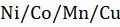 recovery |
| Energy & Emissions Profile | Lower embodied energy & process emissions | Higher acid neutralization or furnace fuel demand |
| Feedstock Sorting Sensitivity | High (requires clean chemistry/grade sorting) | Moderate to low (blended feeds tolerated) |
Relithiation Crystal Recovery and Solid-State Annealing
Restoring electrochemical capacity in lithium-depleted cathode powders relies on relithiation crystal recovery. Over repeated charge-discharge cycles, cathode particles can experience lithium inventory loss, transition-metal migration into lithium slabs (cation mixing in layered  ), and surface phase transformations into rock-salt or spinel-like layers that impede lithium diffusion.
Relithiation methods include solid-state sintering with a stoichiometric lithium precursor—such as lithium carbonate ( ) or lithium hydroxide (
 )—as well as hydrothermal relithiation in alkaline lithium solutions under elevated temperature and pressure, or electrochemical/chemical relithiation routes. Following lithium replenishment, thermal annealing at calibrated temperatures (
 to
 [
 to
 ] in oxygen-rich atmospheres for
 ) orders layered planes, reduces cation mixing, and restores reversible specific capacity (
 ) and rate capability close to pristine cathode benchmarks.
Solvent Extraction Leaching and Hybrid Circular Flows
Pure feedstock streams from retired industrial packs, manufacturing scrap, or well-sorted vehicle packs favor direct cathode recycling. However, real-world waste streams often arrive mixed across diverse cathode chemistries ( ,
 ,
 ,
 ,
 ), varying degradation states, and mixed impurities.
Hybrid circular flows pair direct regeneration of uniform, high-purity fractions with targeted hydrometallurgy and solvent extraction leaching for degraded or mixed black mass. In solvent extraction leaching, organic chelating or ion-exchange extractants dissolved in kerosene or hydrocarbon diluents selectively transfer target metal ions—such as cobalt ( ) and nickel (
 )—from aqueous leach liquors into an organic phase before stripping into pure solutions for precursor precipitation. Combining direct crystal recovery for clean streams with hydrometallurgical refining for off-spec or mixed fractions maximizes recovery of closed-loop critical minerals while keeping chemical waste streams manageable.
Scaling Closed-Loop Critical Minerals and Feedstock Economics
Scaling direct cathode recycling for global clean energy demand requires addressing feedstock collection logistics, chemistry sorting, and degradation diagnostics. Unlike hydrometallurgical plants that can blend heterogeneous black mass batches, direct relithiation performs best when feedstock composition and lithium deficiency are characterized accurately so lithium dosing matches actual deficit without leaving excess unreacted lithium compounds on particle surfaces.
Advances in automated battery sorting, state-of-health screening, and continuous thermal processing enable direct regeneration to complement hydrometallurgical refining across maturing recycling networks. Together, these metallurgical routes reduce reliance on virgin mineral extraction, lower lifecycle carbon intensity per kilowatt-hour of battery capacity, and strengthen material circularity across global energy storage supply chains.

Comments (0)
Login to leave a comment.
No comments yet. Be the first to share your thoughts!