
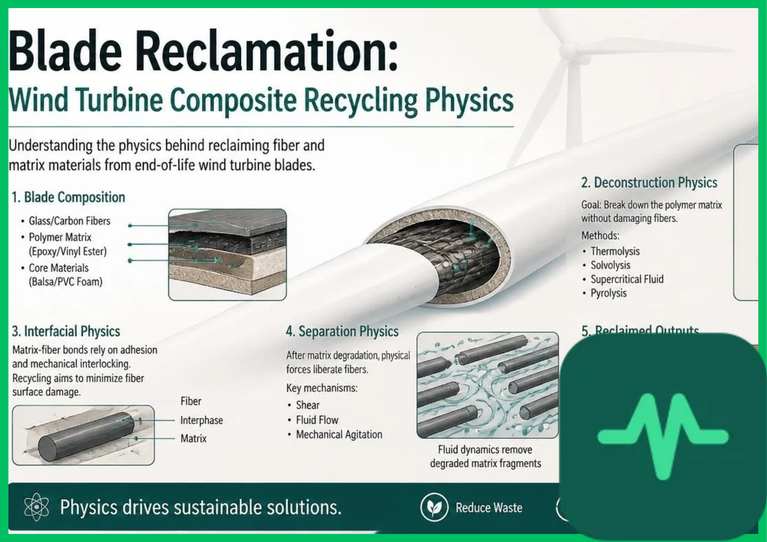
Thermoset Cross-Linking Versus Thermoplastic Resin Chemistry
The fundamental materials challenge in blade reclamation stems from polymer network architecture. Traditional thermoset epoxy resins undergo irreversible curing via cross-linking agents (such as amines or anhydrides), creating a dense three-dimensional covalent network resistant to thermal softening, chemical attack, and mechanical remelting. Heating thermoset composites past degradation thresholds breaks polymer chains while leaving char deposits and degraded matrix residues on reinforcing fibers.
Thermoplastic resins—such as acrylic-based thermoplastic polymers, polyamides, or recyclable epoxies engineered with reversible or cleavable bonds—offer a structural alternative for circular composite manufacturing. Unlike cross-linked thermosets, linear or lightly branched thermoplastics soften and flow upon heating above their glass transition ( ) and melting (
 ) temperatures, enabling melt reprocessing, thermoforming, or dissolution into monomer/oligomer feedstocks under controlled conditions. When paired with compatible sizing agents on glass or carbon fibers, thermoplastic matrices allow cleaner separation of fiber reinforcements and lower thermal energy penalties during end-of-life reclamation than legacy thermoset laminates.
Pyrolysis Kinetics and Char Residue Management
Pyrolysis decomposes organic polymer matrices thermally in an inert or oxygen-starved atmosphere (typically nitrogen,  , or vacuum) at temperatures generally spanning
 to
 (
 to
 ). Under anaerobic heating, scission of polymer backbones converts cross-linked resin into non-condensable pyrolysis gases (such as methane, carbon monoxide, carbon dioxide, and light hydrocarbons), condensable bio-oil or pyrolytic oil fractions, and solid carbonaceous char.
In composite fiber recovery, pyrolysis preserves fiber alignment and length better than open-air combustion, which oxidizes fibers rapidly and degrades tensile strength. However, unoxidized char deposits often adhere to fiber surfaces during pyrolytic decomposition, reducing interfacial bond strength when fibers are reused in secondary composites. Secondary oxidation or controlled air/steam staging ( to
 [
 to
 ] with regulated oxygen partial pressure) burns off residual surface char, though excessive temperature or exposure duration reduces fiber tensile strength and diameter.
Technical Data Specifications of Blade Composite Reclamation Routes
| Reclamation Parameter | Pyrolysis / Thermo-Oxidative | Solvolysis Depolymerization | Thermoplastic Reprocessing |
|---|---|---|---|
| Typical Operating Temperature |  to  (  to  ) |  to  (  to  ) |  to  (  to  ) |
| Primary Reaction Medium | Inert gas ( ) or controlled  | Solvents, alcohols, glycols, sub-/supercritical fluids | Thermal melt or compatible solvent dissolution |
| Target Resin Matrix | Thermoset epoxies, polyesters, vinyl esters | Cross-linked thermosets, polyesters, recyclable resins | Thermoplastic resins & reversible networks |
| Recovered Matrix Output | Pyrolysis oil, gas, and char | Oligomers, monomers, or depolymerized resin | Remeltable / reprocessable polymer matrix |
| Glass Fiber Tensile Retention | Moderate to low (thermal/surface flaw sensitivity) | Moderate to high (lower thermal stress) | High (intact continuous/long fiber geometry) |
| Carbon Fiber Recovery Value | High (high economic value vs. virgin carbon) | High (clean surface, preserved tensile modulus) | High (aligned or milled structural reuse) |
Solvolysis Depolymerization and Chemical Bond Cleavage
Solvolysis depolymerization breaks down polymer matrices chemically using reactive solvents—such as water (hydrolysis), alcohols like methanol or ethanol (alcoholysis), glycols (glycolysis), or alkaline/catalytic solutions—often under elevated pressure and temperature or sub- and supercritical fluid conditions. By cleaving ester, ether, or amine linkages selectively, solvolysis can recover lower-molecular-weight chemical building blocks or oligomers while liberating intact reinforcing fibers.
For carbon fiber-reinforced polymers (CFRP), solvolysis and controlled thermal reclamation hold strong economic appeal because virgin carbon fiber requires high electrical and thermal energy during precursor polyacrylonitrile (PAN) stabilization and carbonization ( to
 + [
 to
 +]). Reclaimed carbon fibers often retain 80% to 95% of virgin tensile modulus and high tensile strength when surface sizing and matrix residues are removed cleanly, supporting reuse in non-primary structural or industrial composite parts.
Glass and Carbon Reclamation Economics
Glass and carbon reclamation faces distinct economic and physical realities because E-glass or high-modulus glass fibers cost far less per kilogram than carbon fibers. Glass fibers in retired wind turbine blades experience surface micro-flaws and thermal embrittlement when exposed to high temperatures ( [
 ]), lowering residual tensile strength and limiting direct structural substitution for virgin continuous glass roving.
Consequently, reclaimed glass fibers and composite chop/milling fractions are frequently channeled into cementitious mortar, concrete reinforcement, asphalt modifiers, or injection-molded compounds where mechanical requirements match recovered properties. Carbon fibers, conversely, justify higher processing cost per kilogram because their high production cost and high specific stiffness preserve economic value across secondary manufacturing applications, provided fiber length distribution and surface compatibility with new matrix resins are engineered carefully.
Pre-Processing, Size Reduction, and Circular Composite Manufacturing
Large turbine blades—frequently measuring  to
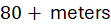 (
 to
 ) in length—require heavy mobile or stationary size reduction before reactor feeding. Cutting blades into manageable sections with diamond-wire saws, hydraulic shears, or heavy shredders precedes milling or thermal/chemical processing, while steel root inserts, lightning protection conductors, and adhesive bonding pastes must be separated or accounted for to prevent reactor slagging and equipment wear.
Advancing circular composite manufacturing requires designing future blades for recyclability alongside scaling reclamation plants. Using thermoplastic resins, modular structural joints, and traceable material passports simplifies sorting and recovery at end of life. Coupled with pyrolysis, solvolysis, and secondary composite formulation, disciplined blade reclamation reduces landfill disposal and supports material circularity across expanding wind power fleets.

Comments (0)
Login to leave a comment.
No comments yet. Be the first to share your thoughts!