
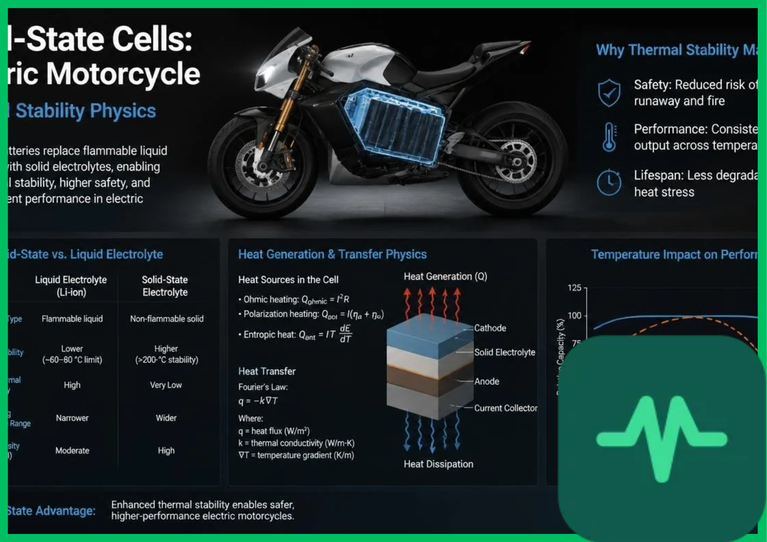
Ceramic Solid Electrolytes and Thermal Decomposition Thresholds
The foundational thermal advantage of a solid-state battery cell lies in replacing flammable liquid carbonate solvents—such as ethylene carbonate or dimethyl carbonate—with non-flammable solid-state ion conductors. Liquid electrolytes typically begin vaporizing and decomposing between  and
 (
 to
 ), releasing combustible gases that fuel thermal runaway if separator layers melt or internal shorts occur.
Solid-state electrolytes—including garnet-type oxides such as lithium lanthanum zirconate (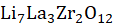 , or
 ), NASICON-type phosphates like
 (
 ), and argyrodite sulfides such as
 —exhibit far higher thermal stability against volatilization. Oxide ceramics remain chemically and thermally stable well above
 (
 ), eliminating liquid solvent flashpoints and reducing self-sustaining fire propagation risk in compact motorcycle battery enclosures subjected to high ambient temperatures (
 to
 [
 to
 ]) or road impact.
Despite superior thermal stability, solid electrolytes introduce interfacial challenges. Rigid ceramic grain boundaries create resistance to lithium-ion transport ( ), and high-voltage cathode materials—such as nickel-rich layered oxides (
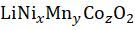 , or
 )—can react at elevated temperatures with certain sulfide or oxide interfaces, increasing interfacial impedance over cycle life.
Dendrite Suppression Kinetics and Lithium-Metal Anodes
Pairing a solid electrolyte with a metallic lithium anode unlocks high volumetric energy density because pure lithium metal offers a high theoretical specific capacity (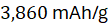 ) and low electrochemical potential without a heavy graphite host. In liquid-electrolyte cells, uneven lithium plating during charging or high-current draw nucleates metallic filaments known as dendrites that pierce polymeric separators and trigger internal short circuits and localized heating.
In solid-state architectures, dendrite suppression kinetics depend on electrolyte shear modulus, grain-boundary density, and uniform  flux across the anode-electrolyte interface. High-shear-modulus ceramics—such as dense
 —mechanically resist filament penetration under ideal conditions, yet microscopic surface flaws, void formation during stripping, and electronic leakage along grain boundaries can still allow lithium filaments to propagate under high current densities.
Controlling dendrite growth requires smooth interface engineering, lithiophilic interlayers that promote uniform nucleation, and regulated external stack pressure. When lithium strips from the anode during discharge faster than solid-state diffusion replenishes it, interfacial voids form, concentrating current density at remaining contact points and accelerating local heating or filament growth.
Technical Data Specifications of Solid-State Motorcycle Cells
| Solid-State Cell Parameter | Engineering & Electrochemical Specification Standard |
|---|---|
| Solid Electrolyte Chemistries | Garnet oxides ( ), sulfides (  ), polymers |
| Volumetric Energy Density Target |  cell/pack design envelope |
| Nominal Cell Voltage Range |  to  (cathode chemistry dependent) |
| Electrolyte Thermal Stability Limit |  to  (  to  ) inorganic solids |
| External Stack Pressure Requirement |  to  ( 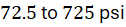 ) interfacial contact |
| Target Cycle Life Envelope | 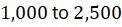 cycles at controlled C-rates |
| Pack Peak Power Output Class |  to  (  to  ) motorcycle drive |
High-Rate Discharge Heat Generation and Reversible Entropy
Electric motorcycles impose demanding transient load profiles, from brisk urban launches and highway passing to steep mountain climbs. During high-rate discharge ( to
 ), total cell heat generation (
 ) combines irreversible Joule/overpotential heating and reversible entropic heat:

where  is discharge current,
 is open-circuit voltage,
 is terminal operating voltage,
 is absolute cell temperature (
 ), and
 represents the entropic temperature coefficient of the electrochemical couple.
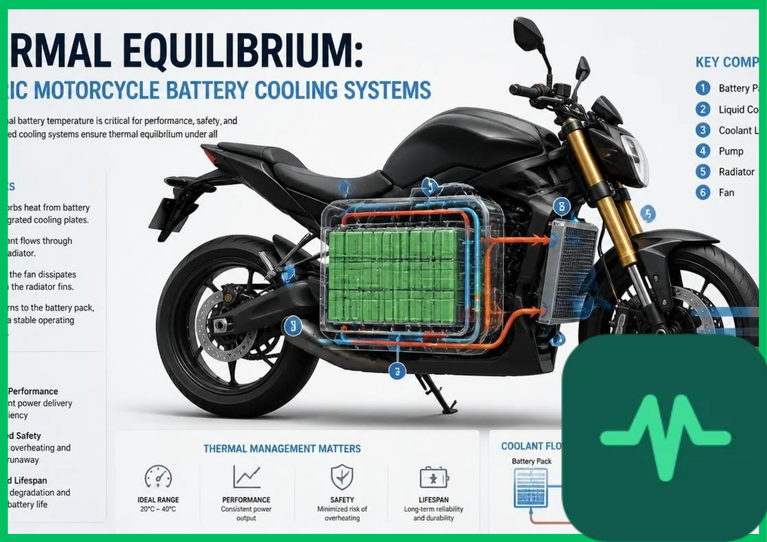
High internal cell resistance or elevated interfacial impedance amplifies irreversible heating ( ) during high-rate discharge. While non-flammable solid electrolytes raise the thermal ceiling against fire compared to organic liquids, excessive temperature rise still degrades cathode active materials, accelerates parasitic side reactions, and increases cell polarization. Maintaining balanced ionic conductivity across the composite cathode, solid separator, and lithium interface keeps voltage drop low and limits temperature rise during sustained high-power output.
External Stack Pressure and Chassis Packaging Trade-Offs
Unlike liquid electrolytes that wet porous electrodes naturally through capillary action, solid-state cells rely on physical pressure to maintain intimate solid-solid contact across electrode-electrolyte interfaces and accommodate volume expansion and contraction as lithium plates and strips during cycling. Applying external stack pressure ( to
 [
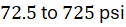 ]) lowers interfacial contact resistance and suppresses void formation.
In an electric motorcycle, maintaining uniform clamping pressure adds structural mass through compression plates, tie rods, or spring mechanisms inside a compact battery housing. Engineers must balance these clamping hardware penalties against the volumetric energy density gains of lithium-metal solid-state cells. Where higher energy density fits greater capacity or reduces battery volume within the frame, overall vehicle mass and thermal management complexity can improve—provided clamping fixtures remain lightweight and corrosion-resistant across wide operating temperatures ( to
 [
 to
 ]).


Comments (0)
Login to leave a comment.
No comments yet. Be the first to share your thoughts!