

Magnetic Flux Path Geometry and Torque Density
The electromagnetic advantage of an axial flux permanent magnet motor originates in its disc-shaped topology and axial magnetic flux path geometry. In a radial-flux machine, electromagnetic torque scales with bore radius squared times active axial stack length ( ), penalizing short, wide form factors. In an axial flux machine, flux lines cross a planar axial air gap between rotor permanent magnet discs—typically sintered neodymium-iron-boron (
 ) or samarium-cobalt (
 )—and a stator core wound with concentrated or distributed copper coils.
Because torque production depends on the radial moment arm between the axis of rotation and the active magnetic poles, placing high-energy magnets at larger outer radii increases tangential Lorentz force leverage without lengthening the motor axially. Dual-rotor, single-stator (Yokeless And Segmented Armature, YASA-style) or multi-stage disc layouts balance axial magnetic attraction forces across the rotor assembly, preventing excessive thrust-bearing loads while concentrating flux density in a compact pancake profile. Academic electric powertrain studies report torque density gains of 20% to 50% and power-to-weight drivetrain efficiency advantages over comparable radial-flux traction motors, allowing peak outputs of  to
 (
 to
 ) inside slim motorcycle swingarms or mid-drive housings.
Stator Winding Thermal Dissipation and Cooling Mechanics
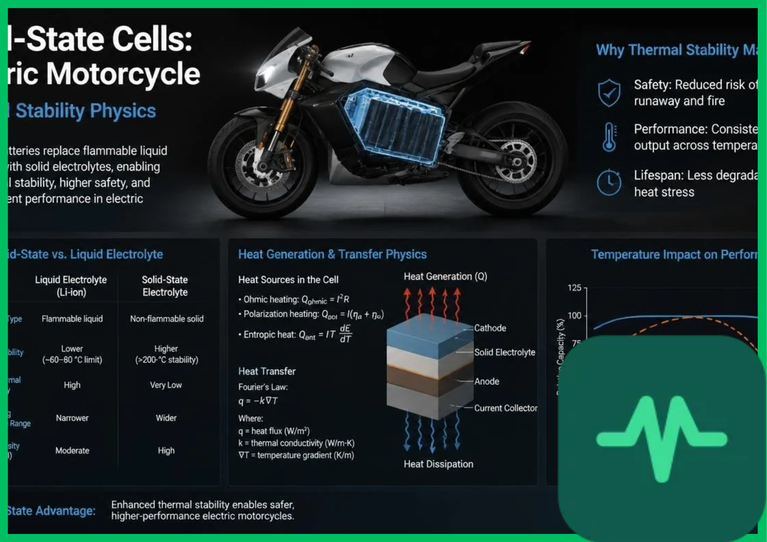
High torque density concentrates electromagnetic losses—stator copper Joule heating ( ), core eddy-current and hysteresis losses, and rotor magnet eddy-current heating—within a smaller physical volume. Left unmanaged, elevated winding temperatures above
 to
 (
 to
 ) degrade Class H or Class N enamel insulation and risk irreversible thermal demagnetization of neodymium permanent magnets, particularly when operating at elevated ambient temperatures (
 to
 [
 to
 ]).
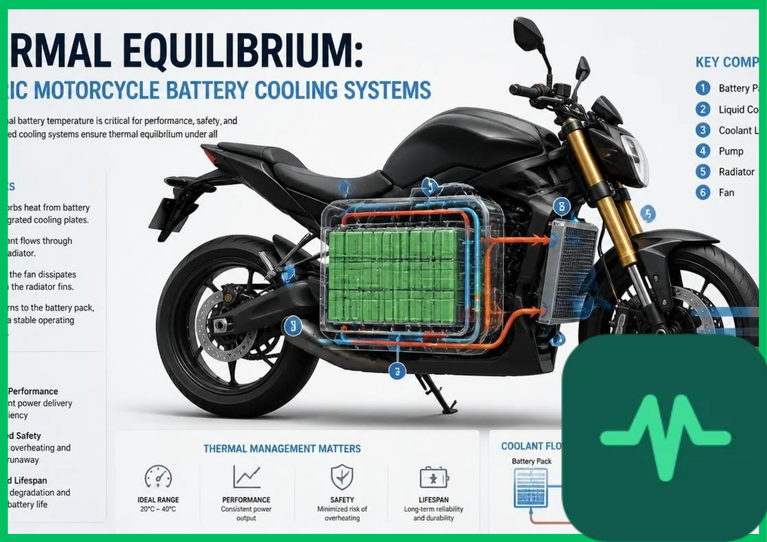
Axial flux geometries offer distinct pathways for stator winding thermal dissipation. Flat, exposed stator yokes and short end-turns in concentrated-winding topologies shorten thermal conduction paths from copper slots to outer housing jackets. Engineers pair these short thermal paths with direct oil-spray cooling, potting compounds with high thermal conductivity ( ), or integrated water-glycol cooling channels machined directly into the stator housing. Direct stator oil impingement removes heat at the slot boundary before it diffuses into rotor magnets, sustaining higher continuous power-to-weight ratios during prolonged high-speed riding or steep grade climbs.
Technical Data Specifications of Electric Motorcycle AFPM Motors
| AFPM Motor Parameter | Engineering & Drivetrain Specification Standard |
|---|---|
| Magnetic Flux Orientation | Axial (parallel to shaft rotation axis) across planar air gap |
| Peak Mechanical Power Output |  to  (  to  ) performance class |
| Continuous-to-Peak Torque Ratio |  to  (  to  ) range |
| Active Motor Mass Envelope |  to  (  to  ) compact disc stack |
| Peak Inverter-to-Shaft Efficiency | 94% to 97% across high-torque operating points |
| Permanent Magnet Grade Class | High-coercivity  or  sintered discs |
| Stator Thermal Cooling Method | Direct dielectric oil spray or liquid-jacket heat exchange |
Unsprung Weight Reduction and Chassis Dynamics
Motorcycle handling stability, suspension compliance, and braking grip depend heavily on the ratio of unsprung mass (wheels, tires, brake rotors, and non-suspended drivetrain components) to sprung chassis mass. Heavy hub-mounted motors increase unsprung mass at the rear wheel, inducing suspension bounce over road irregularities and slowing vertical wheel recovery across rough pavement.
Mounting a slim axial flux permanent magnet motor as a chassis-sprung mid-drive unit—or integrating a compact disc motor directly into the swingarm pivot zone—supports unsprung weight reduction by keeping heavy magnetic and copper mass suspended on the chassis side of the dampers. Lower unsprung mass improves tire contact patch consistency over washboard surfaces and bumps, reducing vertical load fluctuations and enhancing cornering precision.
Power-to-Weight Drivetrain Efficiency and Packaging Integration
Compact axial thickness allows chassis designers to shorten wheelbases, optimize battery pack placement, and route secondary belt, chain, or shaft drives with minimal lateral offset. In electric motorcycles where internal combustion fuel tanks and exhaust headers are absent, freeing axial space enables larger energy storage capacity or improved center-of-gravity distribution without widening the rider's stance.
Across urban acceleration and highway cruising regimes, maintaining high power-to-weight drivetrain efficiency relies on matching axial flux motor pole counts and slot combinations to high-frequency silicon carbide ( ) inverters. Minimizing rotor eddy-current losses at high rotational speeds (
 ) preserves efficiency across wide speed envelopes, translating battery kilowatt-hours into usable wheel torque with low thermal overhead.

Comments (0)
Login to leave a comment.
No comments yet. Be the first to share your thoughts!