Vehicle Dynamics and Unsprung Mass Suspension Mechanics
The foundational mechanical principle governing direct-drive hub motor performance is the dynamic mass ratio between sprung mass ( ) and unsprung mass (
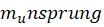 ). The unsprung assembly comprises the wheel rim, tire, brake rotor, axle, and the heavy electromagnetic motor components housed within the hub.
When a motorcycle traverses a road bump or surface pothole of height  , the road irregularity imparts an instantaneous vertical impulse force (
 ) to the tire contact patch. The vertical acceleration of the unsprung mass is governed by the equation of motion:


where  and
 represent the displacement of the unsprung and sprung masses,
 and
 denote the damping coefficient and spring stiffness of the suspension damper, and
 represents the vertical stiffness of the pneumatic tire.
Increasing unsprung mass ( ) by mounting a heavy hub motor (weighing
 to
 [
 ]) increases the inertia of the wheel assembly substantially. A higher unsprung mass reduces the natural frequency of the wheel hop mode, degrading the ability of the tire contact patch to track undulating road surfaces. Consequently, vertical tire load fluctuations increase, reducing rear-wheel traction grip during cornering and heavy braking maneuvers on uneven asphalt.
Rotational Inertia, Gyroscopic Precession, and Handling
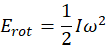
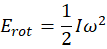
Beyond vertical suspension dynamics, integrating heavy motor assemblies directly into the wheel rim increases rotational inertia ( ) and gyroscopic precession forces during steering and lean maneuvers. Rotational kinetic energy (
 ) scales with moment of inertia and angular velocity (
 ):
Because the heavy copper windings, laminated steel stator cores, and permanent neodymium magnets are positioned at the outermost radius of the wheel, the polar moment of inertia increases by a factor of three to five compared to a standard spoked wheel with a central brake disc.
This elevated rotational inertia increases steering torque resistance when initiating lean transitions into tight corners. Furthermore, gyroscopic precession generates reactive torque couples along the roll and yaw axes when the rider steers the motorcycle, altering handling agility and requiring increased handlebar steering input force at high operational velocities.
Technical Data Specifications of Hub Motor Dynamics
| Unsprung Mass & Suspension Parameter | Engineering Specification Standard |
|---|---|
| Traditional Rear Unsprung Mass |  to  (  ) |
| Direct-Drive Hub Motor Unsprung Mass |  to  (  ) |
| Wheel Polar Moment of Inertia Increase | 300% to 500% over central mid-drive layouts |
Tire Vertical Stiffness ( ) |  to  radial compliance |
Suspension Damping Coefficient ( ) | Adjusted rebound/compression damping for high mass |
| Typical Wheel Hop Resonance Frequency |  to  lowered modal threshold |
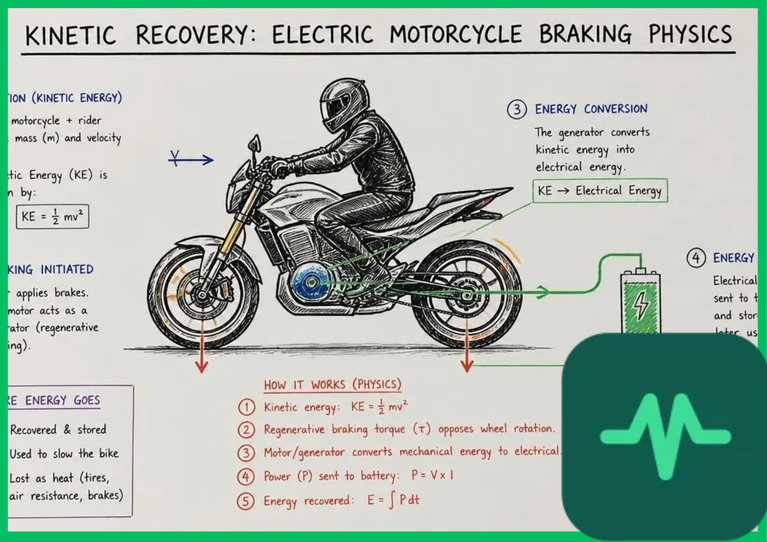
| Regenerative Braking Efficiency (Direct) | 85% to 92% mechanical-to-electrical transmission |
Suspension Damping Optimization and Reactive Control
Mitigating the adverse ride quality impacts of high hub motor unsprung mass requires comprehensive redesign of suspension damping coefficients and spring rates. Traditional shock absorbers tuned for lightweight swingarms experience excessive oscillation and wheel hop when subjected to heavy in-wheel motor masses.
Suspension engineers modify damping profiles by increasing rebound damping forces to suppress the rapid upward return velocity of the heavy unsprung assembly following a road impact. Advanced electric motorcycles implement semi-active or active electronic suspension systems equipped with proportional solenoid valves or magnetorheological fluid dampers. These active systems adjust damping rates within milliseconds based on accelerometer feedback from the unsprung axle, compensating for increased wheel inertia and maintaining optimal tire contact patch forces across rough pavement.
Thermal Convective Cooling Versus Enclosed Hub Constraints
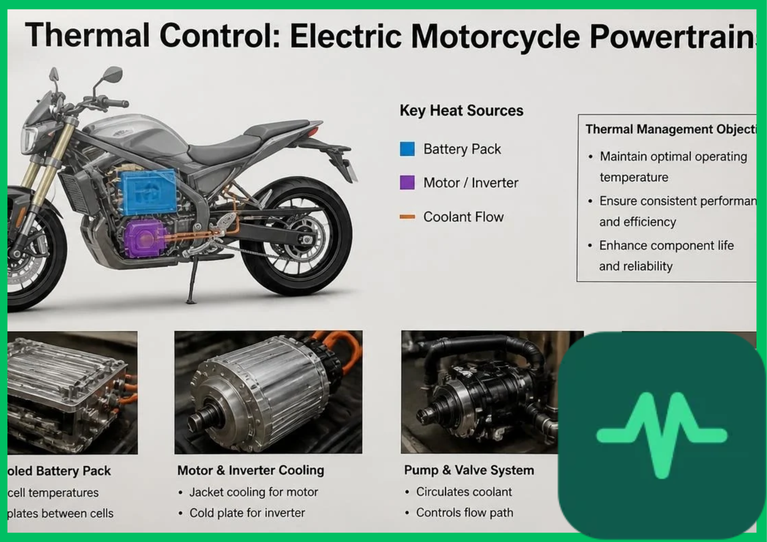
While direct-drive hub motors eliminate transmission losses by removing chains, belts, and gearboxes—achieving mechanical drivetrain efficiencies exceeding 95%—they introduce severe thermal dissipation constraints. Because the electric motor is sealed completely within the wheel rim, surrounded by rubber tires and exposed to harsh environmental moisture, convective cooling is severely restricted.
Heat generated by internal copper winding joule losses ( ) and core eddy currents cannot escape easily through the rotating aluminum rim housing. Under sustained high-torque hill-climbing or heavy acceleration, internal stator temperatures rise rapidly, threatening demagnetization of neodymium-iron-boron (NdFeB) permanent magnets (which degrade above
 to
 [
 to
 ]). Mitigating thermal degradation requires liquid cooling channels routed through the stationary axle shaft or specialized thermally conductive phase-change potting compounds injected into the hub cavity.
The Final Take
Mastering electric motorcycle hub motor unsprung mass vibration requires balancing the mechanical efficiency of direct-drive power transmission against the complex realities of vehicle suspension dynamics. Citing IEA electric mobility assessments and vehicle dynamics literature, increasing unsprung mass degrades tire-road contact forces and elevates rotational inertia, necessitating sophisticated suspension damping optimization and thermal management. By resolving these dynamic constraints, hub motor architectures deliver an efficient alternative for urban electric two-wheeler propulsion.


Comments (0)
Login to leave a comment.
No comments yet. Be the first to share your thoughts!