
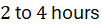
 of rated discharge) excel at intra-day peak shaving and fast frequency regulation, yet become economically prohibitive when scaled to multi-day or multi-week discharge durations (
 ) needed during prolonged wind lulls or extended low-solar weather events. Long-duration energy storage (LDES) decouples power capacity (
 or
 , where
 equals
 ) from energy capacity (
 ), allowing energy-dominant storage architectures to absorb surplus renewable generation and dispatch electricity across multi-day windows. Evaluating discharge duration economics, iron-air battery chemistry, compressed air thermodynamics, and grid curtailment absorption is essential for analyzing long-duration energy storage levelized cost of storage.
Discharge Duration Economics and Levelized Cost of Storage
Assessing multi-day storage requires separating capital cost drivers between power conversion hardware and energy storage media. The levelized cost of storage ( , expressed per unit of discharged electrical energy, such as per
 or
 ) aggregates annualized capital expenditure (
 ), fixed and variable operating and maintenance costs (
 ), charging electricity cost, and end-of-life or stack replacement costs over total discharged energy:
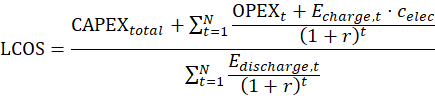
where  is charging energy input in year
 ,
 is charging electricity cost (including curtailed or marginal generation cost),
 is net delivered energy accounting for round-trip efficiency (
 ),
 is discount rate, and
 is project lifetime in years.
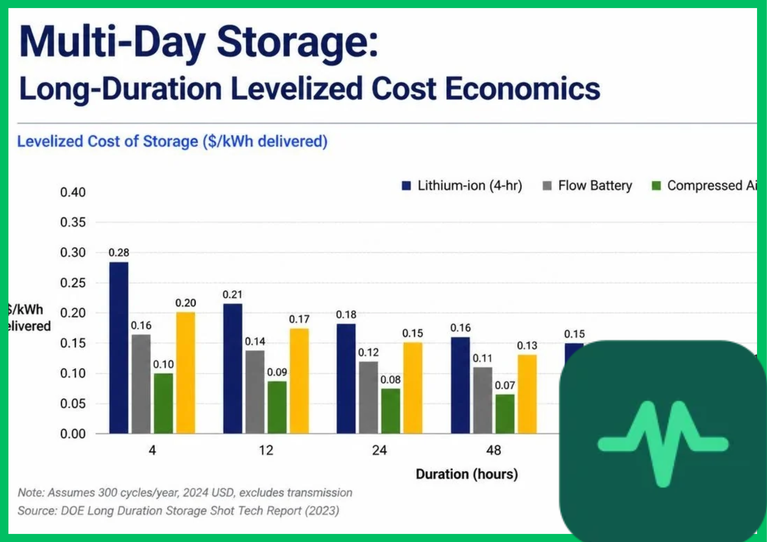
For short-duration storage ( ), power-related costs—inverters, transformers, interconnects, and balance of plant—represent a large share of total cost. As discharge duration rises to
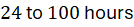 , energy-capacity cost (
 of storage medium) dominates total system cost. Lithium-ion batteries carry high energy-capacity costs per kilowatt-hour, causing their
 per delivered megawatt-hour to climb steeply at long durations and low annual cycle counts. Technologies with low energy-scaling costs—such as iron-air batteries, compressed air energy storage, and thermal or chemical storage—achieve competitive discharge duration economics even when round-trip efficiency is moderate and annual full-cycle counts are low (
 cycles per year).
Iron-Air Battery Chemistry and Reversible Oxidation-Reduction
Among emerging electrochemical storage technologies tailored for multi-day discharge, iron-air battery chemistry uses abundant iron, water, and atmospheric oxygen to lower material cost per kilowatt-hour of storage capacity. During discharge, metallic iron ( ) oxidizes in an alkaline aqueous electrolyte—typically potassium hydroxide (
 )—to form iron hydroxide (
 ) and subsequently iron oxide/oxyhydroxide species while releasing electrons to the external circuit:

At the air electrode, oxygen from ambient air undergoes the oxygen reduction reaction (ORR) in the presence of water:

During charging, reversing the applied voltage reduces iron oxides back to metallic iron and evolves oxygen at the air electrode (oxygen evolution reaction, OER). Because iron and air electrodes are inexpensive and globally available, iron-air systems target very low energy-capacity costs for  discharge windows.
Thermodynamic and kinetic trade-offs define iron-air operation. Hydrogen evolution at the iron electrode during charging acts as a competing side reaction that reduces Faraday efficiency, while air-breathing electrodes face carbonation from atmospheric carbon dioxide ( ) reacting with
 electrolyte to form potassium carbonate (
 ), as well as water evaporation and electrode kinetics limits. Consequently, iron-air systems typically exhibit lower round-trip efficiencies (
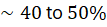 ) than lithium-ion batteries (
 ), making them best suited where low cost per kilowatt-hour over
 outweighs efficiency losses on low-cost or surplus power.
Compressed Air Thermodynamics and Adiabatic Cycles
Compressed air energy storage (CAES) stores electrical energy mechanically by compressing ambient air into large subterranean reservoirs—such as salt caverns, depleted gas fields, or lined rock caverns—or engineered pressure vessels, then expanding the pressurized air through turbines to generate electricity on demand. In a conventional diabatic CAES cycle, compression heats the air ( to
 [
 to
 ] or higher depending on pressure ratio and intercooling), and that heat is rejected to the atmosphere before storage; during discharge, cold expanding air must be reheated by burning natural gas or renewable fuels before entering the expander.
Advanced adiabatic CAES (A-CAES) overcomes fuel dependence and improves compressed air thermodynamics by capturing compression heat in a thermal energy storage (TES) medium—such as pressurized water, thermal oil, or packed rock/ceramic beds—during charging and returning that stored heat to the compressed air stream prior to turbine expansion. Idealized polytropic and adiabatic compression relations link pressure ratio and temperature rise:
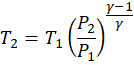
where  and
 are inlet and outlet absolute temperatures (
 ),
 and
 are absolute pressures, and
 is the heat capacity ratio (
 , approximately
 for dry air). Real systems experience thermal losses in heat exchangers and storage media, throttling losses, and cavern temperature fluctuations, yielding typical round-trip efficiencies around
 for adiabatic configurations and lower electrical-to-electrical efficiencies in diabatic plants unless co-fired cleanly.
Technical Data Specifications of Multi-Day LDES Systems
| LDES Parameter | Iron-Air Battery System | Adiabatic CAES System |
|---|---|---|
| Target Discharge Duration |  |  |
| Typical Round-Trip Efficiency | 40% to 50% AC-to-AC | 50% to 70% depending on thermal storage |
| Core Active / Storage Media |  anode,  electrolyte, air | Compressed air + thermal storage medium |
| Operating Temperature Envelope | Ambient / mild thermal ( to  [  to  ]) | Compression up to  to  + (  to  +) |
| System Power Scale | Multi- (  =  ) modular banks |  to  utility scale |
| Primary Cost Scaling Driver | Low energy cost ($/kWh) for long duration | Geological cavern or vessel + turbomachinery |
| Ideal Grid Duty Cycle | Multi-day wind/solar lulls, low cycle count | Bulk energy shifting, seasonal/multi-day balancing |
Grid Curtailment Absorption and System Economics
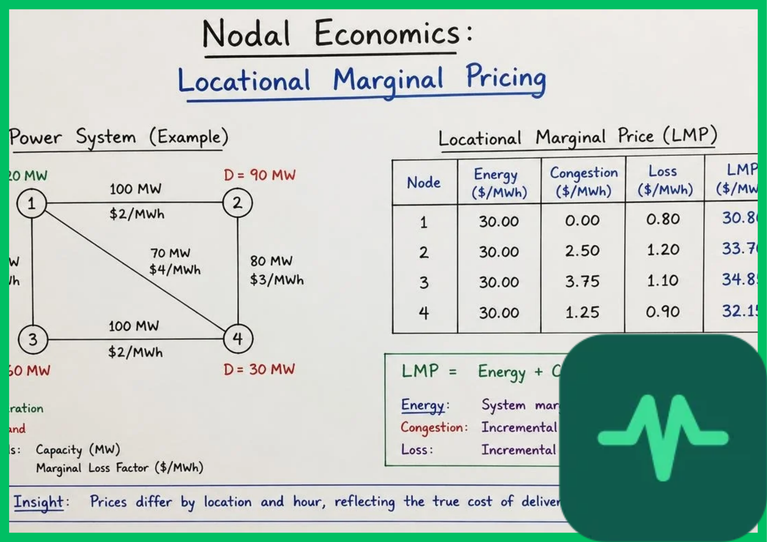
High penetrations of wind and solar photovoltaics produce periods of generation surplus when output exceeds local transmission capacity or instantaneous system demand, forcing curtailment of zero-marginal-cost renewable energy. Effective grid curtailment absorption requires storage capacity sized to capture multi-hour or multi-day surpluses without paying high marginal market prices during charge intervals.
When charging electricity comes from otherwise curtailed wind or solar generation, effective charging cost ( ) drops substantially, improving
 even for technologies with lower round-trip efficiency. Conversely, if a multi-day storage asset operates at low capacity factors—discharging only a few dozen full cycles per year during rare weather events—fixed capital charges must be amortized across a smaller volume of delivered megawatt-hours, making low upfront energy-capacity cost decisive.
System planners evaluate multi-day storage alongside transmission expansion, demand flexibility, and dispatchable low-carbon generation. Where transmission bottlenecks trap surplus clean power or multi-day weather lulls recur across wide regions, long-duration storage reduces unserved energy, lowers peak capacity deficits, and stabilizes wholesale power prices across varying seasonal conditions.


Comments (0)
Login to leave a comment.
No comments yet. Be the first to share your thoughts!