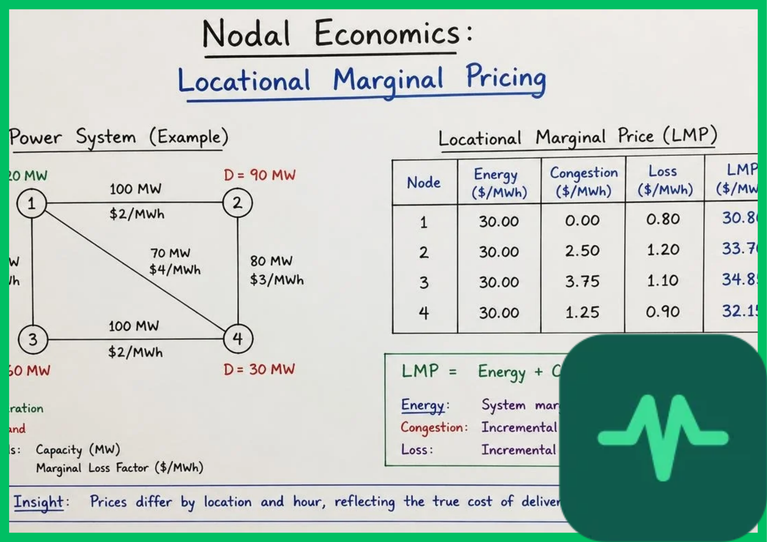
Mathematical Decomposition of LMP Components
The mathematical formulation of locational marginal pricing decomposes the total nodal price into three distinct financial components:


where  represents the system energy component,
 represents the congestion component at node
 , and
 represents the transmission loss component. Each component is derived from real-time Optimal Power Flow (OPF) and Security-Constrained Economic Dispatch (SCED) mathematical optimization algorithms executed by system operators.
- System Energy Component (
 ): Represents the shadow price of the system-wide power balance constraint. It reflects the marginal cost of producing and delivering the next increment of electrical energy from the marginal generator operating at the system reference bus, unconstrained by local transmission limits.
- Congestion Component (
 ): Quantifies the financial penalty or credit associated with transmission line capacity bottlenecks. When power flow across a specific transmission corridor reaches its thermal rating, the system operator re-dispatches expensive local generation behind the constraint, increasing the local nodal price.
- Loss Component (
 ): Accounts for the incremental physical resistance losses (
 resistive heating) incurred as electricity travels through transmission conductors from the generator node to the sink node.
Wholesale Grid Congestion and Transmission Constraints
Grid congestion occurs when scheduled power transfers exceed the thermal, voltage, or stability limits of high-voltage transmission lines and transformers. Transmission assets operate under strict ampacity limits dictated by conductor metallurgical properties, ambient air temperature, and wind cooling coefficients. When a transmission line becomes a binding constraint during peak load intervals, market optimization software computes shadow prices for the constrained element.
These shadow prices translate directly into node-specific congestion price differentials. Nodes located downstream of a congested transmission corridor experience higher LMP values because inexpensive remote generation cannot be delivered freely, requiring local high-cost peaker plants to ramp up production. Conversely, generation-rich zones upstream of a congestion bottleneck experience depressed LMPs, occasionally dropping into negative pricing regimes when inflexible renewable generation exceeds local transmission evacuation capacity.
Transmission Loss Factors and Physics of  Losses
Electrical energy transmission across alternating current (AC) grids inevitably incurs active power losses governed by Joule heating. The electrical resistance ( ) of overhead transmission lines and transformers converts a fraction of transmitted electrical energy into thermal energy:
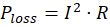
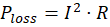
where  represents line current. Locational marginal pricing incorporates marginal loss factors (
 ) derived from power flow Jacobian matrices.
If a generator is electrically distant from major load centers, injecting an additional megawatt into the grid increases total system losses, requiring other generators to ramp up production to compensate. The loss component penalizes distant generation nodes by adding a positive marginal loss charge, while rewarding generation nodes located adjacent to urban load centers by reducing their net delivery cost.
Technical Data Specifications of LMP Market Parameters
| LMP Market Parameter | Engineering & Economic Specification |
|---|---|
| Dispatch Frequency | Real-time 5-minute intervals; Day-ahead hourly markets |
| Optimization Algorithm | Security-Constrained Economic Dispatch (SCED) & OPF |
Energy Component ( ) | Marginal cost of unconstrained system generation ( ) |
Congestion Component ( ) | Shadow price of binding transmission thermal constraints |
Loss Component ( ) | Incremental  transmission line loss penalty factor |
| Negative Pricing Limit | Down to technical floor (- to -  ) |
| Market Clearing Engine | Mathematical programming with linear/non-linear constraints |
Renewable Integration and Energy Storage Optimization
The global transition toward variable renewable energy—such as utility-scale solar photovoltaic arrays and offshore wind farms—magnifies the operational importance of locational marginal pricing. Renewable generation assets are frequently sited in remote geographic regions possessing high resource quality but limited existing transmission infrastructure.
When regional solar or wind generation surges during periods of low local demand, transmission corridors saturate, generating severe local congestion and negative LMP signals. Nodal pricing provides immediate economic feedback to battery energy storage systems (BESS) and flexible industrial consumers. Low or negative LMPs incentivize battery storage assets to charge rapidly, absorbing excess renewable generation and mitigating curtailment. Conversely, during high-demand evening peaks when transmission corridors clear and local peaker plants operate, LMPs spike, prompting storage assets to discharge power back into the grid and capturing high economic returns.
Quantitative market analyses published by the International Energy Agency (IEA) and academic power systems engineering consortia indicate that transparent locational marginal pricing is essential for optimizing long-term transmission expansion planning and wholesale market efficiency. By aligning wholesale electricity prices directly with physical grid constraints, thermal losses, and localized generation costs, nodal economics guides capital allocation toward strategic transmission upgrades and optimal energy storage siting, securing reliable power delivery across modern decarbonized electrical grids.




Comments (0)
Login to leave a comment.
No comments yet. Be the first to share your thoughts!