A fierce storm crashes against power lines down the road.
The lights inside your house flicker once and die.
Outside, the entire street plunges into pitch blackness.
You feel that sudden, cold sinking feeling in your stomach.
You wonder how long you will sit in the dark, waiting for distant utility crews to repair miles of broken transmission lines.
Then, something wonderful happens.
Down the street, the community center lights stay on.
The neighborhood clinic hums quietly with power.
Streetlights glow warmly against the falling snow.
Your neighborhood did not lose power at all.
You feel a profound wave of comfort and safety.
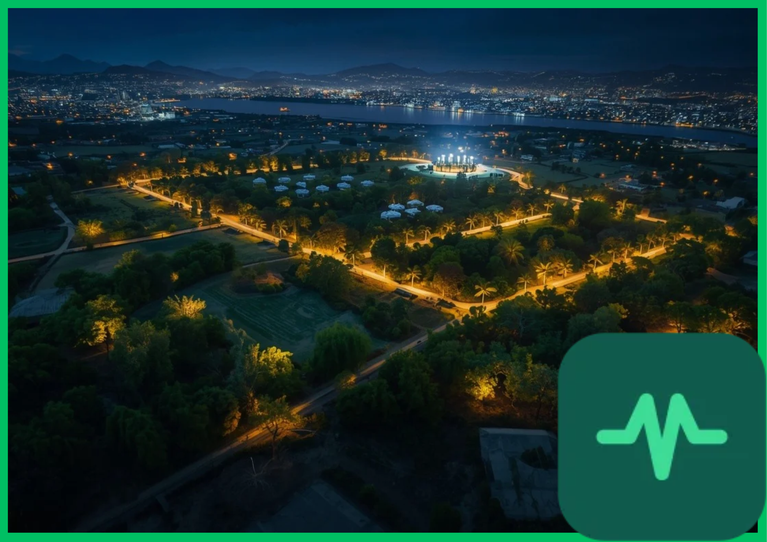
You are standing inside a modern energy sanctuary.
For over a century, electrical grids operated on a massive, centralized model.
Hundreids of miles away, giant power stations burned coal or gas to push electricity through vulnerable transmission wires straight to your door.
When a storm hits one wire in that long chain, the whole system collapses.
That old energy model is fragile, inefficient, and dangerously vulnerable to extreme weather.
We cannot build a resilient clean energy future while relying on brittle power lines that break down every time a severe storm strikes.
What if a neighborhood could disconnect from the giant main grid and generate its own clean power locally?
What if a cluster of homes, solar panels, and batteries could stand strong like an island of light during any blackout?
A quiet, brilliant energy revolution is transforming local neighborhoods across the globe.
According to global clean energy reports from the International Energy Agency (IEA), resource protection frameworks from the United Nations Environment Programme (UNEP), efficiency benchmarks from ENERGY STAR, and academic microgrid research, renewable energy microgrids for community resilience are changing our electrical landscape.
By integrating localized solar arrays, wind turbines, and battery storage into self-contained neighborhood networks, we guarantee reliable power and absolute independence from regional grid failures.
Here is how community microgrids work, why localized clean power networks change energy economics, and how islands of light secure our sustainable future.
The Brittle Vulnerability of Long-Distance Power Lines
To understand why community microgrids matter so much, you have to look at the mounting weaknesses of traditional macro-grids.
Traditional electrical grids stretch thousands of miles across mountains, forests, and plains.
Every single mile of overhead wire represents a point of potential failure.
When climate change brings violent windstorms, devastating wildfires, or freezing blizzards, those long transmission lines snap easily.
When the main grid goes down, entire towns lose power for days or weeks.
Local hospitals lose refrigeration for medicine, water treatment pumps fail, and families freeze in unheated homes.
Skeptics once argued that small neighborhoods could never generate enough reliable power to keep the lights on independently without a massive utility plant backing them up.
Electrical engineers and community organizers proved those skeptics wrong.
When you combine local solar generation with smart battery storage and intelligent software controls, a neighborhood can easily manage its own energy needs.
You do not need a distant power plant if you harness the sun and wind right where you live.
What Is a Community Microgrid?
A community microgrid is a localized, self-contained electrical network that connects a cluster of homes, businesses, and public buildings with local renewable energy sources like rooftop solar panels, small wind turbines, and battery storage systems, operating seamlessly either connected to the main regional grid or completely disconnected during an emergency blackout.
Instead of relying on distant transmission lines, the neighborhood generates and shares its own power.
The system operates through intelligent local coordination:
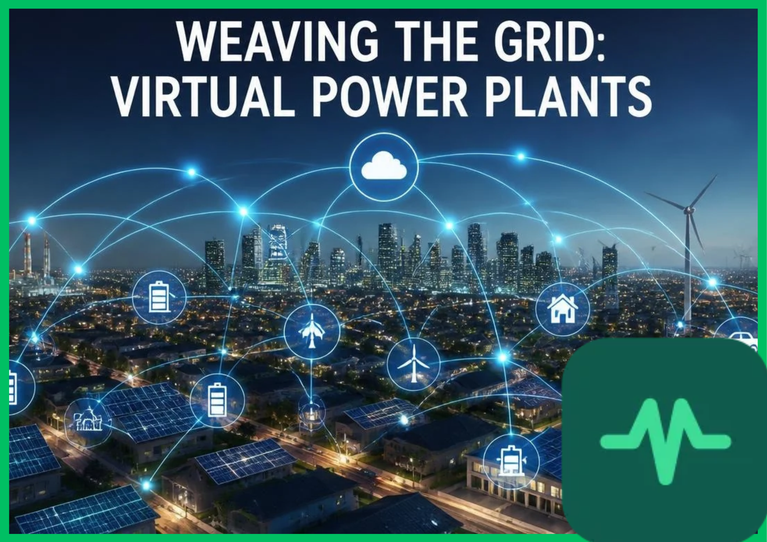
- Local Generation: Rooftop solar panels and neighborhood wind turbines capture clean energy daily, supplying local homes with abundant renewable electricity.
- Surplus Storage: Any extra energy produced during sunny or windy afternoons flows directly into neighborhood battery banks instead of getting lost in transmission lines.
- Island Mode Transition: When a severe storm knocks out the main regional power lines, automated intelligent switches instantly isolate the microgrid, disconnecting it safely from the dead main grid.
- Autonomous Operation: The local microgrid transitions smoothly into island mode, balancing local generation and battery storage to keep every home in the neighborhood fully powered.
You stay warm, safe, and connected while the wider regional grid struggles in the dark.
The Science of Islanding Protection and Load Balancing
How can a neighborhood microgrid disconnect from the main power grid and operate entirely on its own without overloading local circuits?
It comes down to automated islanding controllers and real-time load balancing software.
Academic microgrid research shows that maintaining stable voltage and frequency inside an isolated local network requires lightning-fast digital communication between solar inverters and battery storage units.
When a microgrid enters island mode, smart controllers monitor energy consumption second by second.
If a cloud passes over the solar panels and generation drops temporarily, the software commands the neighborhood battery banks to inject extra power instantly, keeping the local voltage perfectly steady.
Furthermore, ENERGY STAR and international electrical efficiency evaluations show that local microgrids eliminate the 5% to 8% transmission losses that occur when electricity travels across long-distance high-voltage power lines.
Energy stays local. Efficiency skyrockets. Waste disappears.
Environmental Integrity and Neighborhood Independence
The environmental benefits of renewable energy microgrids extend far beyond keeping neighborhood lights on during severe weather storms.
They provide a powerful framework for true community energy independence.
According to UNEP resource governance frameworks, decentralizing power generation empowers local communities to take ownership of their energy footprint, accelerating the transition away from fossil fuels toward 100% renewable sources.
When neighborhoods generate clean power right on their own roofs and open spaces, they stop depending on polluting gas-fired power plants located in neighboring towns.
According to IEA clean energy roadmaps, scaling up community microgrids is an essential pillar to build resilient, decentralized energy systems worldwide.
When every neighborhood becomes its own clean energy custodian, our entire civilization grows stronger and cleaner.
Overcoming Regulatory and Interconnection Realties
Scaling community microgrids from pioneering campus pilot projects into universal neighborhood infrastructure involves navigating real-world regulatory hurdles.
For decades, electrical utility monopolies controlled all distribution wires, making it legally difficult for a cluster of homes to disconnect and share power independently.
Forward-thinking energy regulators, municipal leaders, and electrical engineers are updating interconnection standards, establishing fair local energy-sharing rules, and designing plug-and-play microgrid controllers that satisfy utility safety codes.
As digital smart grids mature and local governments prioritize disaster resilience, community microgrids are transitioning successfully from experimental eco-villages into standard municipal infrastructure worldwide.
Lighting Our Way Toward a Sustainable Future
Community microgrids prove that human engineering can transform vulnerable neighborhoods into resilient, self-reliant islands of light.
We no longer have to accept that keeping our homes safe during a storm requires depending on fragile, long-distance power lines.
By connecting local solar generation, wind power, and battery storage into intelligent neighborhood networks, we take control of our electricity supply.
We step away from centralized power vulnerability, embracing a smart, local, and enduring standard of community resilience.
Through brilliant electrical engineering, rigorous academic research, and a deep respect for our shared environment, islands of light secure a clean, safe, and sustainable future for every community on Earth.
Comments (0)
Login to leave a comment.
No comments yet. Be the first to share your thoughts!