
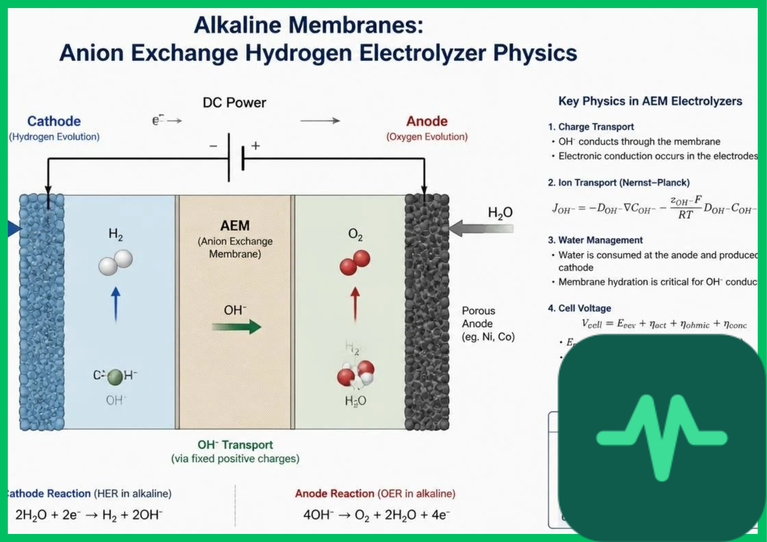
 ) that limit differential pressure operation and slow load-following ramps. Anion exchange membrane water electrolyzers (AEMWEs) bridge these architectures by pairing an alkaline hydroxide-conducting polymer membrane with non-precious transition metal electrocatalysts in a compact zero-gap assembly. Evaluating hydroxide ion conductivity, nickel-iron layered double hydroxides, zero-gap cell architecture, and alkaline polymer membrane degradation is essential for assessing AEMWE performance.
Hydroxide Ion Conductivity and Alkaline Transport Physics
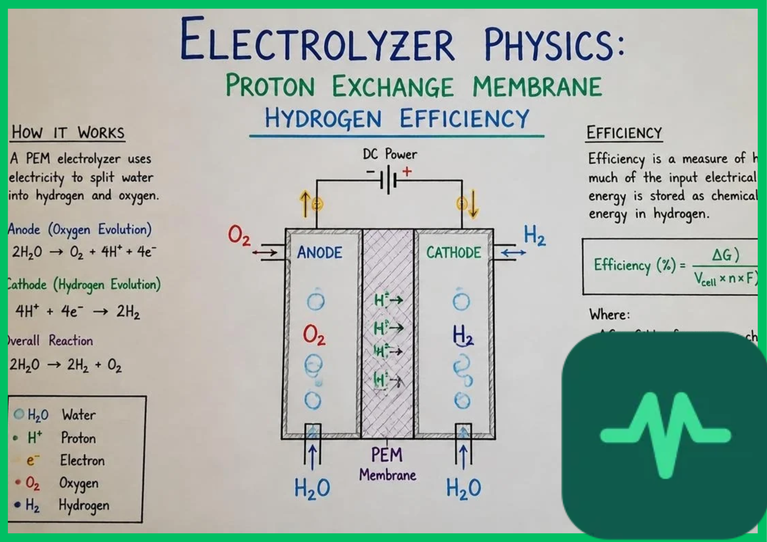
The core ion-exchange mechanism in an anion exchange membrane water electrolyzer is the transport of hydroxide ions ( ) from the cathode to the anode through a solid polymeric anion exchange membrane (AEM). At the cathode, water molecules dissociate electrochemically to form molecular hydrogen gas (
 ) and hydroxide ions:

Generated hydroxide ions migrate across the positively charged polymeric membrane toward the anode under the influence of the electric field and concentration gradient. At the anode, hydroxide ions oxidize to produce molecular oxygen gas ( ) and water:

Achieving high hydroxide ion conductivity ( , typically targeting
 at operating temperatures of
 to
 [
 to
 ]) requires polymer backbones—such as quaternized poly(aryl piperidinium), functionalized polystyrene, or poly(fluorenyl ether)—tethered with cationic head groups like quaternary ammonium (
 ) or imidazolium moieties. Because
 ions exhibit lower intrinsic mobility in hydrated polymer matrices than hydrated protons (
 ) in perfluorosulfonic acid membranes, membrane thickness must remain thin (
 [
 ]) to minimize ohmic resistance without sacrificing mechanical strength or gas-crossover barriers.
Nickel-Iron Layered Double Hydroxides and Non-Precious Catalysts
Operating in a local alkaline environment allows AEM electrolyzers to replace platinum group metals with non-precious catalysts derived from earth-abundant transition metals. At the anode, the sluggish four-electron oxygen evolution reaction (OER) is catalyzed efficiently by nickel-iron layered double hydroxides (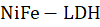 ), nickel cobalt oxides, or nickel foam substrates coated with transition metal oxyhydroxides.
Nickel-iron layered double hydroxides consist of brucite-like host layers containing divalent and trivalent metal cations balanced by intercalated anions and water molecules within interlayer galleries. Iron incorporation into nickel hydroxide lattices modulates electronic d-band structure and local oxygen-binding energetics, lowering OER overpotential at industrial current densities (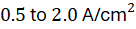 [
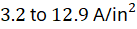 ]). At the cathode, the hydrogen evolution reaction (HER) utilizes nickel-molybdenum alloys, transition metal phosphides, or low-loading nickel catalysts, avoiding iridium and platinum supply bottlenecks while lowering catalyst layer cost per kilowatt of installed electrolyzer capacity (
 equals
 ).
Technical Data Specifications of AEM Water Electrolyzers
| AEM Electrolyzer Parameter | Engineering & Electrochemical Specification Standard |
|---|---|
| Operating Temperature Window |  to  (  to  ) |
| Nominal Operating Current Density | 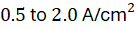 ( 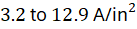 ) active cell area |
Cell Voltage at  |  to  depending on feed molarity |
| Stack Electrical Efficiency (LHV) | 62% to 72% across commercial operating envelopes |
| Membrane Thickness Standard |  (  ) |
| Anode Catalyst Composition | Nickel-iron layered double hydroxides (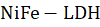 ) /  oxides |
| Cathode Catalyst Composition |  ,  , or transition metal phosphide formulations |
Zero-Gap Cell Architecture and Electrolyte Feed Modes
Modern AEM electrolyzer stacks employ a zero-gap cell architecture in which porous transport layers (PTLs) and catalyst-coated membranes or electrodes press directly against the polymer membrane without wide liquid electrolyte gaps. Direct physical contact shortens ionic conduction paths, reduces ohmic voltage drop across the cell assembly, and enables rapid dynamic ramp rates when coupled to intermittent solar or wind power sources.
System designers configure AEMWEs to operate either with pure deionized water feed or with low-concentration potassium hydroxide ( , typically
 to
 ) circulating through the anolyte loop. Pure water operation simplifies balance-of-plant hardware and avoids corrosive alkaline mist carryover, whereas dilute
 improves ionic conductivity within the catalyst layer and ionomer network, lowering cell voltage at high current densities.
Alkaline Polymer Membrane Degradation and Carbonate Formation
Long-term durability in AEM electrolyzers remains constrained by alkaline polymer membrane degradation and chemical side reactions under high pH and elevated temperatures. Under nucleophilic attack by hydroxide ions—especially when local hydration drops—quaternary ammonium cationic groups undergo Hofmann elimination ( -elimination), nucleophilic substitution (
 ), or Stevens rearrangement, cleaving cationic functional groups and reducing ion-exchange capacity over time.
Additionally, atmospheric carbon dioxide ( ) dissolved in feed water or air reacts with
 ions to form carbonate (
 ) and bicarbonate (
 ) ions. Because carbonate ions carry lower mobility than
 ions and alter local pH, carbonation increases cell ohmic resistance and voltage drift unless feed streams remain sealed against ambient air ingress.
Chemically resilient poly(aryl piperidinium) backbones, rigid sterically hindered cations, and closed-loop gas/liquid management mitigate degradation rates. Advancing membrane chemical stability and scalable catalyst manufacturing positions anion exchange membrane water electrolyzers as a cost-competitive route for industrial green hydrogen production.


Comments (0)
Login to leave a comment.
No comments yet. Be the first to share your thoughts!