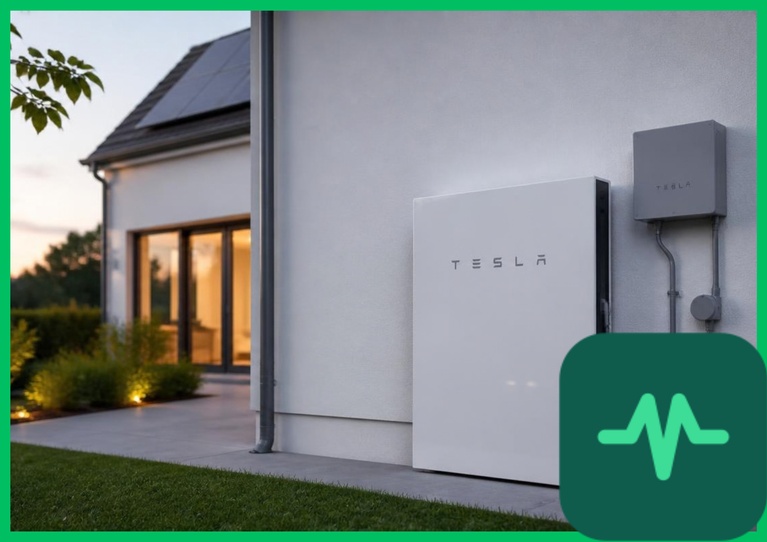
Your home hums along happily, powered entirely by sunlight.
Then evening arrives. The sun dips below the horizon. The sky darkens.
Suddenly, your solar generation drops to zero.
Yet, your household electricity needs do not stop at sunset. You turn on the lights, cook dinner, run the dishwasher, and watch television.
Without energy storage, the moment the sun goes down, your home disconnects from its clean power source and plugs right back into the traditional utility grid.
Generating solar power on your roof is a brilliant step forward, but it is only half the battle.
Industry analyses indicate that combining rooftop solar generation with residential battery storage has shifted from a niche innovation to the default configuration in modern residential upgrades.
Adding residential solar battery storage transforms your setup from a daytime novelty into a 24-hour clean energy powerhouse.
Here is how home batteries capture your daytime solar surplus and discharge it strategically when you need it most.
The Sunset Mismatch in Solar Energy
To understand why home batteries are essential, you have to look at the daily mismatch between solar production and human life.
Solar panels reach peak electricity generation around midday, between 11:00 AM and 2:00 PM.
During those exact hours, many homes sit empty. Parents are at work, children are at school, and energy consumption is remarkably low.
Traditionally, that midday surplus of solar power was fed straight back out through your utility meter into the public grid.
Then, evening arrives. Families return home, turning on appliances, cooking dinner, and charging electric vehicles just as solar production drops to absolute zero.
Your household energy demand peaks precisely when your solar panels stop working.
Without storage, you end up exporting your clean midday solar power cheaply, and buying dirty grid electricity back at high retail rates during the evening.
That is a broken financial and energetic loop.
How Residential Battery Storage Works
A home battery storage system closes that loop completely.
When your rooftop solar panels produce a surplus of electricity during midday hours instead of exporting it to the grid, that excess power flows directly into your residential battery pack.
Advanced chemistry storage blocks inside sleek wall-mounted units capture the direct current electricity, converting and storing it safely as chemical energy.
The battery sits quietly in your garage or utility room, filling up to capacity by early afternoon.
Then, as evening approaches and your household energy demand spikes, the battery swings into action.
It discharges its stored electrical energy smoothly through an inverter, powering your lights, appliances, and electronics with pure sunlight stored hours earlier.
Shielding Households From Grid Volatility
Beyond storing clean energy for nighttime use, home batteries offer massive financial protection against shifting utility pricing and grid instability.
Many regional electric utilities use time-of-use rate structures. They charge rock-bottom rates for electricity during sunny midday hours when solar abundance floods the grid, and sky-high penalty rates during evening peak hours when demand surges.
With a smart battery system installed, you never have to buy expensive grid power during peak hours again.
The battery's management software programs your energy flow automatically: it charges exclusively on cheap midday solar power, locks the energy inside the pack through the afternoon, and discharges the stored power to run your home during expensive evening peak hours.
You insulate yourself from utility price hikes and shave hundreds of currency units off your annual electricity bills.

Comments (0)
Login to leave a comment.
No comments yet. Be the first to share your thoughts!