Outside, a fierce thunderstorm knocks out the neighborhood power lines.
The lights flicker and die. The hum of your refrigerator stops completely. Total darkness and silence swallow your home.
In that sudden moment of vulnerability, you wonder about your family's safety.
You wonder how long your food will stay fresh. You wonder how long you will sit in the dark.
Now, imagine walking down to your basement or garage.
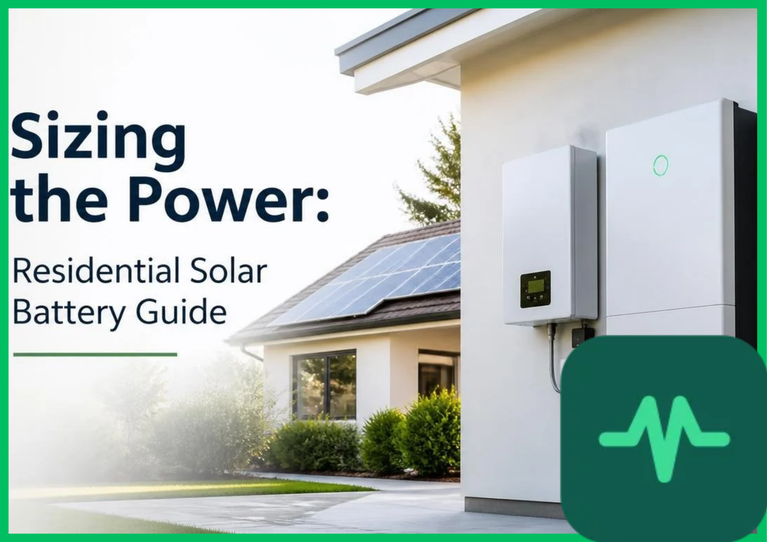
A sleek home energy storage system hums quietly on the wall.
Within a millisecond of the blackout, that battery takes over. Your lights stay on. Your refrigerator keeps running. Your heating or cooling system maintains comfortable indoor temperatures without missing a beat.
You feel an overwhelming wave of relief and security.
Solar panels on your roof capture clean sunlight all day. A residential solar battery ensures that free energy keeps working for you long after the sun goes down.
Installing home storage changes how you experience energy.
Getting the size right is the most critical step in the entire process.
Buy a battery that is too small, and you run out of power halfway through a blackout. Buy a battery that is too big, and you waste money on capacity you never use.
According to global energy reports from the International Energy Agency (IEA), resource sustainability frameworks from the United Nations Environment Programme (UNEP), efficiency benchmarks from ENERGY STAR, and academic microgrid research, mastering home energy storage capacity changes everything.
By matching your battery selection to true household power needs, you secure endless comfort without wasting resources.
Here is how residential solar battery sizing works, why calculating household power needs prevents costly mistakes, and how lithium battery backup systems secure our sustainable future.
The Hidden Cost of Getting the Size Wrong
To understand why battery sizing matters so much, you have to look at how home energy storage works in real life.
Many homeowners approach battery storage like shopping for a car. They assume bigger is always better, so they purchase the largest, most expensive energy storage capacity available on the market.
Others try to save money by buying the smallest budget battery they can find.
Both approaches cause headaches.
If you undersize your system, a minor evening blackout will drain your battery before you even crawl into bed.
If you grossly oversize your system, you tie up financial capital in massive lithium blocks that sit half-empty most of the year.
Finding the sweet spot requires patience, math, and an honest look at your daily electricity habits.
You do not need to power your entire house at 100% capacity during an emergency. You just need to keep your critical loads running smoothly.
Evaluating Your True Household Power Needs
How do you figure out the exact battery capacity your family actually requires?
You start by looking at your daily electrical consumption and identifying your essential loads.
Every home has appliances that consume vastly different amounts of power:
- Critical Loads: Refrigerators, internet routers, medical devices, basic LED lighting, and sump pumps. These require immediate backup power during a grid failure.
- Heavy Loads: Electric vehicle chargers, central air conditioning units, clothes dryers, and electric ovens. These draw massive amounts of current and drain batteries very quickly.
Academic microgrid research shows that most residential blackouts last less than a day.
Instead of trying to run a power-hungry electric clothes dryer from a battery during a storm, smart sizing focuses on powering critical comfort loads.
You calculate your daily kilowatt-hour usage by checking your utility bills, then determine how many hours of autonomy you want your home energy storage system to provide when the grid goes down.
Understanding Kilowatt-Hours Versus Kilowatts
When shopping for home batteries, you run into two confusing technical terms: kilowatt-hours and kilowatts.
Understanding the difference prevents expensive sizing mistakes.
Kilowatts measure power output—the maximum speed at which electricity can flow out of the battery at any given second.
Kilowatt-hours measure energy capacity—the total volume of electricity the battery can store inside its chemical cells.
Think of it like a garden hose and a water tank.
The kilowatt rating is the width of the hose, determining how hard the water sprays.
The kilowatt-hour rating is the size of the water tank, determining how long the spray lasts before running dry.
If you want to run a heavy air conditioner compressor and a refrigerator at the same time during a blackout, your battery needs a high kilowatt power rating to handle that heavy startup surge without tripping its safety switches.
According to ENERGY STAR and international appliance efficiency evaluations, matching both power output and storage capacity to your actual appliances ensures flawless performance during emergencies.
The Science of Lithium Battery Backup Sizing
Modern residential battery systems rely almost exclusively on lithium-ion chemistry.
These advanced cells offer high energy density, long operational lifespans, and deep discharge capabilities.
Unlike old lead-acid batteries that suffered permanent damage if drained past 50% capacity, modern lithium home batteries can discharge up to 90% or more of their stored energy safely.
When calculating your residential solar battery sizing, engineers look at usable capacity rather than total nameplate capacity.
A 13.5 kilowatt-hour battery, for example, delivers roughly 12 to 13 kilowatt-hours of clean usable power to your home circuits.
According to IEA energy transition assessments, pairing that storage capacity with rooftop solar panels creates a self-sustaining loop.
During the day, your solar panels power your home and refill the battery. At night or during grid outages, the battery takes over seamlessly.
UNEP circular economy frameworks highlight that properly sized lithium battery packs experience less chemical stress, extending their operational lifespan to fifteen years or more before recycling becomes necessary.
Designing Your System for Daily Savings and Emergency Security
Sizing your home energy storage system is not just about surviving rare blackouts.
It is also about saving money every single day through smart energy management.
Electricity markets use dynamic pricing models where power costs very little at night, but spikes to high rates during evening peak hours.
With a properly sized residential battery, your home charges up on cheap solar power or off-peak grid electricity during the day, then runs on stored battery power during expensive evening hours.
According to real-world residential data, daily self-consumption optimization slashes monthly utility bills significantly, helping pay off the initial investment over time.
You gain emergency security and financial savings wrapped into one intelligent package.
Securing Your Home Through Smart Sizing
Sizing the power for your home proves that clean technology brings peace of mind directly into our daily lives.
We no longer have to feel helpless when storms knock out neighborhood power lines.
By calculating your true household needs, understanding the difference between power output and storage capacity, and matching your battery to your daily habits, you build a resilient home.
We step away from vulnerable power grids, embracing a self-reliant, clean, and secure standard of living.
Through brilliant electrical engineering, smart storage design, and thoughtful energy stewardship, proper battery sizing secures a bright, sustainable future for every home on Earth.



Comments (0)
Login to leave a comment.
No comments yet. Be the first to share your thoughts!