Then, you think about adding a home heat pump system next spring to replace your old fossil-fuel furnace.
A few months later, you decide to expand the solar panel array on your roof to capture even more clean sunlight.
Your household energy needs change constantly.
Life moves forward. Families grow. New technologies arrive.
When you start shopping for a home energy storage system, you face a tough puzzle.
Do you buy a massive, expensive battery pack today that you might not fully need for years?
Or do you buy a small battery, only to watch it become completely inadequate the moment you add a new electric vehicle or a heat pump to your home?
For a long time, homeowners were forced to make a rigid, permanent gamble.
You guessed your future needs, spent a fortune upfront, and hoped your battery sizing would match your changing life.
If your family expanded or your power demands spiked, your only option was ripping out the old system and buying an entirely new unit from scratch.
That rigid approach wasted money and created unnecessary electronic waste.
Engineering has evolved past that limitation.
According to global energy reports from the International Energy Agency (IEA), resource protection frameworks from the United Nations Environment Programme (UNEP), appliance efficiency standards from ENERGY STAR, and academic microgrid research, modular home battery storage systems are changing how we power our lives.
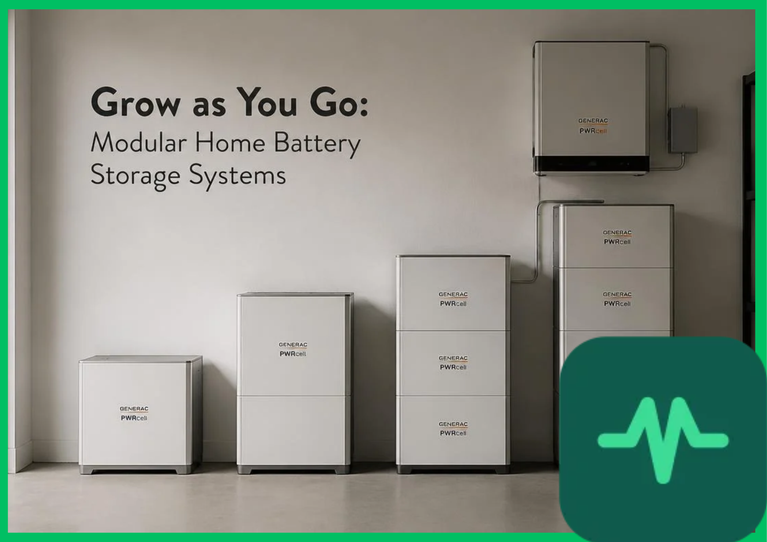
By using scalable, plug-and-play lithium battery blocks that snap together like building bricks, you can expand your energy storage capacity over time as your needs evolve.
Here is how modular storage works, why expandable power changes home economics, and how flexible energy solutions secure our sustainable future.
The Trap of Rigid Energy Storage
To understand why modular batteries matter so much, you have to look at how traditional home energy storage systems used to be built.
Older home batteries came in fixed, monolithic cabinets.
A single massive steel box sat in your garage or basement, housing the inverter and battery cells welded together as one heavy, indivisible unit.
If you bought a 10 kilowatt-hour box, that was your permanent limit.
If your lifestyle changed a few years down the road—perhaps you bought an electric car or built an extra bedroom onto your house—that fixed box could no longer keep up.
Your energy demands outgrew your storage capacity.
Replacing the system meant paying thousands of dollars for a completely new cabinet while throwing away a battery unit that still had working life left in it.
That rigid design frustrated homeowners and went against every principle of resource efficiency.
We needed a system that could adapt, grow, and scale right alongside our changing lives.
What Is a Modular Home Battery Storage System?
A modular home battery storage system is an advanced energy storage setup built using individual, stackable lithium-ion battery blocks that connect seamlessly to a central control unit and inverter.
Instead of buying one massive, unchangeable box, you start with a compact base unit that matches your current budget and energy needs.
When your family adds an electric vehicle, installs a heat pump, or simply wants extra backup security for stormy winter seasons, you do not buy a new system.
You simply purchase an extra battery module.
You slide or snap the new block into place alongside the existing units.
The system recognizes the new capacity automatically through digital handshake software.
Your storage capacity expands instantly, without rewiring your home or replacing your inverter.
It is flexible, scalable power designed to grow as you go.
The Science of Scalable Power and Safety
How do multiple separate battery blocks work together safely without causing electrical shorts or dropping efficiency?
It comes down to smart digital battery management systems and parallel circuit architecture.
Academic microgrid research shows that modular systems use intelligent microprocessors embedded inside every individual battery block.
These tiny computers monitor voltage, internal temperature, and state of charge across every single cell in real time.
When you add a new modular power pack to an older stack, the control inverter synchronizes the voltage levels automatically before allowing current to flow between them.
That prevents energy surges and ensures balanced wear across all modules.
Furthermore, because modular blocks are much smaller and lighter than monolithic cabinets, they are remarkably easy for technicians or homeowners to install and handle safely.
According to ENERGY STAR and international appliance efficiency evaluations, modular systems maintain high round-trip energy efficiency while giving you total control over your home's power architecture.
Financial Freedom and Sustainable Resource Use
The benefits of modular energy storage extend far beyond technical convenience. They transform household economics and resource sustainability.
Buying a massive home battery system all at once requires a significant financial investment upfront.
Modular design lets you spread that investment across years.
You buy a modest base unit today. As you save money on your monthly utility bills through smart solar self-consumption, you can reinvest those savings into adding an extra battery block next year.
According to UNEP resource circularity frameworks, modular systems reduce electronic waste significantly.
Instead of discarding an entire energy storage unit when your power needs grow, you simply upgrade the specific components you need.
IEA energy transition assessments highlight that scalable home storage systems accelerate clean energy adoption by removing financial barriers for everyday households.
Designing Your Modular Home Energy Hub
Building a resilient home energy hub with modular batteries requires looking at your long-term goals.
If you live in a small apartment or a modest home with minimal energy demands, a compact base unit providing 5 to 10 kilowatt-hours of storage handles your daily backup needs perfectly.
If you plan to transition toward total home electrification—powering heat pumps, induction stoves, and electric vehicles—you can start with a baseline stack and add modules incrementally until your system reaches 30 kilowatt-hours or more of robust backup capacity.
According to real-world residential data, modular flexibility ensures your home energy system never feels obsolete.
Growing Toward a Sustainable Future
Modular home battery storage systems prove that clean technology adapts to the fluid, changing rhythm of human life.
We no longer have to guess our future energy needs or lock ourselves into rigid, permanent storage limits.
By investing in scalable, plug-and-play lithium power packs that expand over time, we build homes that grow right alongside our families.
We step away from wasteful upgrade cycles, embracing a flexible, intelligent, and enduring standard of living.
Through brilliant electrical engineering, smart modular design, and deep respect for our planetary resources, expandable energy storage secures a bright, sustainable future for every home on Earth.


Comments (0)
Login to leave a comment.
No comments yet. Be the first to share your thoughts!